
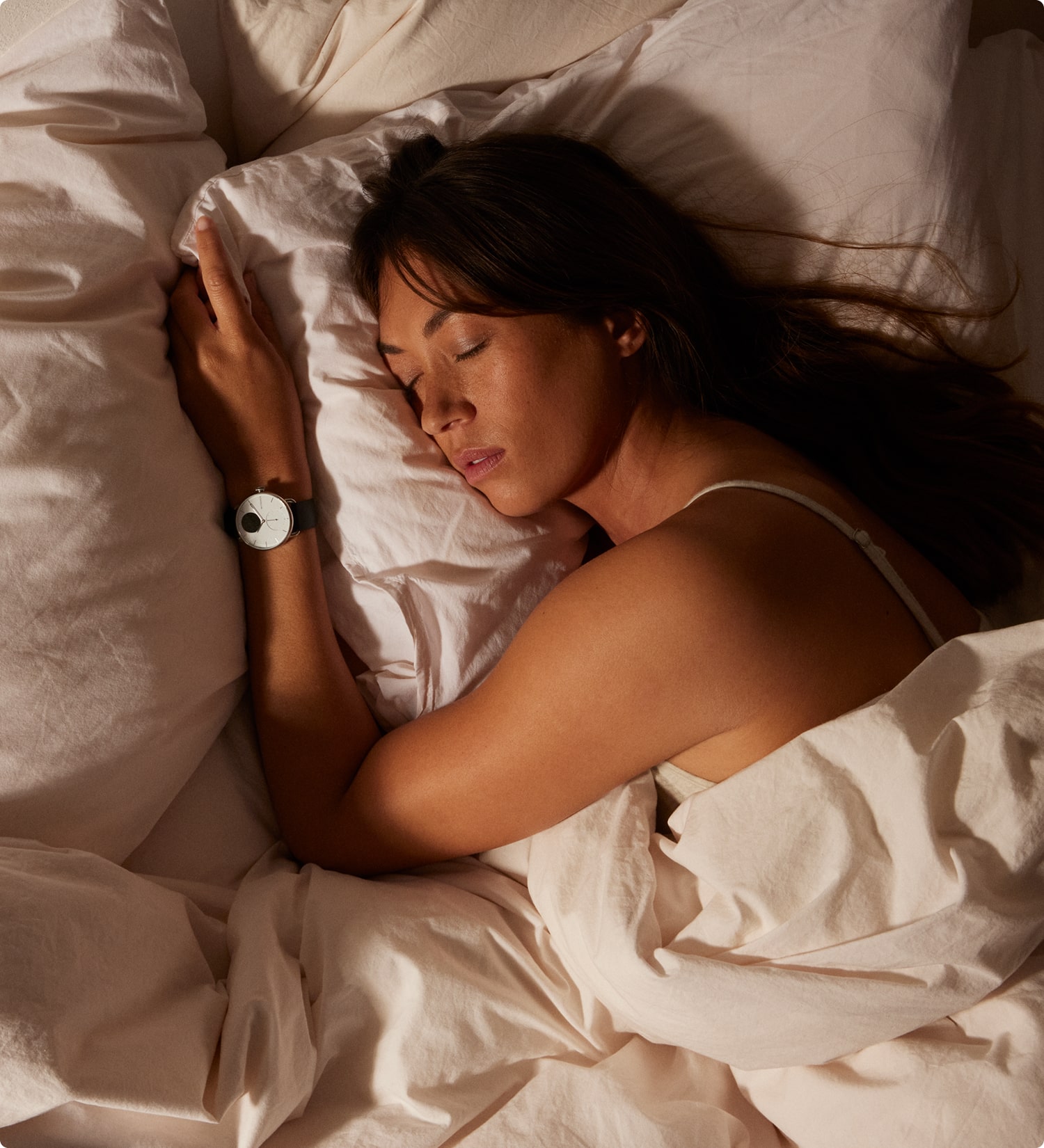
A Watch First, Smartwatch Second–And That's The Point
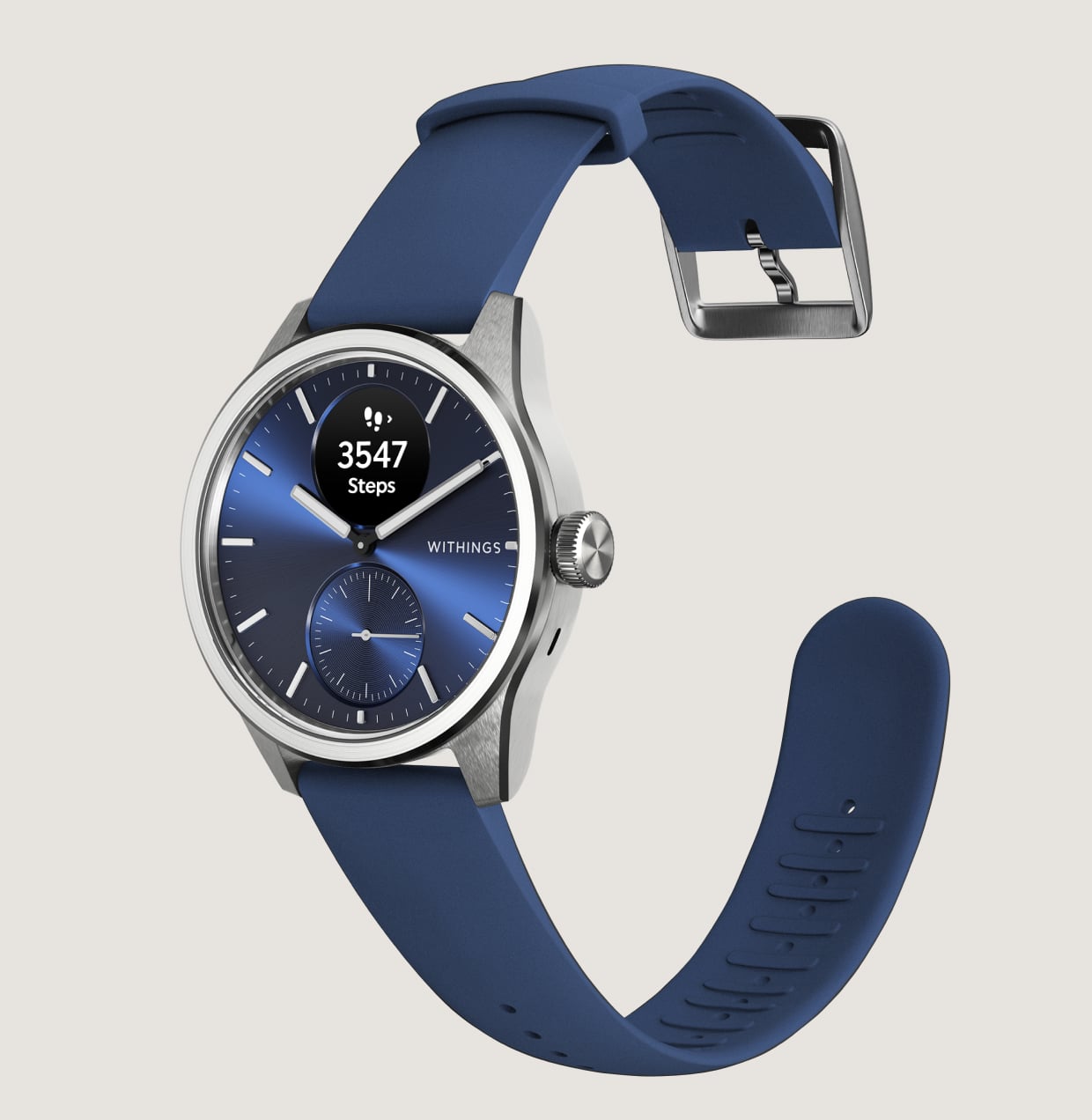
The Withings ScanWatch 2 sits on your wrist like a proper timepiece. Stainless steel case. Sapphire crystal glass. Analog hands that sweep around a classic watch face. There's no glowing rectangle screaming for attention, no bright colors demanding you acknowledge every notification. Just a small grayscale OLED display tucked discreetly at the top of the dial, appearing only when you need it.
This isn't an accident. Withings built the $349.95 ScanWatch 2 for people who want health tracking without looking like they're wearing a fitness tracker–and who want to charge their watch once a month instead of every night. In that regard, it absolutely nails the brief. This is the best-looking hybrid smartwatch you can buy right now–a device with up to 35-day battery life that delivers exceptional health monitoring while maintaining the aesthetic of a traditional Swiss timepiece.
But "hybrid" is the operative word here. The ScanWatch 2 tracks your heart with medical-grade precision and monitors your sleep like a dedicated health device, yet it can't run third-party apps, won't let you pay for coffee, and lacks the fitness chops of a dedicated sports watch. The question isn't whether it's good at what it does–it is. The question is whether what it does matches what you need.
Design & Build: A Masterclass In Restraint
The ScanWatch 2 comes in two sizes: 38mm (34.6g) and 42mm (52.6g), both without the strap. The 42mm version sits comfortably on the wrist without the bulk that comes with most smartwatches. The case is milled stainless steel with a brushed finish that catches light beautifully. The sapphire crystal is scratch-resistant and sits flush with the bezel, giving the watch a premium feel that justifies its $349.95 price tag.
The analog hands are driven by a traditional movement, sweeping smoothly around the dial. There's a small subdial at 6 o'clock for tracking daily activity progress, and that 0.63-inch OLED display at 12 o'clock. The display uses 14,504 pixels at 282 PPI–not particularly high-resolution by smartphone standards, but perfectly adequate for the data it needs to show: heart rate, steps, workout stats, and notifications.
The crown on the right side is your primary control. Press it to cycle through metrics, hold it to start a workout, or rotate it to scroll through menus. It's intuitive, though navigating nested menus can feel clunky compared to the instant responsiveness of a touchscreen smartwatch.
Water resistance is rated at 5ATM (50 meters), meaning you can swim with it without worry. The silicone band is comfortable but unremarkable. The quick-release 20mm standard means you can swap in any aftermarket strap–a metal mesh bracelet instantly elevates the dress-watch aesthetic, while a leather band makes it suitable for formal occasions. This versatility is a huge advantage over smartwatches locked into proprietary band ecosystems.
Display: Small But Sufficient
The grayscale OLED display is tiny by smartwatch standards. It's about the size of a postage stamp, and it only wakes when you raise your wrist or press the crown. When it's off, the ScanWatch 2 looks like a regular analog watch. When it's on, it shows one metric at a time in white text on a black background.
This minimalism is both the display's strength and its limitation. On one hand, it's discreet and doesn't distract from the analog aesthetic. On the other hand, you can't glance at your wrist and see multiple data points simultaneously. Want to check your heart rate during a workout? You'll need to press the crown multiple times to navigate to that screen.
Notifications appear on the display, but you can only see the sender and a truncated preview. There's no way to respond, dismiss individual notifications, or interact with them in any meaningful way. The watch vibrates, shows you who's contacting you, and that's it. If you're the kind of person who needs to triage messages from your wrist, this will frustrate you. If you're trying to reduce phone dependence, it's perfect.
Outdoor visibility is excellent. The OLED display is bright enough to read in direct sunlight, and the analog hands are easy to see at any angle. At night, the hands and hour markers have lume that glows softly–a nice touch that reinforces the traditional watch vibe.
Health & Fitness: Where The ScanWatch 2 Excels
This is where the ScanWatch 2 justifies its existence. The health tracking is exceptional, bordering on medical-grade in several areas.
ECG Monitoring: The ScanWatch 2 has FDA-cleared ECG capability for detecting atrial fibrillation. Press the crown for 30 seconds, and the watch records a single-lead ECG that you can review in the Withings app. The results are clear and easy to understand, with a simple verdict: normal rhythm, AFib detected, or inconclusive. This isn't a gimmick–it's the same technology used in medical devices, scaled down to fit on your wrist.
24/7 Heart Rate Monitoring: The multi-wavelength PPG sensor with 16 channels tracks heart rate continuously throughout the day and night. Accuracy is solid during rest and daily activities. During intense workouts, it occasionally lagged behind chest strap monitors by a few beats, but it was close enough for non-competitive training.
SpO2 Tracking: The watch measures blood oxygen levels automatically during sleep. This data feeds into the sleep apnea detection algorithm, which flags breathing disturbances. If you suspect you have sleep apnea, this feature alone could be worth the price of admission–though it's not a substitute for a proper sleep study.
Temperature Monitoring: The TempTech24/7 module tracks body temperature variations continuously. The watch establishes a baseline over the first few nights, then alerts you to deviations that might indicate illness or changes in your menstrual cycle. During testing, it caught a slight fever a full day before I felt symptoms–genuinely impressive proactive health monitoring.
VO2 Max Estimation: The watch calculates your fitness level via VO2 max estimation based on heart rate data during workouts. It's not as precise as lab testing, but it's useful for tracking trends over time.
Sleep Tracking: Sleep tracking is a major strength. The watch accurately identifies sleep stages (light, deep, REM), tracks sleep duration, and provides a sleep score each morning. The breathing disturbance detection is particularly valuable–it flags potential apnea events and tracks how often you experience disruptions. If you're a chronic poor sleeper, this data is gold.
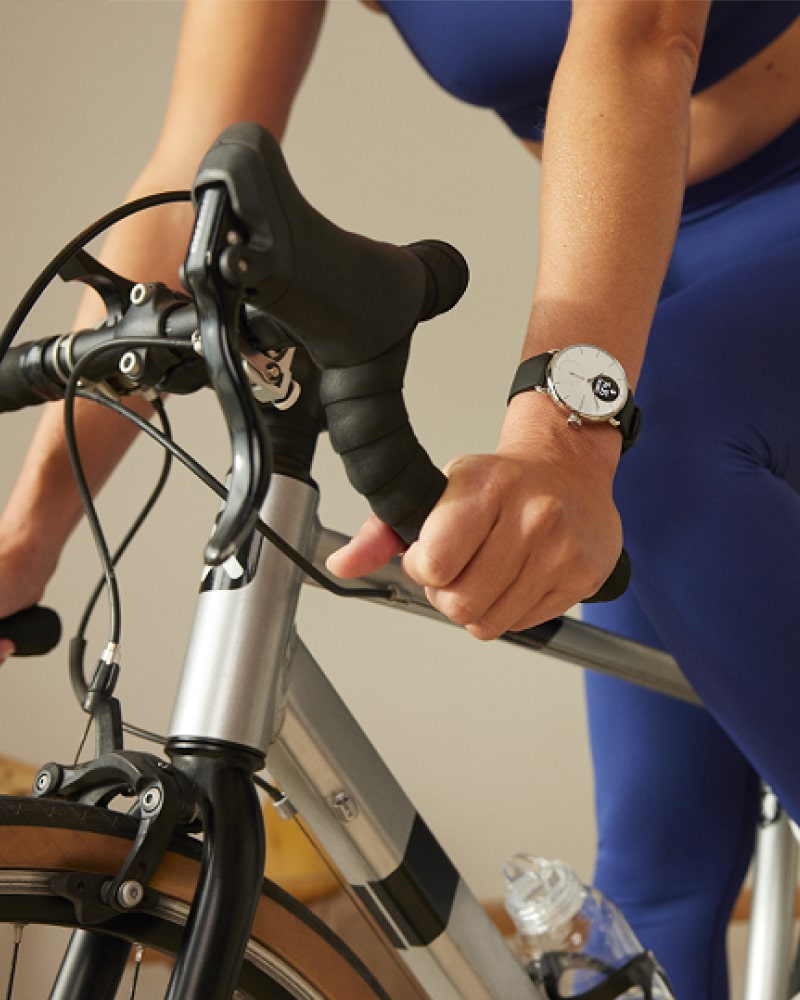
Workout Tracking: The ScanWatch 2 supports 30 workout modes, from running and cycling to yoga and skiing. It automatically detects walking, running, and swimming, which works well in practice. For manual workout tracking, press and hold the crown to select your activity.
The catch: GPS is connected, not built-in. You need your phone with you for accurate distance and pace tracking during outdoor runs or rides. GPS accuracy is reliable when paired with a smartphone–distances match dedicated running watches in testing–but you're tethered to your phone, which defeats the purpose of having a watch for some people.
The ScanWatch 2 isn't a serious fitness watch. There's no real-time coaching, no advanced training metrics, no recovery suggestions. It tracks your workouts and gives you basic stats, but it won't help you train smarter. If you're a competitive athlete or serious about performance, a Garmin Venu 3 or Polar is a better choice.
App Experience: Clean But Limited
The Withings app is refreshingly simple. Open it, and you see your key metrics: steps, heart rate, sleep score, weight (if you have a Withings scale), and activity goals. Tap any metric for more detail. The interface is clean, intuitive, and doesn't overwhelm you with data you don't need.
But that simplicity comes at a cost. The app collects a wealth of health data but doesn't synthesize it into actionable insights unless you subscribe to Withings+ at $9.95/month or $99.50/year. Without the subscription, you get raw numbers and basic trends. With it, you get personalized health reports, advanced analysis, and proactive alerts.
This subscription model feels a bit cheeky given the watch's $350 price. Many competitors include advanced insights for free. Withings argues that the subscription funds ongoing algorithm improvements and new features, but it's still a hard sell when you've already paid premium prices for the hardware.
The app integrates with Apple Health, Google Health Connect, and Samsung Health, which is essential for anyone already invested in one of those ecosystems. Data syncs quickly and reliably.
One notable feature: the app supports multiple Withings devices seamlessly. If you have a Withings scale, blood pressure monitor, or sleep mat, everything appears in one unified dashboard. For someone serious about holistic health tracking, this ecosystem integration is valuable.
Battery Life: The 30-Day Promise–And Then Some
Withings originally claimed up to 30 days of battery life, then bumped it to up to 35 days via a firmware update. In practice, expect 25-30 days with moderate use: continuous heart rate monitoring, sleep tracking every night, notifications enabled, 3-4 workouts per week with GPS, and occasional ECG readings. If you use GPS-connected workouts frequently, expect closer to 20-25 days. If you treat it primarily as a health monitor without heavy workout tracking, you can push past 30 days.
Charging takes about 2 hours via the magnetic USB-C dock. The dock is well-designed–the watch snaps into place securely, and the connection is reliable. You can leave it on your nightstand, charge it once a month while you shower, and forget about battery anxiety entirely.
This is the ScanWatch 2's killer feature. While Apple Watch Series 11 and Samsung Galaxy Watch 8 users charge nightly, you charge monthly. For people who find daily charging tedious or forget to charge their devices, this alone justifies choosing a hybrid over a full-feature smartwatch.
Who It's For
The ScanWatch 2 is perfect for people who:
- Want comprehensive health tracking without the digital aesthetic of a traditional smartwatch
- Value battery life and dislike daily charging
- Prioritize heart health monitoring, sleep tracking, and proactive health alerts
- Appreciate traditional watch design and want something suitable for formal occasions
- Already own other Withings devices and want ecosystem integration
If this sounds like you, check our best health monitoring watches guide for how the ScanWatch 2 stacks up against other medical-grade options.
Who Should Skip It
You should look elsewhere if you:
- Need advanced fitness metrics, training plans, or performance coaching
- Want to run third-party apps or use your watch to pay for purchases
- Require built-in GPS for phone-free outdoor workouts
- Expect comprehensive smartwatch features like music control, voice assistants, or app notifications
- Are budget-conscious and want maximum features per dollar
The Verdict
The Withings ScanWatch 2 is the best hybrid smartwatch you can buy if health monitoring is your priority and smartwatch features are secondary. It's a stunning piece of hardware that delivers FDA-cleared ECG, excellent sleep tracking, and continuous temperature monitoring in a package that looks like a luxury timepiece. The up to 35-day battery life is transformative if you're tired of daily charging rituals.
But it's expensive at $350, especially when full-featured smartwatches from Apple and Samsung cost the same or less. The connected-only GPS is limiting, the tiny display can frustrate, and the subscription model for advanced insights feels like nickel-and-diming. It's not a fitness watch, not a productivity tool, and not trying to be either.
If you want a watch that happens to be smart rather than a smartwatch that happens to look like a watch, the ScanWatch 2 is exceptional. For a lighter and more affordable option in the same family, see our ScanWatch Light review. If you want the upgraded model with even more health features, the ScanWatch Nova is also worth considering. And for a broader comparison across the category, our best smartwatches guide puts the ScanWatch 2 in context alongside the Fitbit Sense 2 and other top contenders.
Score: 77/100
| Category | Score | Weight | Weighted |
|---|---|---|---|
| Core Function | 80/100 | 30% | 24.0 |
| Build Quality | 93/100 | 15% | 14.0 |
| User Experience | 70/100 | 20% | 14.0 |
| Value | 65/100 | 20% | 13.0 |
| Battery | 80/100 | 15% | 12.0 |
| Total | 77.0 |