
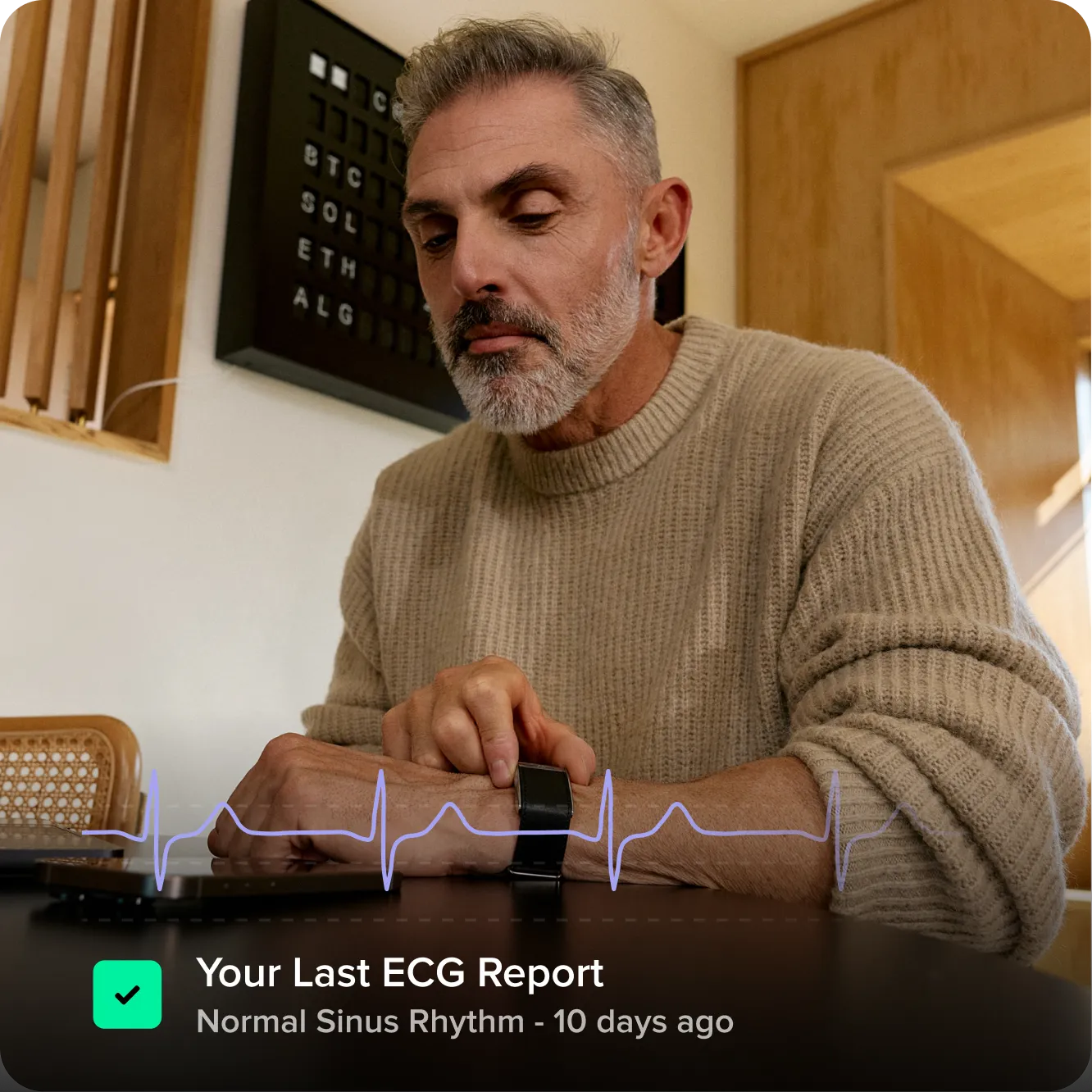
The Whoop MG arrives with a bold promise: medical-grade health monitoring from a screenless band that never leaves your wrist. It delivers an FDA-cleared ECG, controversial blood pressure estimates, and the most sophisticated recovery analytics in the wearable space – all locked behind a $359-per-year mandatory subscription with no option to simply buy the hardware outright. After weeks of daily wear through workouts, sleep, and everything in between, the MG proves it is simultaneously Whoop's most impressive and most frustrating product. The health insights are genuinely excellent. The price model, hardware quirks, and regulatory questions surrounding its headline feature make this a cautionary tale in premium pricing.
This is not a fitness tracker for casual users. The Whoop MG is built for people who already understand HRV, who log daily habits in a journal, and who want a wearable that disappears on the wrist while surfacing deep physiological data through an app. For that narrow audience, it delivers. For everyone else, the math simply does not add up.
Design and Build
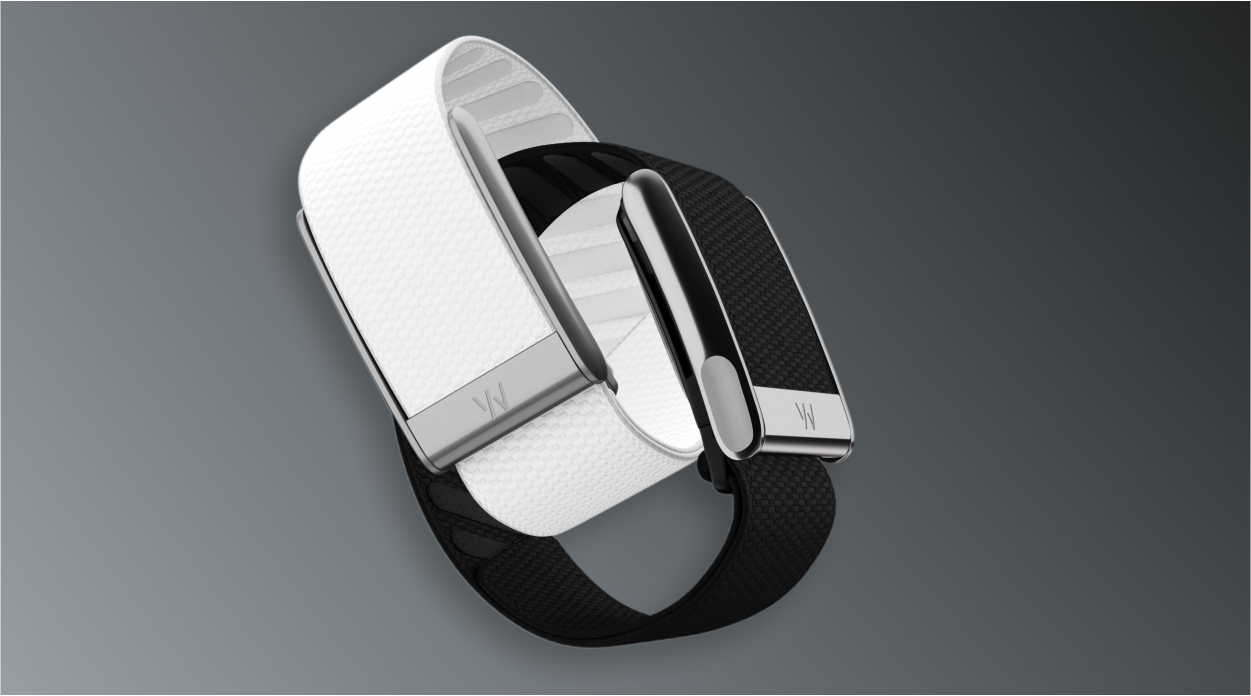
The Whoop MG keeps the brand's signature screenless silhouette, and at 34.7 x 24 x 10.6mm and 26.5 grams, it is 7% smaller than the outgoing Whoop 4.0. The reduction is subtle – hold them side by side and you might miss it – but on the wrist, the MG sits noticeably flatter. The matte-finished pod tucks under a SuperKnit Luxe band that breathes well during workouts and does not trap moisture overnight. Wearing it continuously for days at a time feels natural in a way that bulkier smartwatches cannot match.
The critical design change is the clasp. The MG's locking mechanism incorporates ECG-conductive contact pads, which is how it captures heart rhythm data when you press your fingers against it. Clever engineering, but the execution has problems. The metal clasp detaches from the band far too easily during removal – a complaint echoed across virtually every review and community forum. For a device positioned at the top of Whoop's lineup, the clasp feels like it belongs on a product costing a fraction of the price. Several users also report sharp edges where the clasp meets the band, creating minor discomfort during certain wrist positions.
Water resistance sits at IP68, rated for submersion up to 10 meters for two hours. That covers swimming laps and shower wear without worry, though it falls well short of the 100-meter rating on the Apple Watch Ultra 2. One significant frustration: Whoop 4.0 bands and accessories are completely incompatible with the MG. If you have a drawer full of old Whoop bands, they are now useless, and replacement bands for the new system run $49 to $129 each.
Health and Fitness Tracking
This is where the Whoop MG earns its keep – and also where its most controversial feature lives.
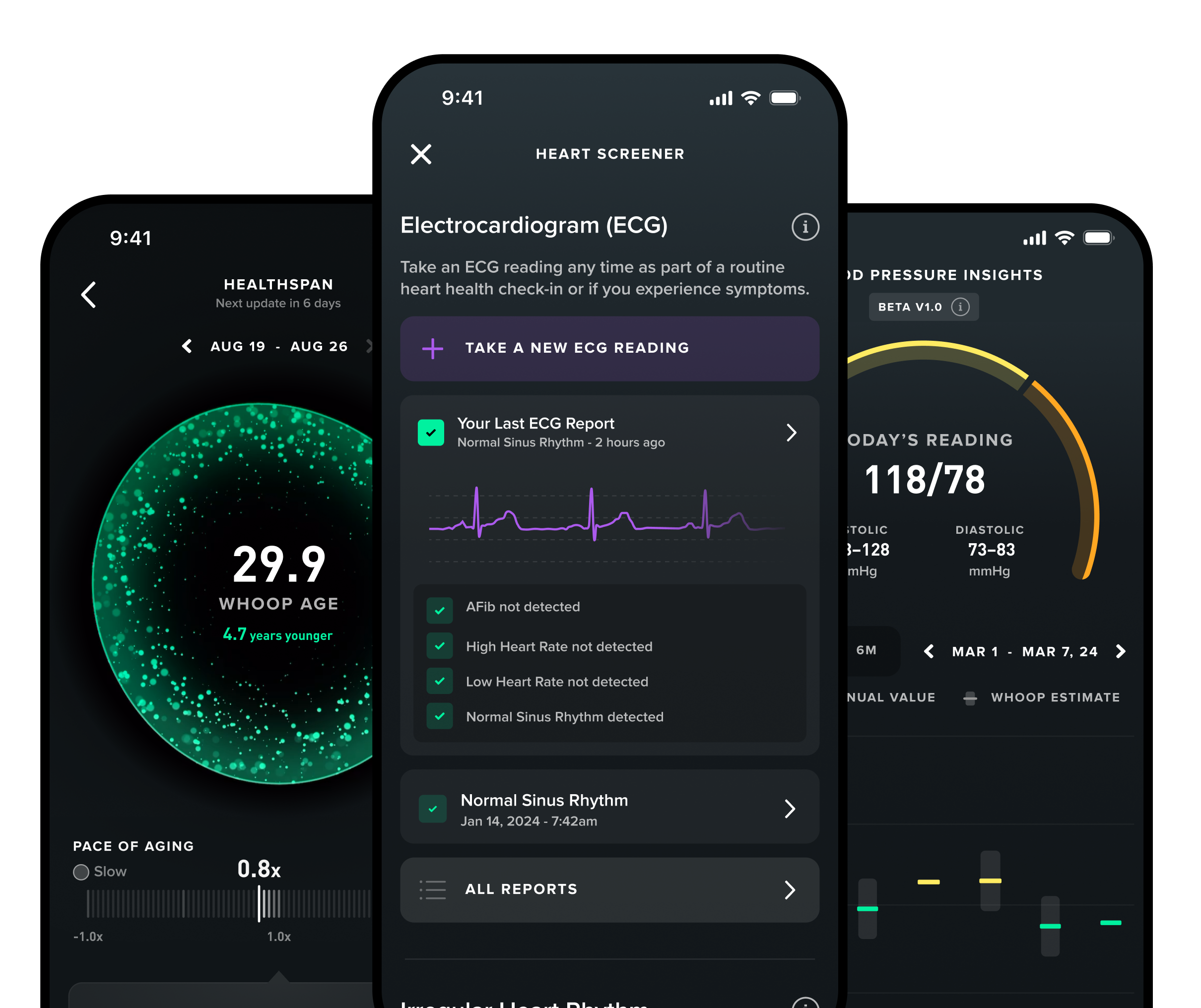
ECG: The on-demand electrocardiogram is FDA-cleared for detecting atrial fibrillation and irregular heart rhythm. Taking a reading is straightforward: touch your thumb and index finger to the conductive pads on the clasp, hold steady for about 30 seconds, and the app delivers a result classifying your rhythm as normal sinus or possible AFib. The readings feel reliable and consistent, and the ability to export PDF reports directly to a healthcare provider is a genuinely useful feature for anyone monitoring heart health. That said, ECG is no longer the differentiator it was two years ago. The Apple Watch Series 11, Samsung Galaxy Watch 7, and even the Pixel Watch 3 all offer FDA-cleared ECG at far lower price points. The MG's implementation works well, but it is table stakes in 2025, not a premium exclusive.
Blood Pressure Insights: This is the headline feature – and the most problematic. Whoop's patent-pending system estimates daily systolic and diastolic readings using optical heart rate data, HRV, and blood flow patterns captured during sleep. It requires initial calibration with three readings from a standard blood pressure cuff, and Whoop prompts recalibration when it detects significant deviations. The readings display as ranges rather than precise numbers, and the feature carries a permanent "beta" label.
The FDA issued a warning letter to Whoop in July 2025, stating that Blood Pressure Insights constitutes an unapproved medical device. Whoop fired back, citing the 21st Century Cures Act and calling it a wellness tool, not a diagnostic. CEO Will Ahmed said the feature would remain live. In January 2026, the FDA issued updated wellness guidance that allows optical blood pressure sensing in the wellness category – provided companies make no claims to "medical-grade" accuracy. Whoop declared victory, but the irony is hard to miss: the MG literally stands for Medical Grade, and that branding walks a fine line under the new rules. Users should understand clearly: this is not a clinically validated blood pressure monitor. It provides estimated trends, not the kind of readings your cardiologist would act on. For genuine blood pressure concerns, a traditional cuff remains far more reliable.
Recovery, Strain, and Sleep: This trio remains the backbone of the Whoop experience, and the MG executes it brilliantly. The recovery score synthesizes HRV, resting heart rate, respiratory rate, skin temperature, and blood oxygen into a single daily readiness number. It accounts for logged habits – alcohol consumption, caffeine timing, late meals, meditation – and surfaces correlations that feel genuinely personalized once enough journal data accumulates.
Sleep tracking is among the best in the business. The MG accurately distinguishes between lying awake and actual sleep onset, breaks down stages with reasonable precision, and provides actionable metrics around sleep consistency and efficiency. The personalized bedtime recommendations actually adapt to your chronotype rather than defaulting to a generic "be in bed by 11pm."
The Strain score translates heart rate data into a 0-to-21 scale that quantifies daily cardiovascular load. It is harder to game than Apple's Activity Rings – you cannot simply walk briskly for an hour and call it a high-strain day. The interplay between yesterday's strain and today's recovery score drives personalized Optimal Strain targets that genuinely influence training decisions. This feedback loop is the core reason athletes gravitate toward Whoop, and it remains best-in-class.
Heart Rate Accuracy: A persistent weak spot. Wrist-based optical heart rate tracking on the MG shows inconsistent calibration across different activities. During steady-state cardio, readings align reasonably well with chest strap references. During high-intensity intervals and strength training, the MG periodically overreports or underreports in ways that affect real-time strain calculations. Auto-detection of exercises is also hit-or-miss – weightlifting sessions frequently go unlogged, and shorter walks often require manual entry. For a device with no GPS and no screen, accurate passive tracking is essential, and the MG does not fully deliver. If you are wondering does WHOOP track steps, it does – but that is not the metric the MG is optimized around.
Performance and Features
The App: Whoop's mobile app is, without question, one of the best fitness platforms available. The dashboard is clean and information-dense without feeling cluttered. Recovery, Sleep, and Strain scores sit front and center, with drill-down views revealing granular data for every metric. The Journal feature tracks over 140 habits and surfaces statistical correlations over time. The AI-powered Whoop Coach, built on OpenAI's GPT-4, provides conversational health guidance that references your actual data rather than serving generic advice.
New to this generation is Healthspan, available on both Peak and Life tiers, a longevity-focused suite that calculates your biological "Whoop Age" and tracks your pace of aging week over week. It synthesizes cardiovascular fitness, sleep quality, recovery trends, and activity levels into an aging trajectory. The concept is compelling, and for users who log data consistently, watching the trend line respond to lifestyle changes creates a powerful feedback loop.
The Stress Monitor provides real-time autonomic nervous system tracking, displaying when your body enters sympathetic (fight-or-flight) versus parasympathetic (rest-and-digest) states. Paired with the haptic alarm – which vibrates on your wrist at optimal wake times based on sleep stage – the overall experience feels like a genuinely integrated health platform rather than a collection of disconnected features.
Connectivity and Compatibility: The MG syncs via Bluetooth to both iOS and Android, with Apple HealthKit and Google Health Connect integration. Strava connectivity works seamlessly for those who want workout data flowing between platforms. The absence of built-in GPS means outdoor activities rely entirely on connected phone GPS or paired devices – a notable omission at this price tier.
Battery Life
Battery life is the MG's unambiguous triumph. The jump from the Whoop 4.0's roughly five-day endurance to 14-plus days on the MG is transformative. A significantly more efficient processor – delivering 10x better power efficiency – paired with hardware optimizations makes this possible.
Fourteen days between charges fundamentally changes the relationship with the device. There is no nightly charging ritual, no anxiety about running out mid-workout. The MG simply runs, quietly collecting data in the background, which is exactly what a screenless health tracker should do. This is comfortably best-in-class for wrist-worn health trackers – the Oura Ring 4 manages up to eight days, the Apple Watch Ultra 2 needs charging every 36 hours, and the Garmin Forerunner 265 stretches to up to 14 days in smartwatch mode.
The wireless PowerPack slides onto the band and charges the MG without removal from your wrist – a design choice that supports Whoop's always-on philosophy. A full charge takes roughly two hours.
The Verdict
Score: 65/100 – The Whoop MG delivers genuinely elite recovery analytics, exceptional battery life, and one of the best health apps on any platform. But a mandatory $359/year subscription with no hardware ownership, a beta blood pressure feature under active FDA scrutiny, early hardware failures, and a poorly constructed clasp undermine its premium positioning. Most users should choose the cheaper Whoop 5.0 or look elsewhere entirely.
| Category | Weight | Score | Weighted |
|---|---|---|---|
| Core Function | 30% | 70 | 21.0 |
| Build Quality | 15% | 55 | 8.25 |
| User Experience | 20% | 72 | 14.4 |
| Value | 20% | 40 | 8.0 |
| Battery | 15% | 90 | 13.5 |
| Total | 100% | 65/100 |
- Core Function (70/100): Recovery, sleep, and strain tracking are best-in-class. ECG works well but is no longer unique. Blood pressure is beta, unvalidated, and under FDA challenge. Heart rate accuracy is inconsistent during intense exercise.
- Build Quality (55/100): Smaller and lighter than its predecessor, IP68 water resistance, but the clasp detaches too easily, edges are sharp, and early units suffered widespread hardware failures requiring replacements.
- User Experience (72/100): The app is exceptional. Screenless design is polarizing but suits the target audience. No GPS and no screen limit standalone utility. Exercise auto-detection is unreliable.
- Value (40/100): A mandatory $359/year subscription with no hardware ownership. The $120 annual premium over the Whoop 5.0 Peak tier buys an unremarkable ECG and a beta blood pressure feature. Old accessories are incompatible. No GPS at any price tier.
- Battery (90/100): Fourteen-plus days is transformative and best-in-class for continuous health trackers. The charge-without-removing design is excellent.
Who Should Skip
Most people. If you want a capable fitness tracker, the Whoop 5.0 at the $239/year Peak tier delivers 90% of this experience without the MG premium. If you want ECG and blood pressure monitoring with a screen, GPS, and no mandatory subscription, the Apple Watch Series 10 does more for a one-time $399. If you want recovery-focused tracking without the subscription model entirely, the Oura Ring 4 at $349 plus $5.99/month offers excellent sleep and readiness scores in a more discreet form factor. The MG's target audience is real but narrow, and for everyone outside it, the value proposition collapses under the weight of its own pricing. For a full comparison, see our best WHOOP alternatives guide, or browse the best fitness trackers for a wider look at the market.
Who It Is For
The Whoop MG makes sense for a very specific user: someone who already understands recovery-based training, who values deep health analytics over workout metrics, who does not need GPS or a screen, and who views $359 per year as an acceptable ongoing cost for a health monitoring platform. Athletes working with coaches who integrate Whoop data, biohackers tracking longevity metrics, and users with cardiac health concerns who want ECG-on-demand as a supplement to clinical care will find genuine value here.