
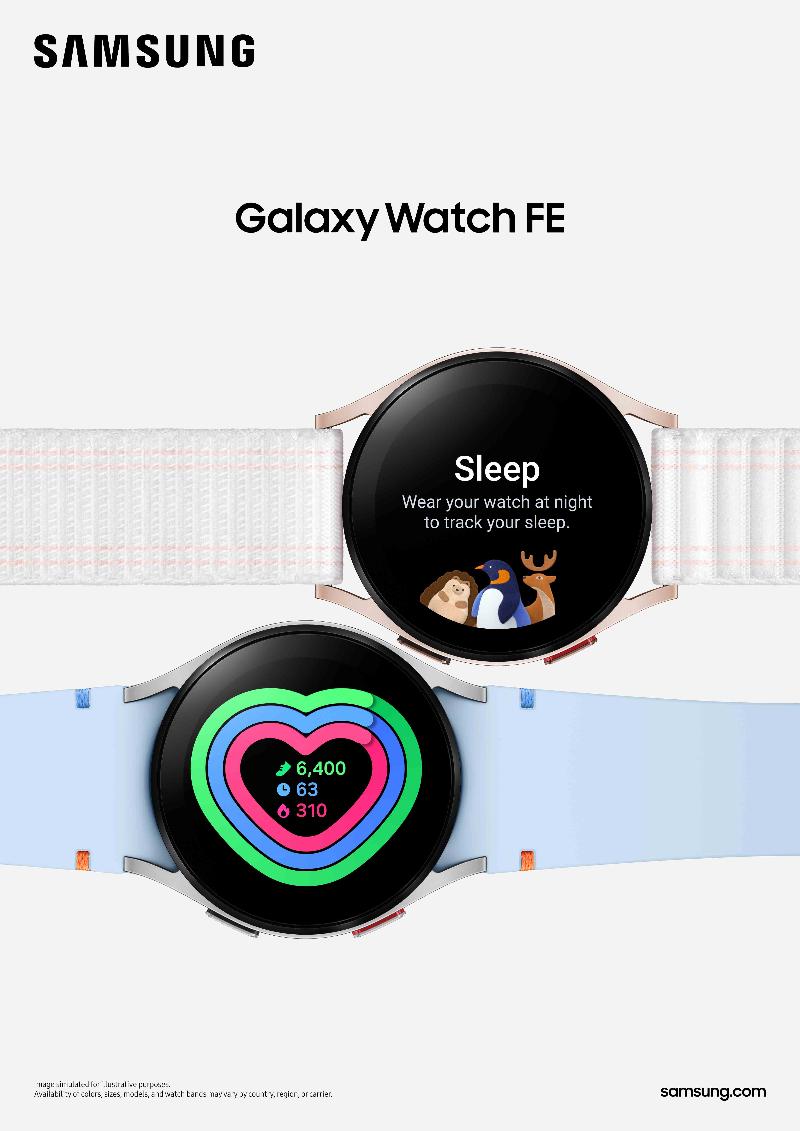
There is a version of reality where the Samsung Galaxy Watch FE makes sense. In that reality, the Galaxy Watch 6 does not exist on store shelves at frequent $150-180 discounts, the Pixel Watch 2 has not dropped to $199, and Samsung is not asking $200 for a processor it debuted in 2021. We do not live in that reality. The Galaxy Watch FE is one of the most confusing product decisions Samsung has made in the wearable space – a perfectly functional smartwatch that is immediately and obviously outclassed by its own siblings and direct competitors at the same price point.
I wanted to like the Galaxy Watch FE. Samsung's FE (Fan Edition) branding has worked well for phones, delivering flagship experiences at midrange prices. But the watch equivalent of that formula has gone badly wrong. Instead of trimming a few premium features from a recent model, Samsung has essentially repackaged the Galaxy Watch 4 from three years ago, slapped on a new name, and priced it as though 2021 internals deserve a 2024 price tag. Worse, they paired those internals with the same 247mAh battery that barely survived a full day in 2021 – and it fares no better three years later.
Design and Build
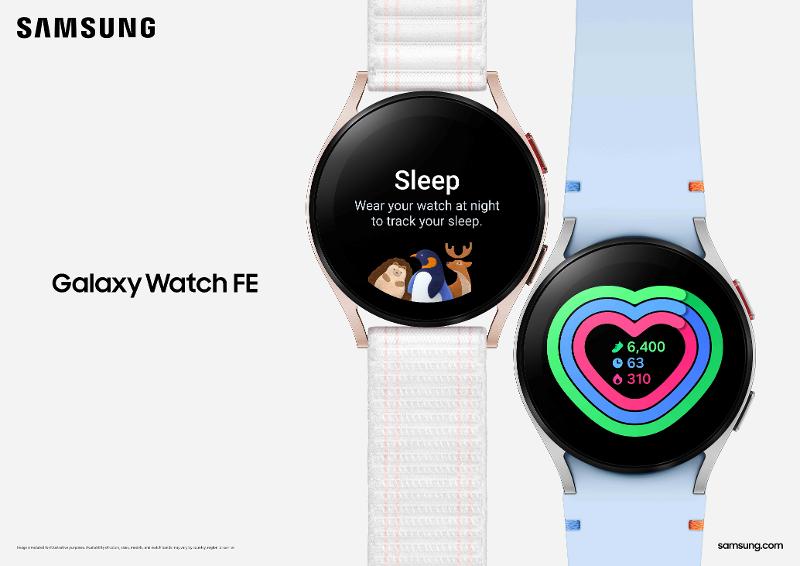
Credit where it is due: the Galaxy Watch FE looks the part. The 40mm aluminum case with its circular face and two side buttons is clean, understated, and nearly indistinguishable from the Galaxy Watch 7 at a glance. The design language is classic Samsung – refined without being flashy, professional enough for the office, sporty enough for the gym. Three color options (Black, Pink Gold, and Silver) cover the basics, and Samsung's one-click band system makes swapping straps quick and painless.
The build quality is genuinely good for the price. Sapphire crystal glass protects the display – an actual upgrade over the Gorilla Glass DX+ found on the original Galaxy Watch 4. The case is rated IP68 and 5ATM for water resistance, meaning it handles rain, sweat, and pool swimming without issue. MIL-STD-810H certification adds peace of mind for durability, though I would not exactly call this a rugged watch.
At 26.6 grams and 9.8mm thick, the Galaxy Watch FE sits comfortably on the wrist. The compact 40mm size works well for smaller wrists but is a genuine limitation for anyone who prefers a larger display. Samsung offers no 44mm option – if you want a bigger Galaxy Watch, you are looking at the Watch 6 or Watch 7, both of which are better watches anyway. The bezels around the 1.2-inch display are noticeably thicker than what you get on the Galaxy Watch 7, giving the screen a slightly cramped appearance that betrays the watch's budget positioning.
Display
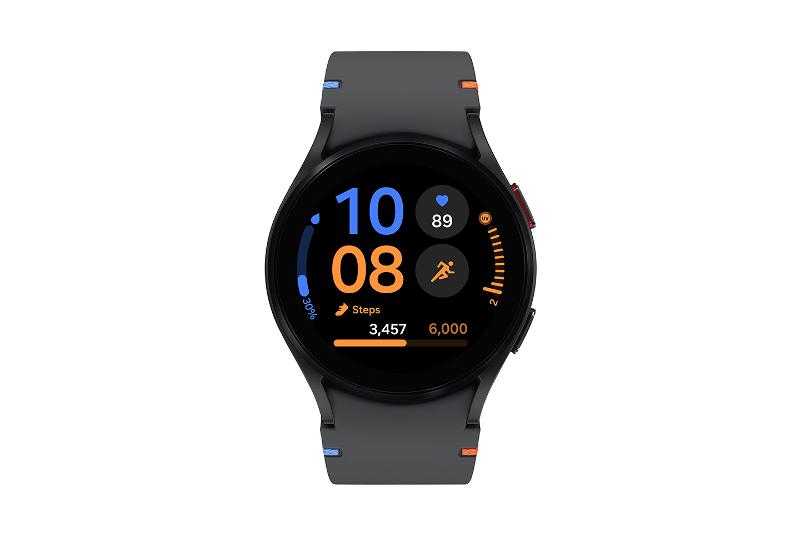
The 1.2-inch Super AMOLED panel delivers 396 x 396 resolution at roughly 330 pixels per inch, and it looks sharp. Colors are vibrant, blacks are deep, and outdoor visibility is strong thanks to solid peak brightness. The always-on display mode works as expected, though enabling it will devastate the already-meager battery life.
For a $200 smartwatch, this is a perfectly competent screen. It handles notifications, workout metrics, and watch faces with no complaints. The touch bezel – a software-based ring around the display edge that you can swipe to scroll – is responsive and adds a layer of interaction that many competing watches lack. The physical display hardware is not the problem with this watch. The problem is everything behind it.
Performance and Software
Here is where the Galaxy Watch FE reveals its true identity. Beneath the modern exterior sits the Exynos W920 processor, the same dual-core chip Samsung introduced with the Galaxy Watch 4 in 2021. Paired with 1.5GB of RAM and 16GB of storage, the spec sheet reads like a time capsule from three years ago – because that is exactly what it is.
Day-to-day performance is adequate but visibly slower than anything running a current-generation chip. Swiping between tiles has a consistent stutter. Opening third-party apps involves a noticeable wait. Google Maps loads, but not quickly. None of this makes the watch unusable, but it does make it feel old, and paying $200 for something that feels old on day one raises serious questions about how it will perform in year two or three.
The software situation has improved since launch. The Galaxy Watch FE shipped with Wear OS 4 and One UI Watch 5, but Samsung has since pushed the Wear OS 5 / One UI 6 Watch update to the device. This brings Galaxy AI features like Energy Score, the Double Pinch gesture, refreshed notification cards, and sleep apnea detection. Samsung promises four years of OS updates and five years of security patches under its official wearable support policy, which is respectable for the price.
One UI Watch remains one of the most polished smartwatch interfaces on the market. The customizable tile layout, quick settings panel, and integration with Samsung Health are all well-executed. Samsung Pay and Google Wallet both work via NFC. The gesture controls – knocking your fist to launch an app, rotating your wrist to answer calls – add convenience. If you own a Samsung phone, the ecosystem integration is seamless. If you own any other Android phone, the setup process is clunkier and some health features (like ECG and blood pressure monitoring) are locked behind Samsung's phone app.
Battery Life: The Dealbreaker
Let me be direct: the 247mAh battery in the Galaxy Watch FE is not adequate for a smartwatch sold in 2024. This is the same capacity as the Galaxy Watch 4 from 2021, and three years of software improvements have not been enough to compensate for the fundamental reality that this battery is too small.
With the always-on display disabled, typical daily use – notifications, a few phone calls, heart rate monitoring, and sleep tracking overnight – delivers roughly 22 to 24 hours of battery life. Enable the always-on display, and that number drops below 20 hours. Add a GPS-tracked workout, and you are scrambling for the charger before dinner.
Going to bed with less than 30% remaining is a gamble. On multiple occasions, the watch either dies or gets stuck in extreme power-saving mode, giving up on sleep tracking halfway through the night. This creates an impossible cycle: charge in the morning and miss your wake-up data, or charge in the evening and miss your sleep data. Either way, you lose a core feature of the watch.
Charging from empty takes just under two hours using the included 5W magnetic charger, which is painfully slow by current standards. The OnePlus Watch 2 charges in about an hour. Even Samsung's own Galaxy Watch 7 charges faster. When you are already struggling with daily battery life, slow charging adds insult to injury.
For context, the OnePlus Watch 2 offers up to 100 hours of battery life at its $299.99 MSRP. The Amazfit GTR 4 delivers about two weeks. Even the Pixel Watch 2, which is not exactly a battery champion, manages a full 24 hours more comfortably. The Galaxy Watch FE's battery life is not just bad – it is worst-in-class for 2024 smartwatches at this price.
Health and Fitness Tracking
Samsung's BioActive sensor is the one area where the Galaxy Watch FE genuinely punches above its weight. This three-in-one sensor combines optical heart rate monitoring, electrical heart rate sensing (for ECG), and bioelectrical impedance analysis (for body composition). It is the same sensor technology found in the Galaxy Watch 6, and it works well.
Heart rate tracking is reliable, running approximately 1-3 beats per minute above a reference chest strap – within acceptable margins for an optical wrist sensor. GPS accuracy is solid for outdoor runs and walks, with distance tracking lining up closely with dedicated running watches. Samsung supports over 100 workout types with automatic exercise detection, and the sleep tracking is genuinely excellent. Sleep stage tracking, snore detection, blood oxygen monitoring during sleep, and sleep coaching provide a comprehensive overnight picture that rivals anything from Fitbit or Apple.
The limitations show up in the details. There is no skin temperature sensor, which means the Galaxy Watch FE misses out on some of the more advanced cycle tracking features available on the Galaxy Watch 7. Cadence and pace metrics during runs occasionally produce confusing numbers that do not match reality. There is no dual-band GPS, so accuracy in dense urban environments or heavy tree cover can wander. And a GPS-intensive workout like an eight-mile run can consume nearly 35% of the battery in just over an hour – devastating when you started the day with a full charge and still need the watch to last until bedtime.
Who It Is For and Who Should Skip It
If you find the Galaxy Watch FE on deep discount – around $100-120, which has happened on Woot and Amazon – it becomes a reasonable impulse purchase for someone who wants basic Samsung Health integration and does not mind daily charging. At that price, you are getting a functional Wear OS smartwatch with a good sensor suite, decent GPS, and a sharp AMOLED display. The value equation shifts dramatically when the price drops below $130.
At the full $199.99 MSRP, however, this watch is nearly impossible to recommend. The Galaxy Watch 6, which is better in every measurable way – faster processor, better battery life, available in two sizes – regularly drops to the $160-180 range and sometimes lower. The Pixel Watch 2 often hits $199 and delivers smoother performance, better Fitbit integration, and a more modern chipset. Even Samsung seems to know the FE's pricing is off, given how aggressively it has been discounted since launch.
Skip this watch if you care about battery life, if you prefer a larger display, if you run or cycle with GPS frequently, or if you are not married to the Samsung ecosystem. That covers most people.
The Verdict
The Samsung Galaxy Watch FE is not a bad smartwatch. It is a bad deal. Samsung has taken perfectly good 2021 hardware, wrapped it in a 2024 design, and priced it as though the intervening three years of wearable innovation never happened. The health tracking is solid. The build quality is fine. The software, especially after the Wear OS 5 update, is genuinely good. But none of that matters when the battery dies before your day ends, the processor stutters through basic navigation, and you could buy a better Samsung watch for the same price on any given Tuesday.
The "Fan Edition" label implies you are getting the best of a flagship experience at a friendlier price. What you are actually getting is the Galaxy Watch 4 experience at a Galaxy Watch 6 price. Samsung can do better than this, and frequently does – which is exactly why the Galaxy Watch FE should stay on the shelf. If you are shopping for an affordable smartwatch, our guide to the best budget smartwatches covers options that deliver far more for the money, and Android users should check out the best smartwatches for Android for a broader look at the competition.
Score: 56/100
| Category | Weight | Score | Weighted |
|---|---|---|---|
| Core Function | 30% | 65 | 19.5 |
| Build Quality | 15% | 72 | 10.8 |
| User Experience | 20% | 58 | 11.6 |
| Value | 20% | 42 | 8.4 |
| Battery | 15% | 38 | 5.7 |
| Total | 100% | 56 |