
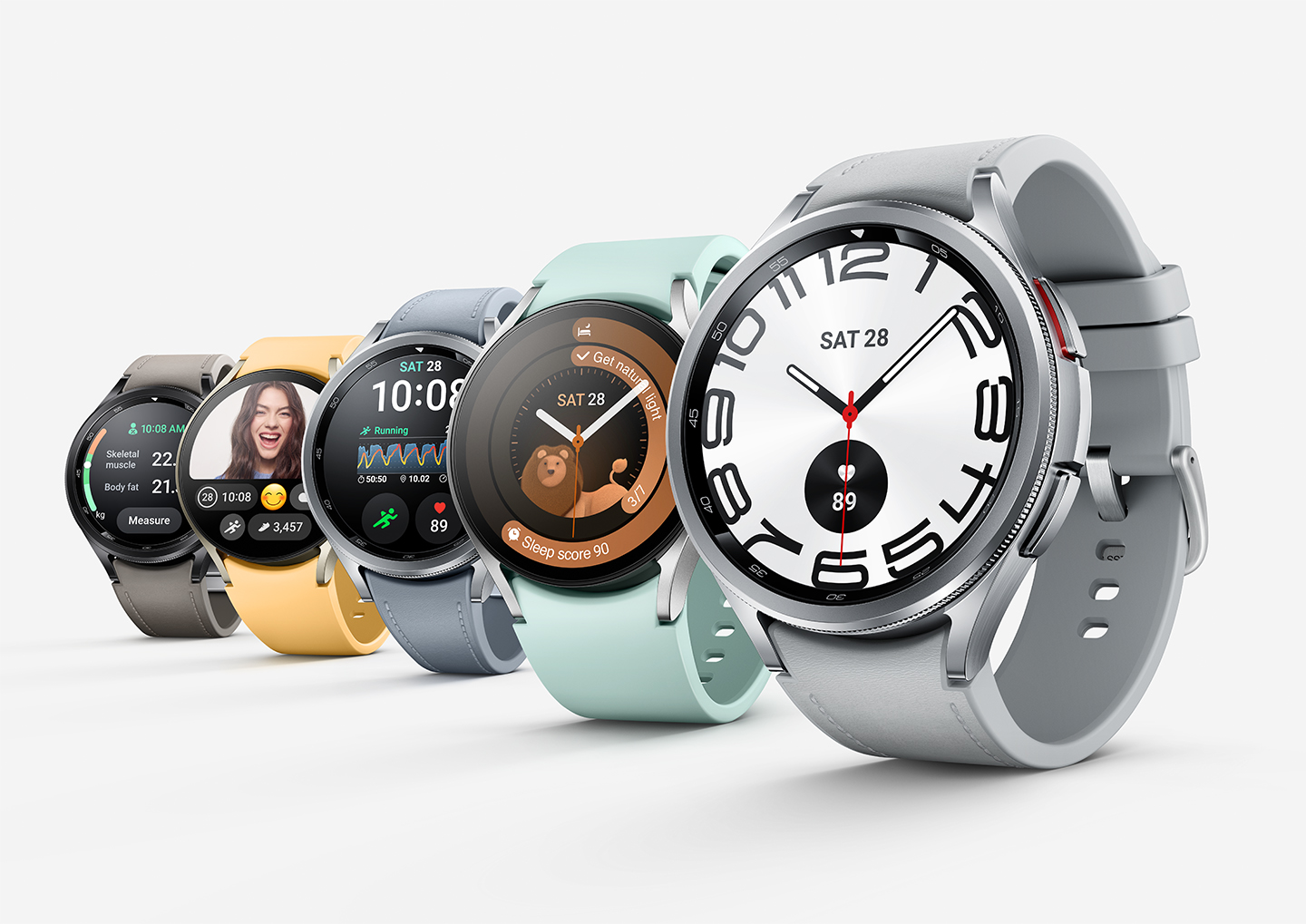
The Samsung Galaxy Watch 6 is a genuinely good smartwatch with one genuinely frustrating problem: you will charge it every single day. Not because you forgot to optimize your settings, not because you left always-on display running by accident, but because that is simply what this watch demands. Samsung claims "up to 40 hours" of battery life, and under ideal lab conditions with everything switched off and the watch sitting motionless on a desk, perhaps that number is real. In daily use – with notifications, heart rate monitoring, sleep tracking, and the occasional glance at the always-on display – the Galaxy Watch 6 is a one-day watch. Plan accordingly.
That caveat out of the way, what you get for your nightly trip to the charging puck is one of the most refined Android smartwatch experiences money can buy. Now superseded by the Galaxy Watch 7 and Watch 8, the Watch 6 remains available at steep discounts, making it a compelling entry point into Samsung's wearable ecosystem. The question is whether "good at almost everything except stamina and GPS precision" is enough.
Design and Build
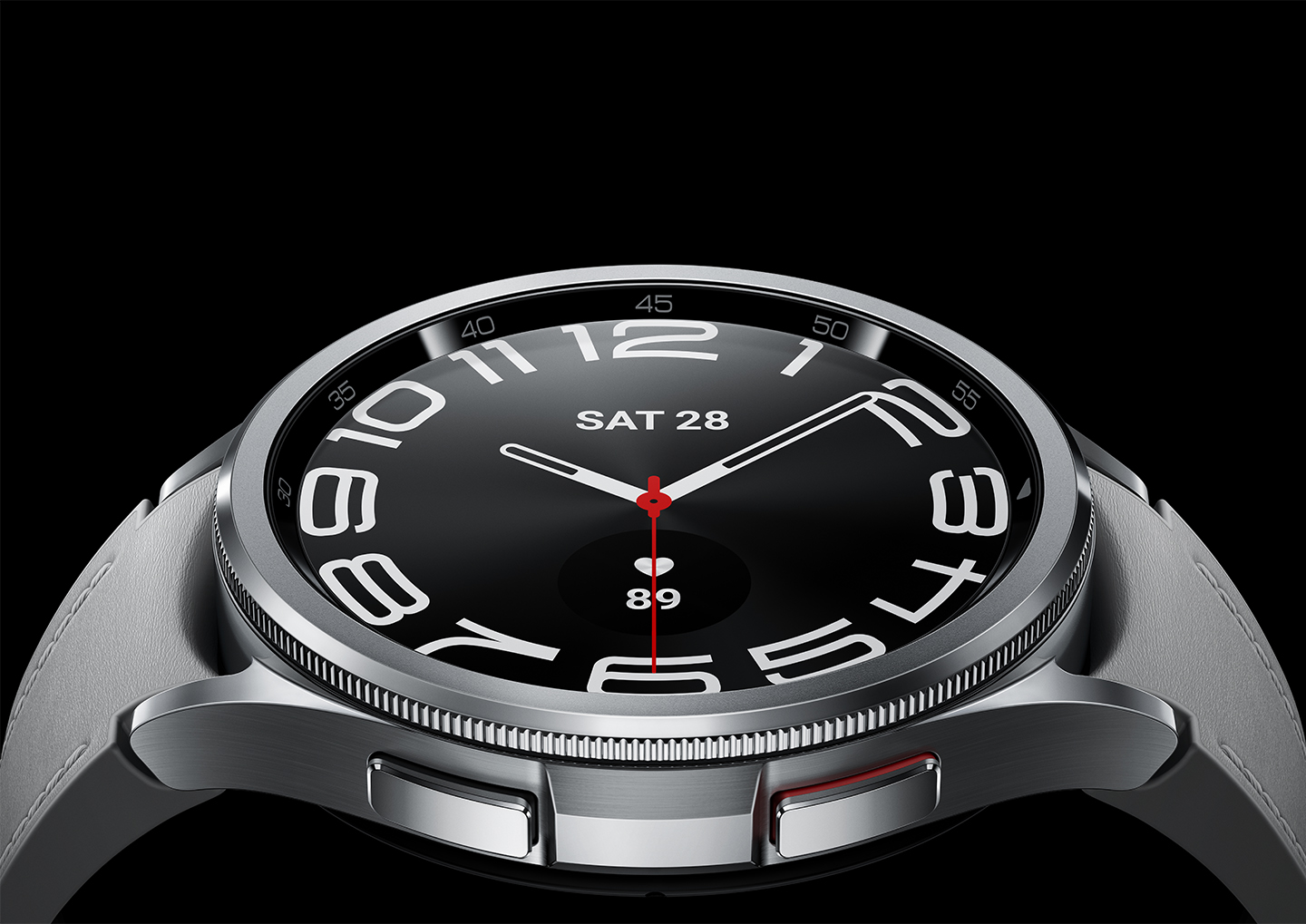
The Galaxy Watch 6 comes in two sizes – 40mm and 44mm – and both feel more polished than the Galaxy Watch 5 they replaced. Samsung shaved the bezels down by 30%, which sounds like a spec-sheet detail until you see the difference in person. The watch face stretches closer to the edges of the case, giving it a more modern, less chunky look than its predecessor.
The 40mm model weighs just 28.7 grams and the 44mm comes in at 33.3 grams, both light enough to sleep in comfortably. The aluminum case with Sapphire Crystal Glass feels reassuringly premium without crossing into jewelry-watch territory. This is a sporty, everyday watch that does not look out of place at the gym or at dinner.
Samsung earns points for durability ratings: IP68, 5ATM water resistance (good for swimming), and MIL-STD-810H military-grade toughness certification. The Sapphire Crystal Glass has held up well against daily wear – no scratches even without a screen protector.
The one-button-plus-back-key hardware layout is functional but unremarkable. Those who want the tactile satisfaction of a rotating bezel need to step up to the Galaxy Watch 6 Classic, which costs $100 more. The standard Watch 6 relies on touch bezels – a swipe around the display edge to scroll – which works but lacks the satisfying click of a physical ring. Band swapping uses Samsung's redesigned quick-release mechanism, and it works exactly as advertised: press, slide, done.
Color options are understated – Graphite and Gold for the 40mm; Graphite and Silver for the 44mm – which is either elegant restraint or a missed opportunity depending on your taste.
Display
The display is the Galaxy Watch 6's strongest feature, full stop. The 1.3-inch (40mm) and 1.5-inch (44mm) Super AMOLED panels push 2,000 nits of peak brightness, which makes them readable in direct midday sunlight without any squinting or wrist-angling. At 480 x 480 resolution on the 44mm model (432 x 432 on the 40mm), everything looks crisp – text, watch face complications, workout metrics, notification cards.
The always-on display mode is well-implemented, dimming the screen to a power-sipping state while keeping time visible at a glance. Raise-to-wake response is fast and reliable. The combination of brightness, resolution, and responsiveness makes the Watch 6's screen feel like a genuine upgrade from budget fitness trackers and even some competing smartwatches. Comparing it to an Apple Watch Series 9, the brightness specs are identical. This is a top-tier smartwatch display by any measure.
Performance and Software
Under the hood, the Exynos W930 dual-core processor paired with 2 GB of RAM delivers smooth, lag-free navigation. Apps open quickly, transitions are fluid, and the watch never chokes on multi-step tasks like loading a Spotify playlist while tracking a workout. The 5nm chip is efficient enough that the processor itself is not the battery problem – more on that later.
The Galaxy Watch 6 launched with Wear OS 4 and One UI 5 Watch, and has since been updated to Wear OS 6 with One UI 8 Watch. The current software is genuinely pleasant to use. The tile system for quick-glance information works well: swipe left for your next calendar event, right for weather, up for recent notifications. Google Maps, Google Assistant, and the full Google Play Store are all available, along with Samsung's own suite of apps. The 16 GB of internal storage is ample for offline Spotify playlists, watch faces, and apps.
Where the experience fractures is Samsung's ecosystem dependency. Pair the Watch 6 with a Samsung Galaxy phone and you get the full experience: Samsung Health syncing, camera remote, Find My Phone, seamless Bluetooth handoff, and the blood pressure monitoring feature (available in select markets). Pair it with a Pixel or OnePlus phone and some of those features evaporate. Samsung Health still works on any Android phone, but you will need to install the Galaxy Wearable app, Samsung Health app, and possibly a plugin or two. It is manageable, but it is not elegant. And iPhone users need not apply – this is Android-only hardware.
The watch also supports Samsung Wallet with NFC for contactless payments, which works reliably at terminals that accept Google Pay or Samsung Pay.
All of this works smoothly in the moment – the battery cost of that smoothness is a separate conversation, and a less flattering one.
Health and Fitness Tracking
Samsung's BioActive sensor handles the health-tracking suite: continuous heart rate monitoring, blood oxygen (SpO2), electrocardiogram (ECG), skin temperature, and bioelectrical impedance analysis (BIA) for body composition. On paper, this is one of the most sensor-rich watches in its class.
Heart rate tracking during steady-state activities – walking, easy running, cycling at moderate effort – is solid. Readings often fall within 5 BPM of a chest strap during steady-state zone-2 efforts and casual gym sessions, though accuracy can be inconsistent. Push into high-intensity intervals or wrist-heavy activities like rowing and the numbers become unreliable. This is a limitation shared by nearly every optical wrist sensor, but Samsung's implementation trails behind Apple and Garmin at the extremes.
The BIA body composition feature is a neat party trick and a reasonable trend-tracking tool. Press two fingers to the side buttons, wait 15 seconds, and get readings for skeletal muscle mass, body fat percentage, BMI, body water, and basal metabolic rate. The numbers will not match a DEXA scan, but they are consistent enough over time to spot trends – which is the point.
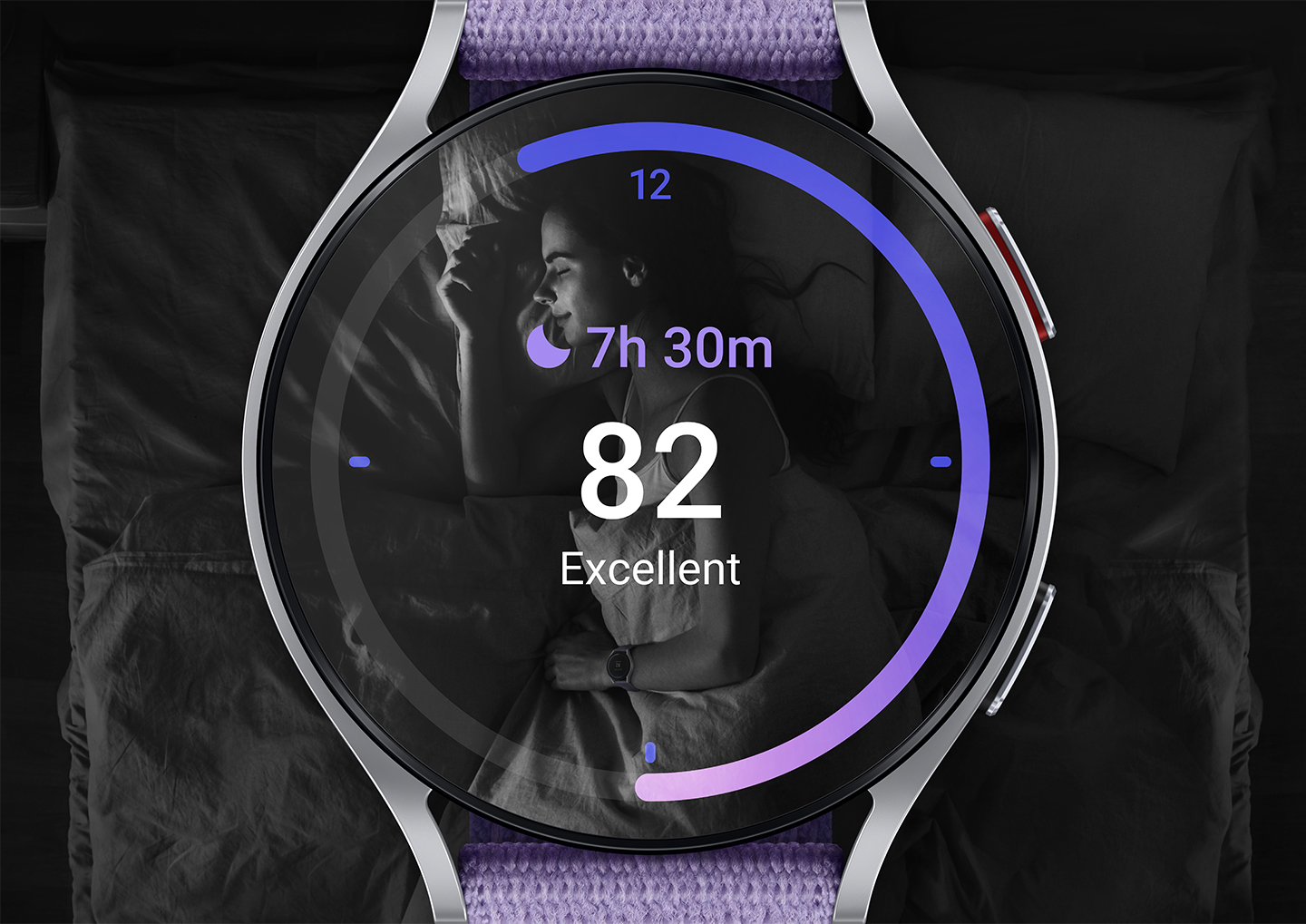
Sleep tracking is detailed and useful. The Watch 6 detects sleep stages (REM, light, deep, awake), tracks blood oxygen during sleep, measures skin temperature, and detects snoring via the phone's microphone. Samsung's sleep coaching feature assigns you a "Sleep Animal" – a cute if slightly gimmicky way to categorize your sleep patterns – and provides actionable tips for improvement. The sleep score system is comprehensive, factoring in duration, consistency, and time spent in each stage.
GPS performance is adequate for casual fitness use but disappointing for serious runners or cyclists. The watch supports GPS, GLONASS, Galileo, and BDS satellite systems, but track accuracy during runs through urban canyons or tree-covered trails tends to cut corners and drift. If precise route tracking matters to you, the Galaxy Watch 6 is not the answer – look to Garmin or COROS instead.
Workout tracking covers over 90 exercise types with automatic detection for common activities like walking, running, and cycling. The personalized heart rate zone feature calibrates effort zones to your fitness level rather than generic age-based formulas, which is a thoughtful touch. There is also a high-heart-rate alert and fall detection, both of which function as advertised.
Battery Life
Here is where candor becomes unavoidable. Samsung rates the Galaxy Watch 6 at "up to 40 hours" of battery life. The 40mm model packs a 300 mAh cell; the 44mm gets 425 mAh. In real-world use with always-on display enabled, continuous heart rate monitoring, sleep tracking, and typical notification flow, the 44mm model lasts roughly 24 to 30 hours. The 40mm model fares worse, often dipping below 24 hours.
The math is unforgiving: the watch loses about 2.5-3.5% per hour during waking use, then another 10-15% overnight during sleep tracking. Start the day at 100% and you are at roughly 45-60% by bedtime. Track your sleep and you wake up somewhere around 25-35%. That means you need to charge every morning, or skip sleep tracking and charge overnight. Either way, you are charging daily.
Disable the always-on display and you can stretch the 44mm to about 36 hours. Disable continuous heart rate monitoring too and you might approach Samsung's claimed 40 hours. But at that point, you have turned a smartwatch into an expensive notification mirror.
Charging is at least fast. The 10W wireless charging via the magnetic puck gets you from zero to full in about 80-90 minutes, and a quick 30-minute top-up adds roughly 45%, enough to get through a full waking day. Many owners develop a "charge while showering and getting ready" routine, which works – but it is a workaround for a problem that should not exist on a flagship watch.
For context, the Apple Watch Series 9 faces similar one-day constraints, so Samsung is not uniquely terrible here. But Garmin and Amazfit can stretch significantly longer under comparable conditions. Battery life is the Galaxy Watch 6's Achilles' heel, and Samsung has not solved it in subsequent generations either.
Who It Is For
The Galaxy Watch 6 is the right choice for Samsung Galaxy phone owners who want a tightly integrated smartwatch for everyday health tracking, notifications, and light fitness use. If your priorities are a gorgeous display, polished software, comprehensive health sensors, and you already charge your phone every night anyway, adding a watch to your charging routine is a minor inconvenience.
It is also a strong pick for anyone entering the Android smartwatch market at a budget, given that street prices have dropped well below $200 for the Bluetooth models. At that price point, the Watch 6 offers more sensors and a better display than nearly anything else in its class.
Who Should Skip It
Serious runners and cyclists who demand accurate GPS tracking should look elsewhere. The Galaxy Watch 6's positioning accuracy is not competitive with Garmin, COROS, or even the Apple Watch Ultra line. If you track routes and care about splits, this watch will frustrate you.
Anyone who cannot tolerate daily charging should also pass. If multi-day battery life is non-negotiable, the Amazfit T-Rex series or Garmin Venu 3 offer better stamina (with trade-offs elsewhere).
iPhone users cannot use this watch at all. And non-Samsung Android users will get a slightly diminished experience, particularly around ECG and blood pressure features.
The Verdict
The Samsung Galaxy Watch 6 is a smartwatch that does 90% of what you want, 90% as well as you would hope. The display is stunning. The build quality is excellent. The health tracking suite is comprehensive. The software is smooth and mature. Samsung Health provides genuinely useful insights. It looks good on your wrist and feels good in daily use.
And then you look at the battery icon at 6 PM and see 35%, and you remember the 10% that is not quite right. Daily charging is not a dealbreaker for everyone – Apple Watch owners have accepted it for a decade – but it is an ongoing tax on convenience that Samsung keeps promising to fix and keeps failing to address.
At its current discounted street price, the Galaxy Watch 6 represents solid value for the Android faithful. At its original $299-$329 MSRP, it was a harder sell against the competition. The watch that replaced it, the Galaxy Watch 7, offers incremental improvements (as Samsung tradition demands) but not a fundamentally different proposition. If you find a Watch 6 for under $200, it is one of the best deals in Android wearables.
Score: 78/100
| Category | Weight | Score | Weighted |
|---|---|---|---|
| Core Function | 30% | 82 | 24.6 |
| Build Quality | 15% | 85 | 12.75 |
| User Experience | 20% | 83 | 16.6 |
| Value | 20% | 78 | 15.6 |
| Battery | 15% | 55 | 8.25 |
| Total | 100% | 77.8 → 78 |
A good smartwatch with a clear caveat. The Galaxy Watch 6 does not redefine anything, but it does nearly everything competently – except lasting more than a day on a charge.