
The Brand That Invented Heart Rate Training Finally Caught Up
The Polar Vantage V3 is the most complete sports watch Polar has ever made – and the first one in years that genuinely competes with Garmin and COROS at the high end. At $699.99, it pairs an AMOLED display, dual-frequency GPS, free offline maps, and ECG with what remains arguably the deepest training analytics platform on any wrist. It earns an 82/100 and a firm recommendation for serious athletes – though the complete absence of music storage, contactless payments, and third-party apps narrows its audience.
There is a certain irony in how Polar got here. The Finnish company literally created the first wireless heart rate monitor in 1982, pioneered training zones, and supplied chest straps to Olympic teams for decades. And then, somewhere around 2018, the world moved on. Garmin gobbled up the serious athlete market. Apple captured everyone else. Polar's watches started feeling like antiques with monochrome displays, no maps, and single-frequency GPS. The Vantage V3 is Polar's answer to every criticism from the last five years, all at once.
Design and Build
The Vantage V3 wears its aerospace aluminum case like a uniform. At 57 grams with the silicone band (39 grams without), it is noticeably lighter than the Garmin Fenix 8 and only marginally heavier than the 53-gram Forerunner 965. The 47.3mm case sits comfortably on wrists during long runs, open-water swims, and overnight sleep tracking. The 13.5mm thickness is not svelte by fashion watch standards, but it is entirely normal for a multisport GPS watch and sits flush enough to slip under a wetsuit sleeve.
Three color options are available: Night Black, Sky Blue, and Sunrise Apricot. The Night Black is the safe choice for daily wear; the Sky Blue is genuinely eye-catching without feeling garish. Five physical buttons surround the case – a welcome abundance compared to the minimal button layouts on some competitors – and provide reliable tactile control during rain-soaked trail runs when touchscreens become unreliable.
Gorilla Glass 3 protects the display. It is not the sapphire crystal found on pricier Garmin models, but for the vast majority of training scenarios it holds up well. Water resistance is rated at WR50, which covers pool and open-water swimming comfortably. The operating temperature range of -20 to 50 degrees Celsius means it can handle anything from a February Nordic ski session to a midsummer desert ultra.
Display
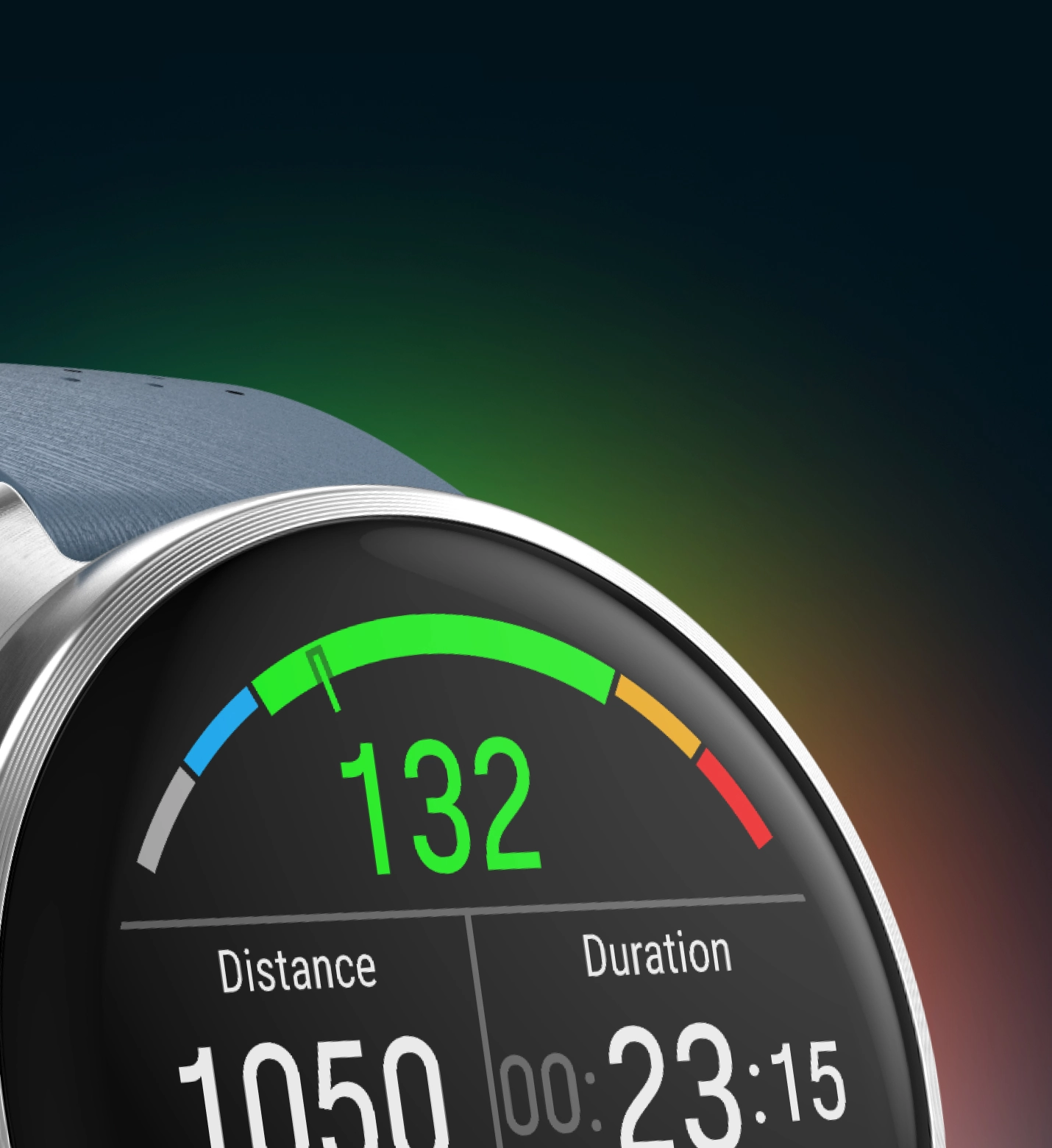
After years of squinting at Polar's dim MIP screens, the 1.39-inch AMOLED display on the Vantage V3 is a revelation. The 454 x 454 resolution at 462 PPI produces sharp, vivid data screens and smooth map rendering. Colors are rich, text is crisp, and the always-on display mode means you can glance at your pace, heart rate, or navigation without the wrist-raise gesture.
Outdoor visibility deserves specific praise. Polar implemented an ambient light sensor that boosts brightness aggressively under direct sunlight, and the result is one of the most readable AMOLED screens in the category. During midday trail runs, every data field stays clearly readable without shading the screen. That said, the always-on mode does drain battery faster – a tradeoff that every AMOLED sports watch makes, but worth noting if you are planning ultra-distance events.
The curved Gorilla Glass gives the display a slightly premium feel, and the touchscreen is responsive whether navigating menus, scrolling through maps, or swiping between data screens during a workout. Combined with those five physical buttons, the interaction model strikes a good balance between modern touch navigation and the reliable button presses that athletes need when their hands are wet, gloved, or mid-sprint.
Performance and Features
GPS and Navigation
The dual-frequency GPS (L1/L5) with support for GPS, GLONASS, Galileo, BeiDou, and QZSS is a massive step forward for Polar. In open terrain and mountain trails, positioning accuracy is excellent and tracks closely match established trail routes and known distances.
Urban environments present the only notable weakness. In dense city blocks with tall buildings, tracks occasionally cut through buildings or clip corners. This is not unique to Polar – it is a physics problem that every GPS watch faces – but the Forerunner 965 and Apple Watch Ultra 2 handle it marginally better in the tightest urban canyons.
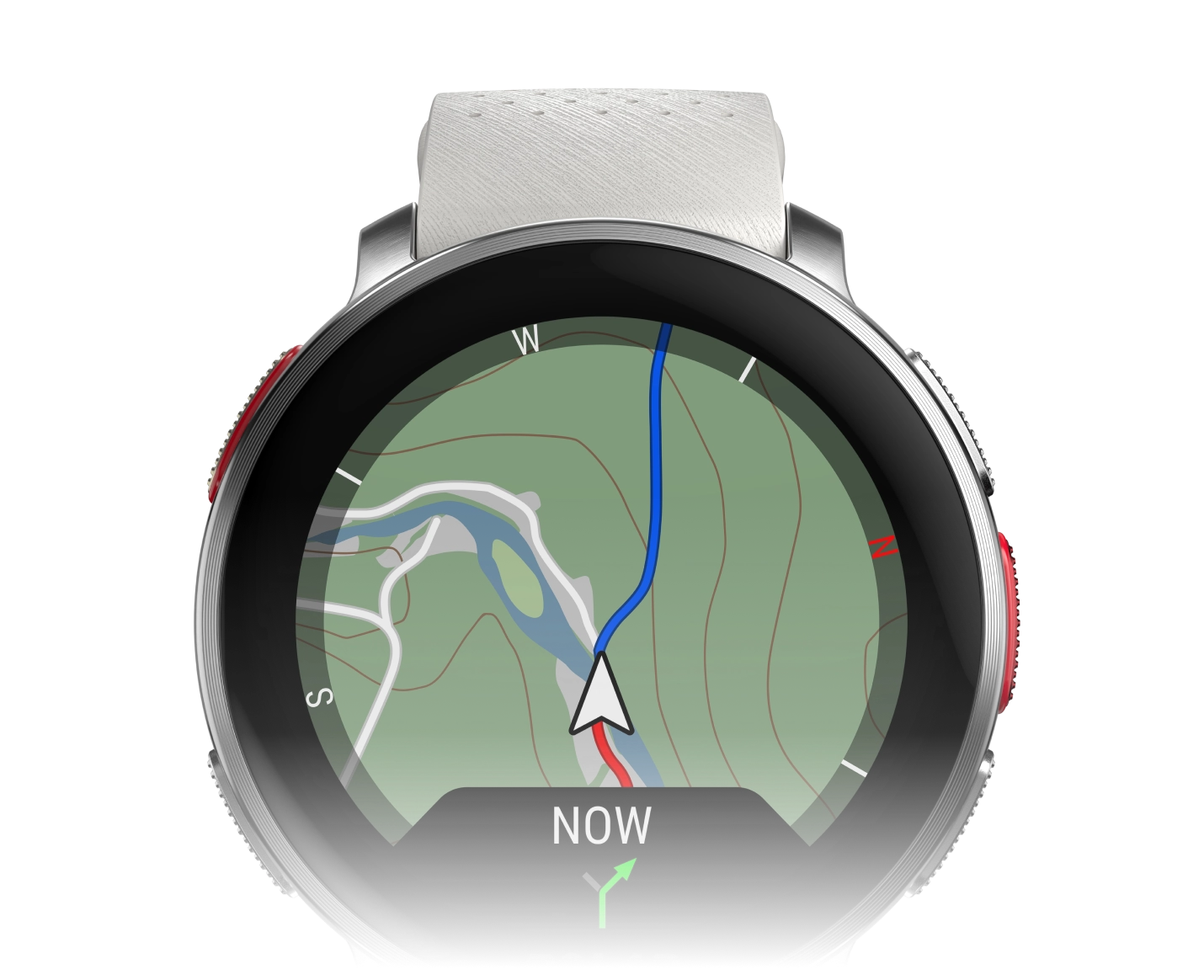
The headline feature is offline maps. The 32 GB of storage can hold detailed topographic maps with contour lines, trails, roads, rivers, and points of interest. Maps are free and global – no subscription required. The watch ships preloaded with basic coverage of North America and Europe, and additional detailed regional maps can be downloaded via Polar Flow on desktop. Komoot integration enables turn-by-turn route guidance, and the breadcrumb trail function provides reliable track-back capability.
Training Analytics
This is where Polar separates itself from the pack. Training Load Pro breaks your training stress into Cardio Load, Muscle Load, and Perceived Load – giving you a nuanced picture of how different types of training are taxing different systems. Recovery Pro combines long-term training load data with autonomic nervous system recovery measurements, sleep quality, and subjective questionnaires to deliver daily training readiness recommendations.
FitSpark provides daily workout suggestions tailored to your recovery status, training history, and fitness level. The orthostatic test – previously requiring a chest strap – can now be done with the wrist-based ECG, which lowers the friction of doing daily readiness assessments. Leg recovery tests and VO2 max estimates round out a training toolkit that genuinely rivals what you would get from a dedicated coaching platform.
Over 150 sport profiles are supported, with dedicated metrics for running (including wrist-based running power), cycling, swimming (with stroke detection), triathlon, and more. The Polar Flow web service and app provide the deep-dive analytics layer, with training history, load tracking trends, and sleep data organized in a comprehensive interface.
What Is Missing
No music storage. No contactless payments. No third-party app ecosystem. No ANT+ support. A maximum of four data fields per screen (where Garmin and COROS offer more). These are not dealbreakers for training-focused athletes, but they are the reason the Vantage V3 cannot claim to be the best overall multisport watch – only one of the best training tools.

Health and Fitness
Heart Rate Accuracy
The Polar Elixir sensing platform brings the Gen 4 optical heart rate sensor, and the results are genuinely good – with caveats. During steady-state running and cycling at consistent effort, the sensor tracks closely with chest strap reference data. For long tempo runs, marathon-pace sessions, and easy aerobic efforts, the wrist readings are reliable enough to trust for zone-based training.
Where the optical sensor stumbles is during rapid transitions. Warm-up phases, interval sprints, and activities with significant wrist movement can produce readings that lag or deviate by up to 10+ BPM from chest strap data. This is an industry-wide optical sensor limitation, but given Polar's heritage as the heart rate company, expectations were understandably high. The honest recommendation: for interval training and racing where every beat matters, pair the watch with the Polar H10 chest strap.
ECG
The wrist-based ECG captures a 30-second reading by placing a finger on one of the side buttons. It is not medically certified and does not provide automatic AFib detection like the Apple Watch. Its primary utility on the Vantage V3 is enabling the orthostatic test without a chest strap – a practical convenience that serious athletes will appreciate daily.
Blood Oxygen and Skin Temperature
The SpO2 sensor is useful for altitude acclimatization tracking and general wellness monitoring. Nightly skin temperature tracking adds another data stream to recovery assessment and supports menstrual cycle tracking for female athletes. The watch needs to be worn snugly at night for reliable readings – something the 57-gram weight and smooth silicone band make reasonably comfortable, though the 47mm case size can feel bulky for sleep.
Sleep Tracking
Polar's sleep tracking is a genuine strength. Sleep Plus Stages tracks sleep phases (light, deep, REM) with impressive accuracy. Fell-asleep and wake-up times are typically within a couple of minutes of reality.
Nightly Recharge combines sleep quality data with autonomic nervous system recovery measurements to produce a daily recovery score. SleepWise maps how your sleep quality affects your predicted alertness throughout the following day. Together, these features create the most actionable sleep-to-training feedback loop available on any sports watch. The only friction: you need to wear the watch for three consecutive nights before Nightly Recharge data appears, and five nights before sleep insights fully calibrate.
Battery Life
Polar claims up to 43 hours of continuous GPS tracking in dual-frequency mode and up to 140 hours in single-frequency eco mode. In daily smartwatch use, the rated 10 days is achievable with the always-on display off.
Real-world GPS performance is impressive. During outdoor runs tracked with dual-band GNSS, battery drain averages roughly 2-4% per hour – competitive with the Garmin Forerunner 965. Real-world testing suggests the Vantage V3 is at least as efficient as Garmin's flagship in GPS mode.
The always-on display mode cuts smartwatch endurance to roughly three to five days, which is entirely reasonable for the AMOLED panel quality you get. For ultra-distance events, switching to eco mode or disabling always-on is advisable.
Charging uses the USB-C Polar Charge 2.0 cable. It is proprietary (not a standard USB-C plug directly into the watch) but charges quickly and reliably.
Who It Is For
The Polar Vantage V3 is built for athletes who prioritize training intelligence over smartwatch convenience. Triathletes, marathon runners, ultra-distance athletes, and anyone who wants the deepest recovery analytics available on their wrist will find enormous value here. If you already use Polar Flow or have a history with Polar products, the V3 is an absolutely massive upgrade from any previous Polar watch.
It is also a strong choice for athletes who want offline maps and turn-by-turn navigation without jumping to the $1,000+ Garmin Fenix 8 or the ~$700 COROS VERTIX 2S.
Who Should Skip It
If you want music on your wrist, contactless payments, a rich app ecosystem, or the ability to reply to messages, look at the Garmin Forerunner 970 or Apple Watch Ultra 2 instead. If you are a casual fitness user who does not need deep training analytics, the Vantage V3 is more watch than you need – and far more expensive than you need.
If optical heart rate accuracy during intervals is non-negotiable and you refuse to use a chest strap, the Apple Watch Ultra 2 and Garmin Fenix 8 are marginally more consistent from the wrist.
The Verdict
Score: 82/100
The Polar Vantage V3 is the comeback that Polar needed. The AMOLED display, dual-frequency GPS, free offline maps, and ECG bring the hardware in line with 2024-2025 expectations. The training analytics – Training Load Pro, Recovery Pro, Nightly Recharge, SleepWise, FitSpark – remain among the best in the industry and give Polar a genuine edge over Garmin for athletes who care about the science behind their training.
The weaknesses are real but specific: optical heart rate accuracy during transitions is merely good rather than class-leading, the smartwatch feature set is barebones compared to Garmin and Apple, and the four-field-per-screen limitation feels unnecessarily restrictive. At $699.99 – $100 more than the Garmin Forerunner 965 – it asks a premium for its training analytics depth while delivering less on the smartwatch side.
For the right athlete – the one who cares about recovery scores, training readiness, and sleep quality more than Spotify playlists and Apple Pay – the Vantage V3 is one of the best running watches money can buy. If you want the same Polar training tools at a lower price, the Vantage M3 delivers nearly identical software in a lighter, more affordable package.
| Category | Score | Weight | Weighted |
|---|---|---|---|
| Core Function (GPS, HR, training tools, maps) | 85 | 30% | 25.5 |
| Build Quality (materials, durability, comfort) | 84 | 15% | 12.6 |
| User Experience (display, software, app) | 80 | 20% | 16.0 |
| Value (price vs. features vs. competition) | 74 | 20% | 14.8 |
| Battery Life | 87 | 15% | 13.1 |
| Total | 81.9 -> 82 |