
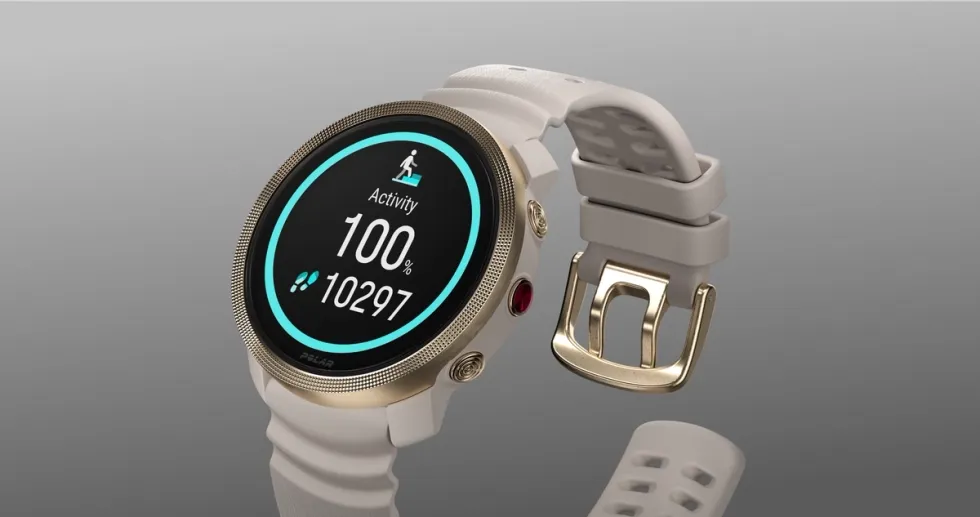
The Polar Vantage M3 punches above its weight. At $399, it packs the same training tools, sensors, and AMOLED display technology as Polar's $599 Vantage V3, wrapped in a lighter, more affordable package. For data-obsessed athletes who don't need smartwatch frills, it's one of the best values in GPS sports watches. Just don't expect it to replace your phone for anything beyond workout tracking.
Design & Build
The Vantage M3 opts for function over flash. The 44mm plastic case with stainless steel bezel won't win style awards, but at 53 grams it practically disappears during long runs. Strap it on for an ultramarathon and you'll appreciate the lack of bulk. Two silicone band sizes ship in the box, covering most wrist sizes without hunting for aftermarket options.
Build quality sits in the "good, not great" category. The Gorilla Glass 3 display resists everyday bumps but lacks the sapphire crystal of pricier alternatives. A kitchen counter encounter might leave a mark. Water resistance hits 50 meters - adequate for pool swimming and rain, though divers should look elsewhere.
The five-button layout around the bezel guarantees usability in any condition. Gloves on? Sweaty fingers? Wet from a swim? The buttons work regardless. The touchscreen is responsive when conditions allow, but having physical controls as backup is essential for serious outdoor use.
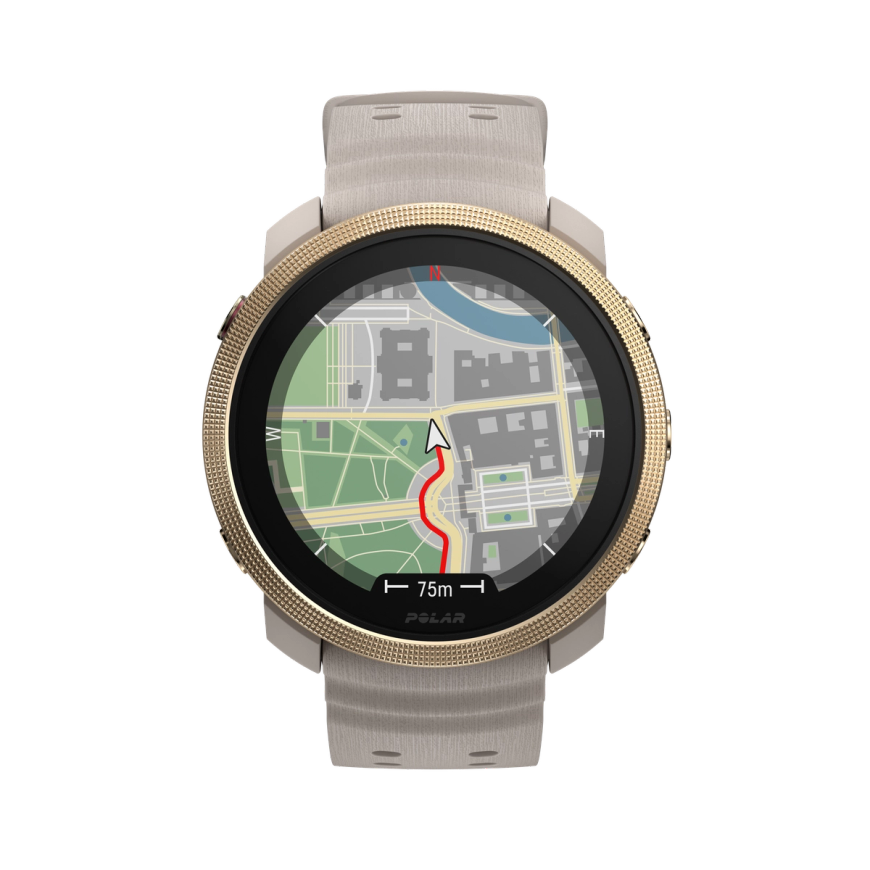
Two colorways are available: Night Black and Greige Sand. Neither screams "sports watch" - both could pass in a business casual setting. The watch sits unobtrusively on the wrist, a pleasant change from bulkier GPS watches that catch on sleeves and announce themselves across the room.
Display
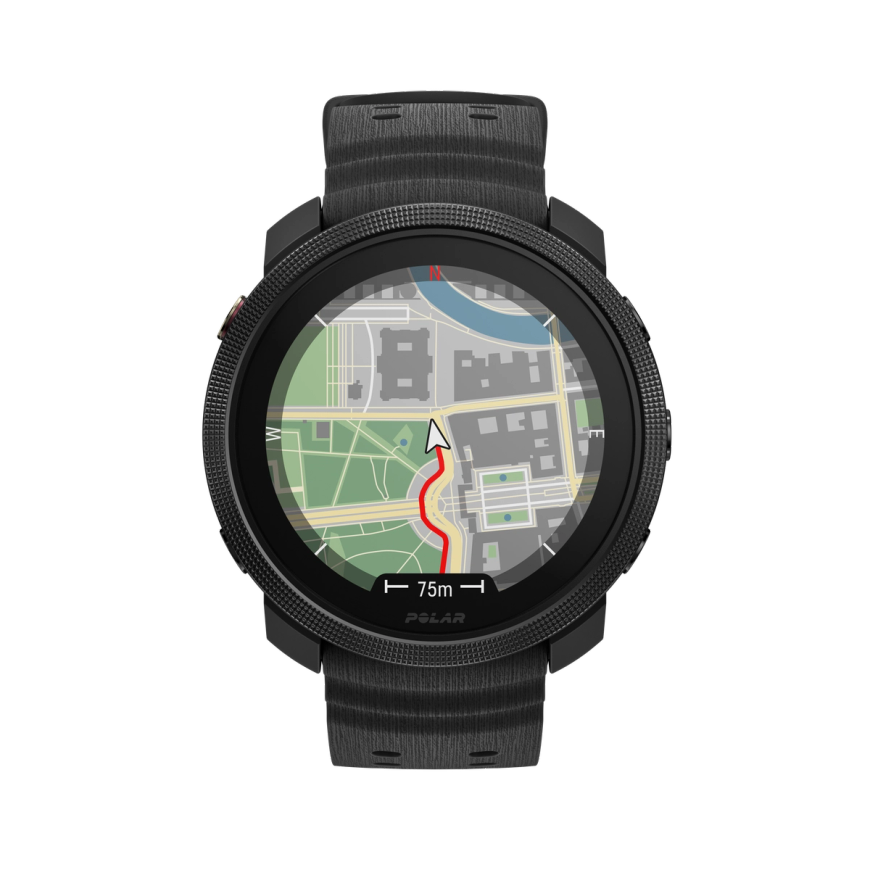
This is where the M3 shines - literally. The 1.28-inch AMOLED panel hits 1,500 nits at peak brightness, making it readable in direct sunlight without shading or squinting. Checking splits on a noon trail run is effortless. The 416 x 416 resolution keeps text sharp and colors vibrant, whether you're reviewing training load charts or navigating with offline maps.
The always-on display option keeps key metrics visible without the raise-to-wake delay. Battery takes a hit - dropping from 7 days to 4-5 days with moderate use - but for workout-focused users, that trade-off makes sense.
Touch response is quick and accurate. Swiping through menus feels fluid, animations are smooth, and the interface never feels sluggish. Button navigation remains faster during workouts, but the touchscreen handles casual browsing well.
Compared to the memory-in-pixel display on the older Vantage M2, this is a generational leap. Polar's transition to AMOLED across their lineup was overdue, and the M3 proves they got it right.
Performance & Features
The Vantage M3 runs identical software to Polar's $749 Grit X2 Pro and $599 Vantage V3. Every training feature, every metric, every recovery tool - all present. This shared platform approach means feature updates (eventually) land on all three watches, and there's no feature gatekeeping to push buyers toward pricier models.
Training Load Pro remains Polar's standout feature. It tracks cardiovascular load, muscular load, and perceived exertion across days and weeks, showing when you're overreaching and when you have capacity for more. Recovery Pro analyzes heart rate variability overnight and delivers a recovery status each morning. These tools provide genuinely actionable guidance for periodized training.
The 170+ sport profiles cover everything from running and cycling to yoga and kayaking. Multisport modes handle triathlons seamlessly. Structured workouts sync from Polar Flow or Komoot. Running power (calculated from wrist, no pod needed) adds another training dimension for those who use it.
Dual-frequency GPS locks on fast - typically under 30 seconds - and tracks accurately through open terrain. Technical singletrack, tight switchbacks, canyon trails: the M3 handles them well, with routes that match reality when reviewed post-workout. Dense urban environments with tall buildings cause occasional wobbles, but nothing worse than the competition.
Offline maps are a genuine differentiator at this price point. Full-color topographic maps with turn-by-turn navigation work without phone connectivity. The Garmin Forerunner 265 at $449 lacks this feature entirely. For trail runners and hikers who venture into areas without cell service, it's valuable.
Where the M3 falls short is everything beyond fitness. No third-party apps. No music storage or streaming. No contactless payments. No voice assistant. Notifications appear but can't be replied to. This feels dated. If you want a smartwatch that happens to track workouts, look at Garmin or Apple. If you want a training tool that happens to show notifications, the M3 delivers.
Health & Fitness
Sensor accuracy is mostly strong but not flawless. The Gen 4 optical heart rate sensor performs well during steady-state efforts - easy runs, zone 2 rides, recovery sessions. Data typically matches chest strap readings within a few BPM.
High-intensity work tells a different story. Interval sessions occasionally register heart rates higher than external monitors show. The sensor sometimes struggles during warm-ups before blood flow stabilizes. Cycling, particularly with arm tension on handlebars, produces the most erratic results. Athletes training by heart rate zones for serious goals should pair with a chest strap for precision.
GPS accuracy impresses. Side-by-side with premium watches from Garmin and Apple, the M3 tracks competitively, occasionally outperforming on technical terrain. Track runs produce clean ovals. Trail runs stick to the correct side of paths.
Swimming is problematic. Distance tracking in pools struggles, particularly with flip turns. Drill recognition is poor. If pool training is a priority, this watch disappoints.
Additional sensors include SpO2 (blood oxygen), skin temperature, barometer (for elevation), and wrist-based ECG for heart rhythm recording. Note that unlike Apple and Garmin watches, Polar's ECG does not include AFib detection–it's designed for general wellness recording rather than medical diagnostics. Sleep Plus Stages tracks sleep timing accurately, though sleep stage breakdowns feel approximate. Nightly Recharge combines sleep and HRV data into a morning recovery score.
Battery Life
Battery performance sits in the competitive middle ground. The claimed 7 days in smartwatch mode and 30 hours with GPS tracking match real-world experience reasonably well.
Moderate users - tracking one 45-minute workout daily with GPS, wearing for sleep, receiving occasional notifications - see 5-6 days between charges. Enable always-on display, and that drops to 4-5 days. Add more GPS hours, and the math changes accordingly.
For a 4-hour marathon or long trail race, expect roughly 20% battery drain. Hourly GPS training consumes 4-6%. Planning a multi-hour adventure means either starting fully charged or carrying a power bank.
Eco mode extends runtime to a claimed 70 hours by disabling features, useful for multi-day backcountry trips where basic tracking beats dead battery.
This battery performance beats the Garmin Forerunner 265 (20 hours GPS) but trails the COROS Pace Pro (38 hours GPS). For most training patterns, it's adequate. Ultra-endurance athletes logging back-to-back multi-hour days should consider alternatives.
Who It's For
Buy the Vantage M3 if you: - Prioritize training tools over smartwatch features - Want premium Polar analytics at a mid-range price - Need offline maps without paying Garmin premium prices - Are upgrading from an older Polar watch - Appreciate data-driven recovery and training load guidance
Skip the Vantage M3 if you: - Expect smartwatch functionality (apps, payments, music, assistant) - Are new to fitness tracking and want something simple - Swim regularly and need accurate pool distance tracking - Are frustrated by companion app quality issues - Want best-in-class heart rate accuracy for interval training
The Verdict
The Polar Vantage M3 delivers premium training features at a mid-range price. The AMOLED display is excellent. GPS accuracy is solid. Training Load Pro and Recovery Pro provide genuinely useful coaching. At $399 with offline maps included, it undercuts similarly-featured Garmin watches while offering more than COROS at a similar price point.
The catches are real. The Polar Flow app feels stuck in 2018. Heart rate accuracy wobbles during high-intensity efforts. Smartwatch features are essentially nonexistent. Pool swimming tracking disappoints. These limitations matter - they push the score down from what the hardware alone would merit.
For serious athletes who view their watch as a training tool first and everything else second, the Vantage M3 is easy to recommend. It's Polar's best value watch and a genuine competitor at this price point. If you're shopping for a running watch that prioritizes depth of training data over lifestyle features, the M3 belongs on your shortlist. Just know what you're getting: excellent fitness, mediocre software, zero smartwatch.
Score: 80/100 - Strong training features and excellent display at a competitive price, held back by a dated companion app, limited smartwatch functionality, and occasional heart rate inconsistencies.