
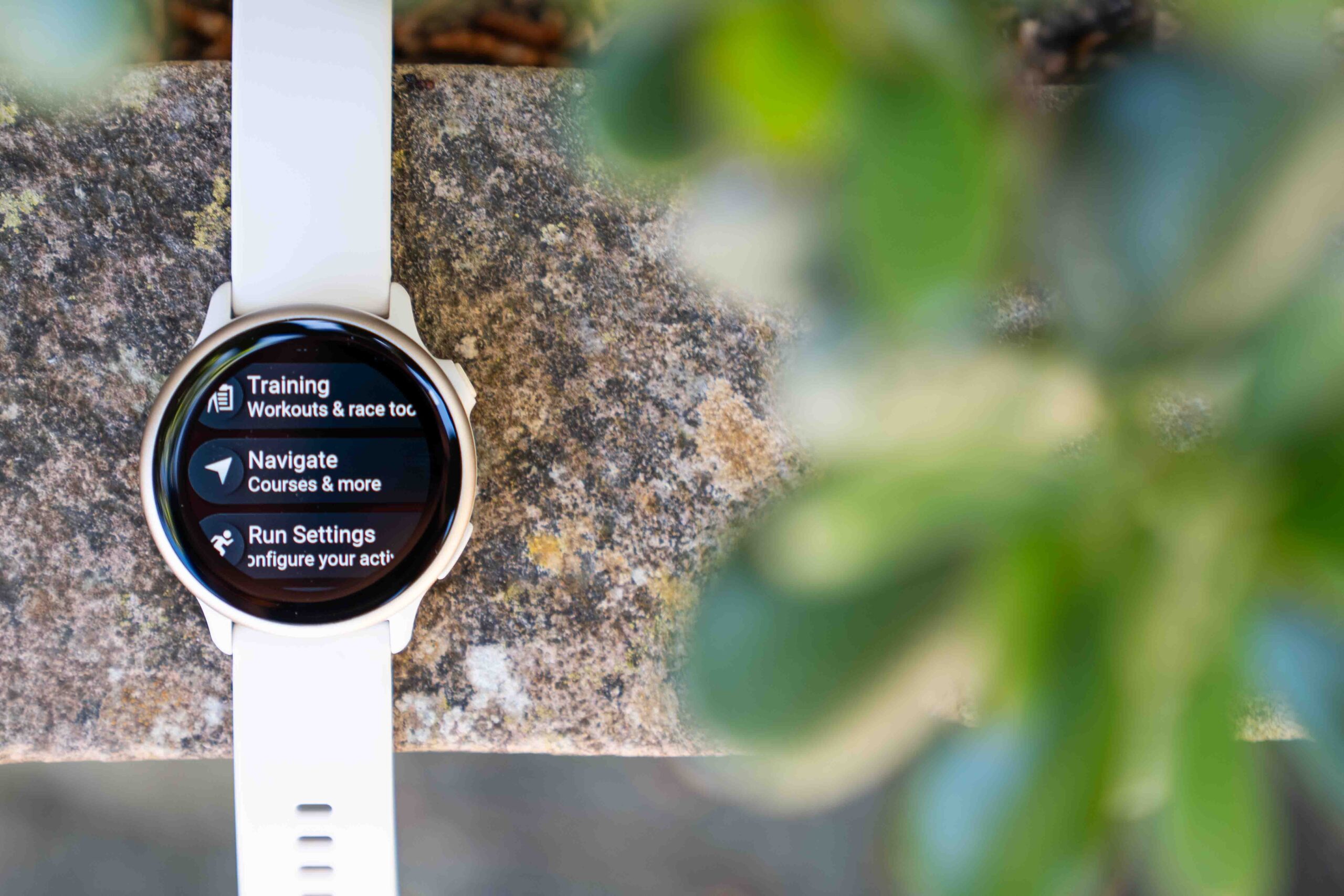
At $299.99, the Garmin Vivoactive 6 has no business being this capable. This 36-gram watch packs PacePro pacing, Running Dynamics, course following, and 80-plus sport modes – features that, until recently, required spending $450 or more on a Forerunner or Venu. After weeks of daily wear across runs, gym sessions, sleep tracking, and the mundane rhythm of notifications, the verdict is clear: the Vivoactive 6 is not a compromised Venu. It is a fitness-first smartwatch that trades a few lifestyle luxuries for training tools most $500 watches would envy.
Design & Build
The Vivoactive 6 is a watch that disappears on your wrist in the best possible way. At 10.9mm thick and 36 grams with the silicone band, it is slightly slimmer than its predecessor and among the lightest GPS-equipped watches in Garmin's current lineup. The fiber-reinforced polymer case with an aluminum bezel feels sturdy without pretending to be a luxury timepiece, and the Corning Gorilla Glass 3 over the display handles daily wear without complaint.
The 42mm case is the only size option, which is a miss for anyone with smaller or particularly large wrists. Two physical buttons flank the right side – an action button up top and a back button below – complementing the touchscreen for navigation. The 20mm quick-release silicone strap is comfortable and easy to swap, though it picks up dust and lint like a magnet.
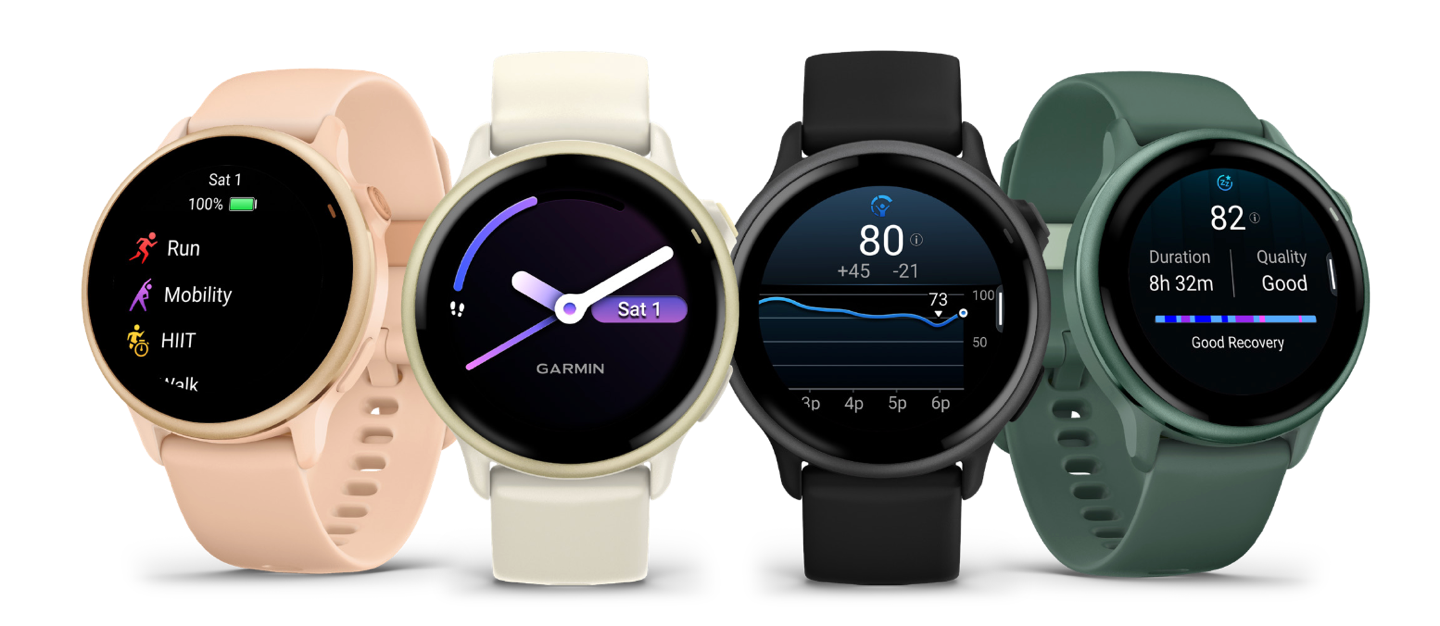
Color options span Black/Slate, Bone/Lunar Gold, Jasper Green, and Pink Dawn – a decent palette that skews toward understated rather than sporty. The overall aesthetic lands somewhere between the Apple Watch SE and Garmin's own Forerunner line: clean, modern, and unobtrusive enough to wear with business casual without drawing stares.
Water resistance sits at 5 ATM (50 meters), covering swimming, showers, and rainy runs without issue. This is not a dive watch, but for the vast majority of fitness use cases, it is more than adequate.
Display
The 1.2-inch AMOLED panel carries over from the Vivoactive 5 with one meaningful upgrade: brightness. Garmin has pushed the display to an estimated 1,500 nits, which translates to genuinely usable outdoor visibility, even in direct sunlight. The 390 x 390 resolution delivers crisp text, clean workout metrics, and vivid watch faces. For a sub-$300 watch, this screen competes with anything in its class and surpasses the Apple Watch SE's display quality.
Always-on display mode is available but comes with a significant battery trade-off, cutting endurance from 11 days down to roughly five. With always-on disabled, the raise-to-wake gesture is responsive and consistent enough that the compromise rarely feels painful during runs or workouts. The AMOLED blacks remain gorgeous, making Garmin's updated UI elements pop with satisfying contrast.
One caveat: indoor brightness at night can feel insufficient for some users. This is a common AMOLED trait at low brightness levels, but it is worth noting if you plan to glance at the watch in a dark bedroom.
Performance & Features
This is where the Vivoactive 6 earns its keep. Garmin has crammed an almost unreasonable number of features into this watch, many of which were previously reserved for the $450-plus Forerunner and Venu lines.
PacePro is the headliner for runners. This grade-adjusted pacing tool creates a dynamic pacing strategy for your route, accounting for elevation changes and delivering real-time guidance to keep you on target. Having PacePro on a $300 watch is genuinely remarkable – it was previously reserved for premium models like the Fenix 6 and Forerunner 945.
Running Dynamics bring cadence, stride length, ground contact time, and vertical oscillation to the wrist via the built-in accelerometer – no accessories needed. Pairing a compatible chest strap or Running Dynamics Pod improves accuracy and adds ground contact time balance, but the wrist-based data is solid enough for tracking form trends over time.
Course following arrives for the first time on a Vivoactive, allowing you to import GPX routes and follow breadcrumb navigation on the watch. It is basic – no full-color maps, no turn-by-turn directions – but for trail runs or exploring new neighborhoods, it gets the job done.
Beyond running, the watch offers 80-plus sport profiles covering cycling, swimming, strength training, yoga, Pilates, HIIT, and more. Daily Suggested Workouts pull from your training history and readiness to recommend sessions, though the walking workout suggestions feel like filler rather than genuine coaching. Garmin Coach adaptive training plans for running, cycling, and strength add structured periodization that most competitors at this price simply do not offer.
Smart features are competent but not exceptional. Garmin Pay handles contactless payments seamlessly. Spotify, Amazon Music, and Deezer support offline downloads to the 8GB of storage (doubled from the VA5), letting you leave your phone behind on runs. Notifications mirror your phone reliably, and per-app filtering lets you block individual apps from buzzing your wrist – a welcome level of control that keeps the notification stream manageable.
What's missing: There is no speaker or microphone, so no wrist calls or voice assistant. There is no ECG or skin temperature sensor, as those remain locked to the Elevate Gen 5 sensor in the Venu 4. And there is no barometric altimeter, meaning floors climbed and real-time elevation data are absent – a notable omission for hikers and anyone who cares about vertical gain accuracy.
The elephant in the room is Garmin Connect+, the $6.99/month subscription service that paywalls newer AI-driven insights and expanded LiveTrack features. Nothing essential is locked behind the paywall today, but Garmin has been transparent that more features will "likely" migrate there. For a watch that otherwise represents outstanding value, the looming subscription tax is a legitimate concern.
Health & Fitness
The Vivoactive 6 uses Garmin's Elevate Gen 4 optical heart rate sensor – not the latest Gen 5 found in the Venu 3 and Venu 4. In practice, the Gen 4 sensor is perfectly adequate for continuous heart rate monitoring, heart rate zones during workouts, and resting heart rate trends. It is not as precise during high-intensity intervals or cold-weather wrist readings as newer optical sensors, but for the target audience of this watch, the gap is academic rather than practical.
Pulse Ox (blood oxygen saturation) tracking is onboard for spot checks and overnight monitoring. Heart rate variability (HRV) status provides a seven-day rolling view of autonomic stress and recovery. Body Battery – Garmin's energy monitoring metric that synthesizes HRV, stress, sleep, and activity – remains one of the most genuinely useful wellness features in any wearable ecosystem. It is the single best answer to "should I push hard today or take it easy?"
Sleep tracking is comprehensive and largely accurate, capturing light, deep, and REM stages with reasonable fidelity. The new Sleep Coach offers personalized recommendations based on your sleep history and next-day schedule. The Smart Wake Alarm monitors your sleep stages and wakes you during a light-sleep window within your preset time range – a feature that works well in concept, though the vibration motor feels a bit aggressive for what should be a gentle nudge.
Stress tracking throughout the day is reliable and integrates with guided breathing and meditation sessions accessible directly from the watch. Women's health tracking covers menstrual cycle and pregnancy monitoring. Morning Reports consolidate overnight data into a digestible daily briefing, though the workout suggestions within them could be more personalized.
The absence of ECG is the most meaningful health gap. If detecting atrial fibrillation or generating clinical-grade heart rhythm data matters to you, the Venu 3 or Apple Watch is the correct choice. For the vast majority of fitness-focused users tracking workouts, recovery, and daily wellness, the Vivoactive 6 covers everything you need.
Battery Life
Garmin claims up to 11 days in smartwatch mode, and real-world usage consistently delivers 8 to 10 days with a mix of daily wear, sleep tracking, notifications, and two to three GPS workouts per week. That is comfortably more than a full week between charges – a luxury that Apple Watch and Galaxy Watch owners can only dream about.
GPS mode runs up to 21 hours, which is more than enough for marathon-length activities. Always-on display mode drops battery life to approximately five days, still respectable for an AMOLED panel. Battery saver mode stretches to 21 days by stripping back features to the essentials.
In the broader landscape, this battery performance is strong but not class-leading. The Amazfit Active 2 claims up to 21 days, and Garmin's own Forerunner 265 squeezes out 13 days. But the Vivoactive 6 outpaces every Apple Watch and Samsung Galaxy Watch by a wide margin, and for most users, charging once a week is the practical threshold where battery anxiety evaporates.
Who It's For
The Vivoactive 6 is built for the fitness enthusiast who wants Garmin's ecosystem depth without Garmin's flagship price. If you run, cycle, hit the gym, or swim regularly – but you are not training for an Ironman or chasing sub-elite race times – this watch gives you 90% of what a Forerunner 265 or Venu 3 delivers at a fraction of the cost. It also earns a spot among the best smartwatches of 2026 and the best budget smartwatches for its outstanding feature-to-price ratio.
It is also an outstanding first Garmin. The improved UI and AMOLED display make the ecosystem far less intimidating than it used to be, and the breadth of sport profiles means you will not outgrow it quickly.
Who Should Skip
If you need ECG monitoring, a barometric altimeter for hiking, or multi-band GPS for trail precision, spend more on the Venu 4 ($549.99) or Forerunner 265. If you want a lifestyle smartwatch with robust app support, phone calls, and voice assistant, the Apple Watch SE 3 or Samsung Galaxy Watch 7 will serve you better. And if you want the largest possible screen, the single 42mm case size may feel cramped.
The Verdict
Score: 84/100 – The Vivoactive 6 delivers exceptional fitness value at $300, trading lifestyle extras for training depth that punches well above its price class.
The Garmin Vivoactive 6 does something rare in the wearable market: it makes you question why anyone would spend $500 or more on a fitness watch. PacePro, Running Dynamics, course following, Body Battery, Garmin Coach, and 80-plus sport profiles – all wrapped in a featherweight, week-long-battery package for $299.99. The compromises are real (no ECG, no altimeter, no wrist calls, older heart rate sensor), but they are precisely the right compromises for the audience this watch serves. Garmin has not made a cheap Venu. It has made a smart, focused fitness tool that happens to cost less than one.
| Category | Weight | Score |
|---|---|---|
| Core Function | 30% | 85 |
| Build Quality | 15% | 78 |
| User Experience | 20% | 80 |
| Value | 20% | 90 |
| Battery | 15% | 82 |