

Garmin has spent years building a reputation on watches that outlast, outtrack, and out-spec the competition. So when the company announced the Venu X1 at $799.99 – matching the Apple Watch Ultra 3 dollar for dollar – the fitness world took notice. This is Garmin's most radical design departure yet: a sleek, 7.9mm-thin smartwatch with a massive 2-inch AMOLED display, sapphire lens, and titanium caseback. It's gorgeous, comfortable, and undeniably premium. But turn on the always-on display, and you're looking at just two days of battery life. For an $800 Garmin watch that also lacks ECG and multi-band GPS, that's a tough pill to swallow. The Venu X1 is a beautiful compromise – emphasis on compromise.
Design & Build
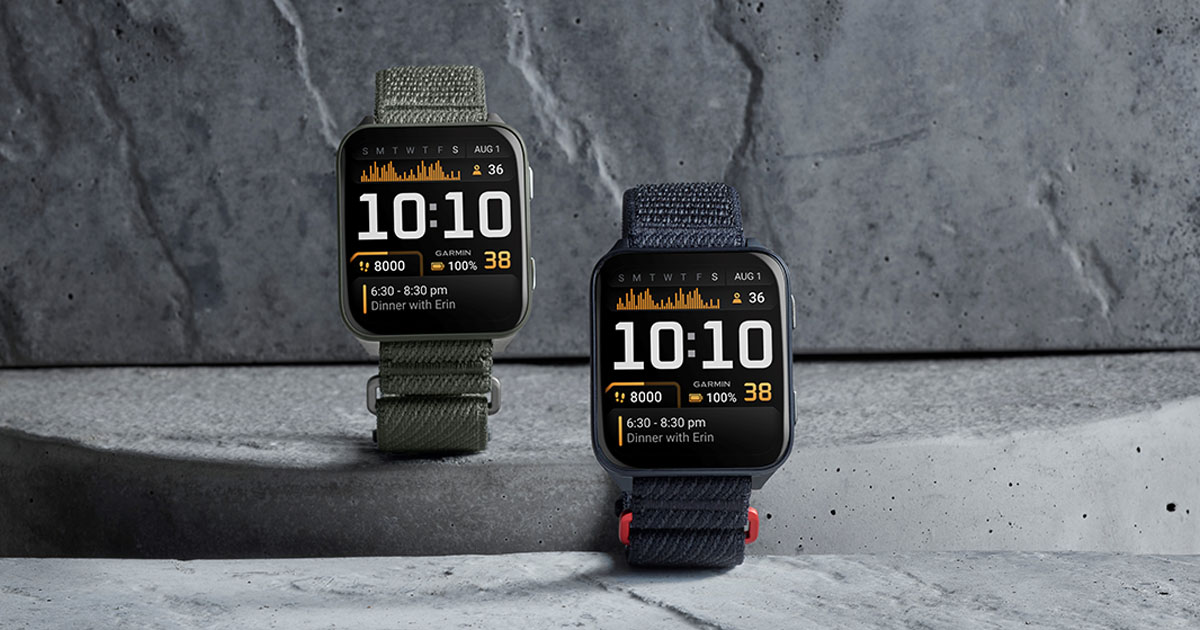
The Venu X1 is a radical departure from Garmin's usual chunky, G-Shock-style aesthetic. At 41mm x 46mm x 7.9mm and weighing just 34 grams (40 grams with the ComfortFit nylon band), this is one of the slimmest, lightest smartwatches on the market. It's thinner than the Apple Watch Ultra 3 (12mm) and roughly 20 grams lighter.
The squircle design sits flush against the wrist with virtually no overhang. The ultra-narrow bezel maximizes screen real estate, and the scratch-resistant sapphire lens feels legitimately premium. The titanium caseback adds durability without weight, while the fiber-reinforced polymer case keeps things light. Garmin offers three colorways: Black with Slate Titanium, Moss with Titanium, and a 2026-exclusive Soft Gold with French Grey nylon strap ($699.99).
The two-button layout is minimal but functional. There's a single button on each side – no digital crown, no five-button Garmin navigation system. It's sleek, but it sacrifices some of the tactile control that makes other Garmin watches so workout-friendly. Mid-workout? You'll miss physical buttons – sweaty fingers and touchscreen swipes don't always cooperate.
Still, this is the best-looking Garmin watch ever made. It doesn't scream "runner's watch." It looks like something you'd wear to a meeting, not just a marathon.
Display
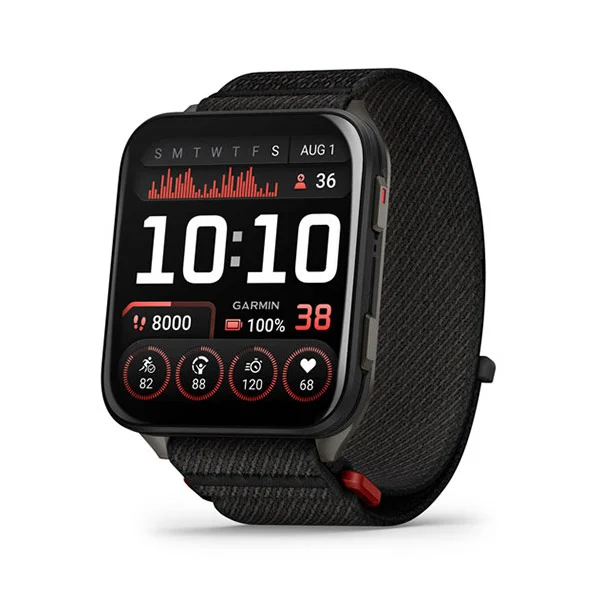
The Venu X1's 2-inch AMOLED display is a showstopper. With a resolution of 448 x 486 pixels, text is crisp, maps are detailed, and workout metrics are easy to read at a glance. The screen is bright enough to remain legible in direct sunlight even at minimum brightness, and the colors pop with the vibrancy you'd expect from a premium AMOLED panel.
The always-on display mode is gorgeous – watch faces remain crisp and colorful even in dimmed AOD mode, without the graying or ghosting you see on cheaper AMOLEDs. But here's the catch: enabling AOD slashes battery life from up to eight days down to just two. That's a 75% reduction in endurance for the convenience of glancing at your wrist. It's the Venu X1's Achilles' heel, and it deserves a closer look.
The edge-to-edge screen design is stunning, but the lack of a physical bezel means you're entirely reliant on touchscreen navigation. Mid-workout swipes can be clunky, especially when your hands are sweaty or gloved. Other Garmin watches with button-heavy interfaces handle this better, but they don't look this good.
Battery Life
Here's the deal-breaker for many Garmin loyalists: the Venu X1 gets up to 8 days of battery life in smartwatch mode, but only up to 2 days with the always-on display enabled. GPS tracking drains it further – expect up to 14 hours with all-systems GNSS, or up to 16 hours in GPS-only mode.
Two days with AOD is not terrible by smartwatch standards. The Apple Watch Ultra 3 manages up to 42 hours. But Garmin users are accustomed to week-long (or longer) battery life. The Fenix 8 can stretch to 29 days. The Forerunner 970 gets 15 days in smartwatch mode. Even the cheaper Venu 4 lasts 12 days.
The Venu X1's battery life is deeply un-Garmin-like. If you turn off AOD, you'll get a more palatable 5-8 days depending on usage. But the whole point of a premium AMOLED display is to enjoy it – and that means keeping it on.
For users coming from an Apple Watch or Samsung Galaxy Watch, two days might feel normal. For Garmin veterans, it's a letdown.
Health & Fitness
The big omission? No ECG at $800. The Venu X1 lacks the metallic bezel contact required to complete an electrocardiogram circuit. The Venu 3, Fenix 7 Pro, Epix Pro, and even the Venu 2 Plus all support ECG. But the ultra-thin design of the Venu X1 made it technically unfeasible. At this price, the absence of ECG is glaring – especially when the Apple Watch SE 3 and Samsung Galaxy Watch Ultra both include it at similar or lower price points.
The Venu X1 features Garmin's Elevate V5 optical heart rate sensor, which uses green, red, and infrared LEDs to track heart rate, SpO2 (blood oxygen), and skin temperature across a wide range of skin tones. The sensor is accurate during workouts and at rest, and it supports 24/7 health monitoring including heart rate variability (HRV), respiration rate, and stress tracking.
Sleep tracking is comprehensive. The watch monitors sleep stages (light, deep, REM), naps, and skin temperature deviations from your baseline. It takes three nights to establish a baseline, but once calibrated, the insights are useful for tracking recovery trends.
Advanced running metrics like VO2 max, Training Load, Endurance Score, and Training Readiness are all present. Running Tolerance (Impact Load) and Running Economy – originally exclusive to the Forerunner 970 – arrived on the Venu X1 via an August 2025 firmware update, narrowing the feature gap with Garmin's pricier models. Still, the Venu series has always made trade-offs to balance fitness and smartwatch features, and the X1 continues that trend.
Performance & Features
The Venu X1 supports over 100 sports and activity profiles, from running and cycling to golf, swimming, and yoga. The watch includes full-color TopoActive offline maps with dynamic round-trip routing – a feature typically found on Garmin's higher-end Fenix and Forerunner models. For outdoor navigation, the watch includes an altimeter, barometer, and three-axis electronic compass.
The built-in LED flashlight is a surprisingly handy addition for early morning or late-night runs. The onboard speaker and microphone allow you to take phone calls directly from the watch, and Garmin Pay (NFC) supports contactless payments at participating retailers.
Music storage tops out at 32GB, which is shared with maps and activity history. You can download playlists from Spotify, Deezer, or Amazon Music for phone-free listening. Pair Bluetooth headphones, and you're set for a run without your phone.
GPS accuracy is solid – in open conditions, the watch tracks within 0.01 miles of multi-band-equipped devices like the Forerunner 970. Garmin's single-band GPS is accurate when satellite visibility is strong. But in dense tree cover or urban canyons, the lack of multi-band GPS becomes noticeable. For casual runners and gym-goers, it's fine. For marathoners chasing precise splits in tricky environments, it's a limitation.
The Garmin Connect app remains the gold standard for fitness data visualization. Training Readiness, Endurance Score, Hill Score, VO2 max, and Body Battery all provide actionable insights. The ecosystem is mature, data-rich, and miles ahead of Apple's Fitness app in terms of depth.
But the Venu X1 doesn't support third-party apps the way Wear OS or watchOS do. There's no cellular connectivity, no robust app store, and no Google Maps integration. For an $800 smartwatch, that's a significant competitive gap versus Apple and Samsung. It's a Garmin through and through – powerful for fitness, limited for everything else.
Who It's For / Who Should Skip
Buy the Venu X1 if: - You want a Garmin watch that looks like a smartwatch, not a trail GPS - You're okay with charging every 2-5 days (depending on AOD usage) - You prioritize design, comfort, and a gorgeous display over multi-week battery life - You're a multi-sport athlete who wants offline maps, advanced training metrics, and Garmin's ecosystem - You're an Android user looking for a genuine Apple Watch Ultra alternative
Skip the Venu X1 if: - You demand multi-band GPS for precise tracking in difficult environments - ECG is a must-have feature for you - You want traditional Garmin battery life (1+ weeks with AOD) - You're a hardcore runner or triathlete who needs every advanced metric – the Forerunner 970 ($749) or Fenix 8 ($999) are better choices
For buyers who want Garmin's fitness ecosystem in a more affordable and longer-lasting package, the Vivoactive 6 and Venu 4 both deliver excellent value. And if style is a top priority but your budget is tighter, the Garmin Lily 2 Active is worth a look for women seeking a fashionable fitness watch.
The Verdict
The Garmin Venu X1 is a statement piece. It's a bold, beautiful smartwatch that proves Garmin can compete on design without sacrificing core fitness features. The 2-inch AMOLED display is stunning, the build quality is exceptional, and the comfort is unmatched in Garmin's lineup.
But at $799.99, the compromises sting. No ECG. No multi-band GPS. Battery life that's shockingly short by Garmin standards. At the same price as the Apple Watch Ultra 3 – which includes ECG, cellular, and dual-frequency GPS – the omissions are hard to overlook. The Venu X1 is a sports watch in a beautiful disguise – and for a particular type of user, it will be nearly perfect. But it's not the slam-dunk Apple Watch Ultra competitor Garmin hoped it would be. For a broader view of where it stands, see our best smartwatches of 2026 guide.
Score: 76/100
| Category | Weight | Score | Weighted |
|---|---|---|---|
| Core Function | 30% | 82 | 24.6 |
| Build Quality | 15% | 95 | 14.3 |
| User Experience | 20% | 72 | 14.4 |
| Value | 20% | 50 | 10.0 |
| Battery | 15% | 85 | 12.8 |
Total: 76/100 – Good, recommended with caveats. The Venu X1 dazzles with design and build quality, but its $800 price tag demands features – like ECG and multi-band GPS – that simply aren't here.