
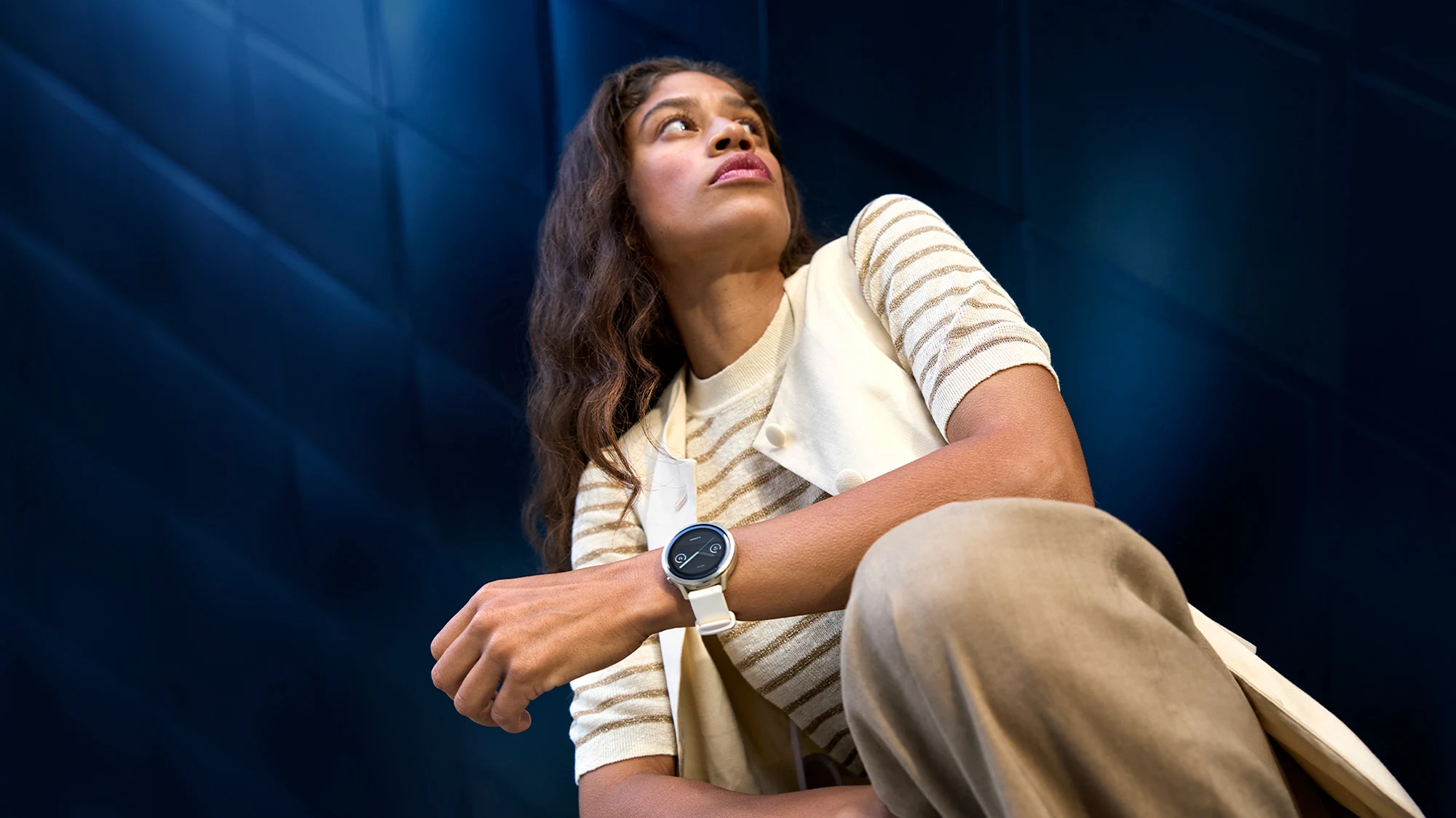
The Garmin Venu 4 arrives with a bold proposition: pay $550 for a smartwatch when the Apple Watch Series 11 costs $399 and the Samsung Galaxy Watch 8 starts at $349. Garmin hiked the price by $100 over the Venu 3, betting that serious fitness enthusiasts will pay extra for multi-band GPS, a full metal case, and training insights that Apple and Samsung simply cannot match.
Garmin was not bluffing. The Venu 4 delivers on its promises with surgical precision: 12 days of battery life, pinpoint-accurate dual-frequency GPS, and health metrics sophisticated enough to replace a sports scientist. But there is a catch – most people do not need this much watch, and at this price point, Garmin has backed itself into a corner where only dedicated athletes will find the premium worthwhile.
The Venu 4 is built for serious athletes who need multi-day battery life, pinpoint GPS accuracy, and recovery analytics. If that does not describe you, the $550 price premium over competitors makes little sense. Casual exercisers should look at the Venu 3 or Samsung Galaxy Watch 8 ($349). Apple Watch Series 11 ($399) wins for app ecosystem and iOS integration.
Design and Build
Garmin ditched the fiber-reinforced polymer case of the Venu 3 and went all-in on stainless steel. The result is immediately noticeable – the Venu 4 feels like a $550 watch should. The 45mm version weighs 56 grams with the silicone strap, noticeably heavier than the Venu 3 at 46 grams, but the added heft reads as quality rather than burden.
The steel bezel catches light beautifully, transforming what used to be Garmin's sporty outdoor aesthetic into something you would wear to dinner without hesitation. This is the first Garmin that does not scream "I just climbed a mountain" – it whispers "I could if I wanted to."
Garmin added a built-in LED flashlight to the top edge of the case, activated by holding the bottom physical button. The dual-mode white and red light is genuinely useful during predawn runs and nighttime dog walks. The brightness settings are adjustable, and the strobe mode exists for emergency situations.
Display
The 1.4-inch AMOLED display on the 45mm model delivers 454 x 454 resolution with vibrant colors and deep blacks. Garmin boosted brightness over the Venu 3, and it shows – the screen remains readable in direct sunlight, a persistent weakness in previous AMOLED Garmins. Always-on display drains battery faster (4-5 days versus 12), but unlike Apple Watch, always-on is actually optional rather than mandatory.
The touchscreen responds instantly, and Garmin's button-plus-touch navigation feels intuitive after the first day. Two physical buttons on the right side handle primary functions: top for activities, bottom for the flashlight and back navigation.
Garmin's interface is not as polished as Apple's or Samsung's, and that is immediately obvious. Transitions occasionally stutter, and the visual design favors function over aesthetics. But every swipe reveals actionable data – Body Battery, training readiness, sleep quality, HRV status – rather than beautifully animated but sometimes shallow health summaries.
Battery Life
This is where Garmin obliterates the competition. The Venu 4 delivers up to 12 days of battery life in smartwatch mode with daily workouts, sleep tracking, and moderate notification use. With always-on display enabled, battery life drops to 4-5 days – still crushing Apple Watch's 18-24 hours and Samsung Galaxy Watch 8's 1-2 days.
GPS mode is rated for up to 20 hours of continuous tracking in GPS-only mode, dropping to about 17 hours with dual-band GPS enabled. Multi-day ultras are feasible without portable chargers – a non-starter with Apple Watch.
Charging takes about 60 minutes from empty to full using Garmin's proprietary cable. The lack of Qi wireless charging is a minor annoyance, but when you are charging every 10-12 days instead of nightly, it becomes a non-issue.
Performance and Features
Smart features on the Venu 4 cover the basics without pretending to replace your phone. There is no LTE connectivity – the Venu 4 is Bluetooth-only, a puzzling omission at this price point when competitors offer cellular options. You get notifications (iOS and Android compatible), call handling via built-in mic and speaker, Garmin Pay contactless payments, and onboard music storage with Spotify support. YouTube Music support requires downloading from Connect IQ, which may be less seamless than native integration.
The dual-band GPS (a key $100 premium feature) locks satellites in seconds and tracks routes with accuracy that makes single-band systems look amateur. Heart rate tracking from the Elevate Gen 5 optical sensor is reliable across varied conditions, matching chest-strap readings within a few BPM during interval training. Occasional odd readings crept in during high-intensity intervals, but overall accuracy surpasses what wrist-based sensors typically deliver.
The sensor also handles ECG measurements, SpO2 monitoring, and skin temperature tracking for women's health features.
The training suite separates Venu 4 from lifestyle competitors. Training Readiness scores your recovery state each morning using HRV, sleep quality, stress, and recent training load. Training Status tracks whether you are productive, peaking, strained, or overreaching based on weeks of data. These are legitimately useful tools for avoiding overtraining and optimizing performance.
Body Battery remains one of Garmin's killer features. The algorithm tracks your energy reserves throughout the day, rising during rest and falling during activity and stress. When Body Battery dips below 20, pushing through workouts invariably backfires with poor recovery. It is like having a coach who actually knows when to say "take a rest day."
The new Lifestyle Logging feature lets you tag daily choices – caffeine intake, alcohol, heavy meals, late nights – and correlates them with health metrics. Once about a week of data accumulates, the connection between afternoon coffee and demolished sleep quality becomes unmistakable.
Health and Fitness
Sleep tracking on the Venu 4 goes beyond basic stage breakdowns. Garmin provides a sleep score, sleep stages (light, deep, REM), HRV status during sleep, respiratory rate, and SpO2 readings. The sleep coaching feature analyzes your circadian rhythm and activity history to recommend personalized sleep duration targets.
Nap detection works automatically, adding any sleep period under three hours to your daily totals. This sounds minor until you realize how much a 30-minute power nap impacts your afternoon recovery and training readiness score.
HRV Status tracking runs continuously, establishing your baseline over weeks and flagging deviations. An unbalanced HRV can signal illness, overtraining, or insufficient recovery – critical information for athletes trying to avoid injury.
The Venu 4 supports 80+ preloaded sports apps covering everything from running and cycling to pickleball and sailing. Each profile captures sport-specific metrics: running dynamics (cadence, stride length, ground contact time), cycling power zones, swim stroke analysis. The depth of data available after each workout dwarfs what Apple Watch provides.
The Race Calendar and Primary Race widgets shine for endurance athletes. Set a goal race, and Garmin generates training plans with daily workout suggestions tailored to your fitness level and time until race day. Daily suggestions adapt based on recovery status and training load – if you are stressed or under-recovered, Garmin prescribes easier workouts automatically.
Who It Is For
Buy the Venu 4 if:
- You are training for races and need advanced metrics like training load, VO2 max, and recovery time
- You want multi-day battery life and refuse to charge nightly
- You value GPS accuracy and train outdoors frequently
- You want cross-platform compatibility (works with iPhone and Android)
Skip the Venu 4 if:
- You prioritize smart features and app ecosystem over fitness depth – buy Apple Watch Series 11
- You need LTE connectivity for phone-free operation
- You want the most polished interface and seamless iOS integration – Apple wins
- You are a casual exerciser who does not need training analytics – save money with Venu 3 or Samsung Galaxy Watch 8
- You are on a budget – at $550, the Venu 4 costs $200 more than Samsung Galaxy Watch 8 and there are compelling alternatives
The Verdict
Score: 82/100 – The Garmin Venu 4 is the most polished smartwatch-styled fitness tracker Garmin has ever produced, but the $100 price hike over Venu 3 means it is best suited for serious athletes who will actually use its advanced training tools.
The Venu 4 successfully bridges the gap between lifestyle wearable and serious sports tool, adding a premium stainless steel build, brighter AMOLED display, and dual-frequency GPS to an already formidable health tracking platform. For serious athletes who live in Garmin Connect and train with purpose, the premium buys training tools Apple and Samsung simply do not offer – and the 12-day battery life alone justifies the cost.
For casual fitness enthusiasts who want a nice-looking watch with good tracking, the Venu 4 is overkill. The Apple Watch integrates better with iOS, Samsung works more seamlessly with Android, and both cost significantly less while covering 90% of what most people actually use.
Garmin built an exceptional product and priced it for athletes who know exactly why they need it. If you are that person, the Venu 4 will not disappoint.
| Category | Score | Weight | Rationale |
|---|---|---|---|
| Core Function | 27/30 | 30% | Elite fitness tracking, dual-band GPS, comprehensive training metrics; minor HR sensor quirks during HIIT |
| Build Quality | 13/15 | 15% | Full stainless steel construction, 5 ATM water resistance; slightly heavy for sleep |
| User Experience | 14/20 | 20% | Deep fitness app, but no LTE, limited smart features, reduced physical buttons |
| Value | 14/20 | 20% | $550 is steep against $399 Apple Watch Series 11; justified only for fitness-focused users |
| Battery | 14/15 | 15% | Outstanding 12-day battery life; slow charging is the only drawback |
| Total | 82/100 | Excellent fitness tracker in premium clothing, but overpriced for casual users |