
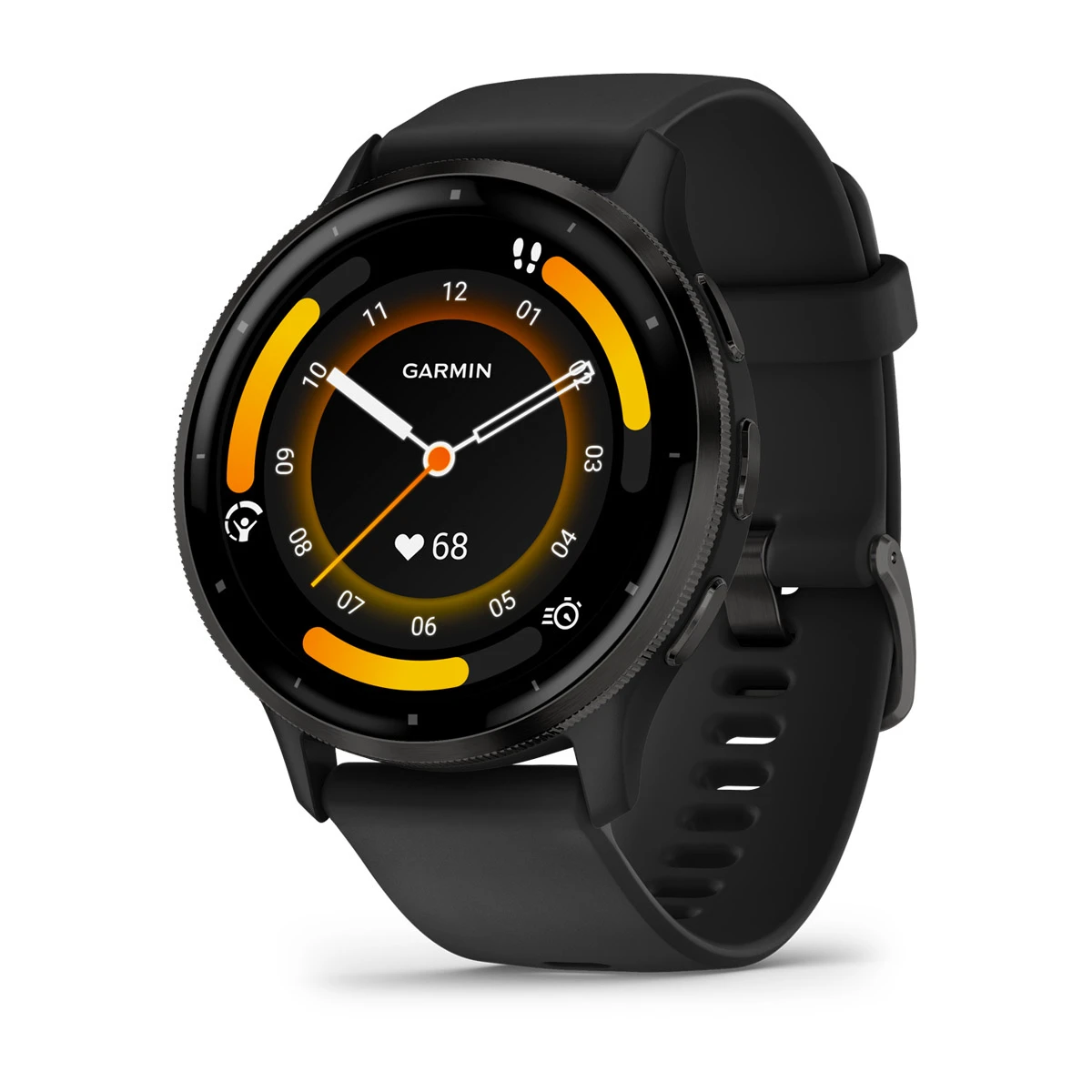
The Garmin Venu 3 is the best smartwatch Garmin has ever made for people who don't want a sports watch. That's both its greatest strength and its most important limitation. With a brilliant AMOLED display, built-in speaker and microphone, sleep coaching and nap detection, and battery life that embarrasses the Apple Watch and Galaxy Watch, the Venu 3 is a genuinely compelling daily driver. But if you're training for a marathon or chasing a triathlon PR, you'll hit its ceiling faster than you'd expect from something wearing a Garmin logo.
Launched in August 2023 at $449.99 and now regularly available around $349.99, the Venu 3 occupies an unusual space. It borrows features from Garmin's premium lineup – Body Battery, HRV monitoring, ECG – while wrapping them in a package designed for the gym-and-brunch crowd rather than the 5 AM interval session crowd. That positioning is deliberate, and it makes the Venu 3 either the perfect Garmin or the wrong one, depending on what you need.
Design and Build
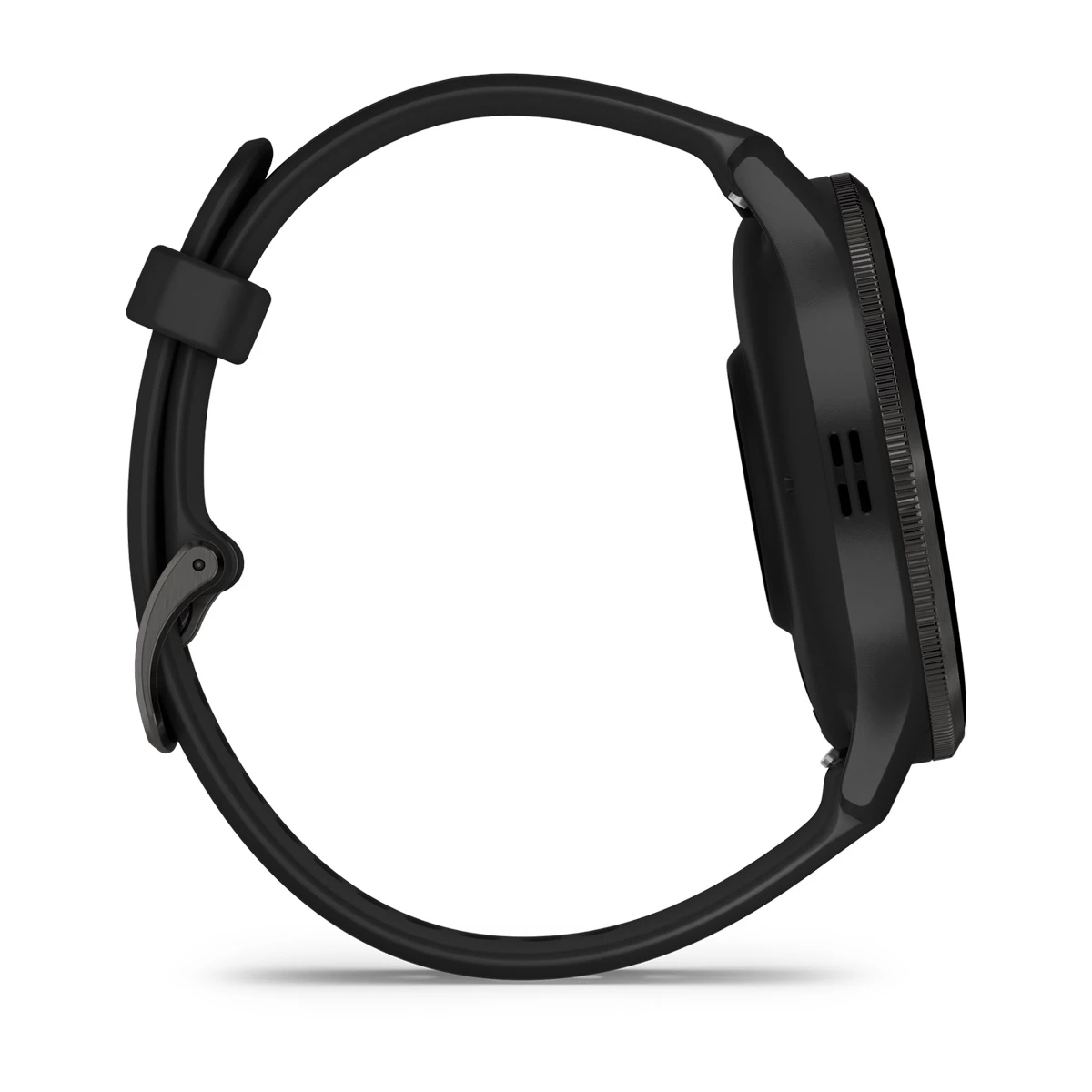
The Venu 3 is a good-looking watch. The 45mm case (a 41mm Venu 3S is also available for smaller wrists) uses a fiber-reinforced polymer body with a stainless steel bezel that gives it a more refined look than most Garmin watches. At approximately 46 grams with the included silicone band, it sits comfortably on the wrist all day and overnight for sleep tracking without feeling bulky. For context, that's lighter than a Samsung Galaxy Watch 8 Classic (59g) and comparable to an Apple Watch Series 10 (29.3-41.7g depending on size and material).
The three-button layout on the right side works well in practice. The top button opens a quick menu of workouts and apps, the middle accesses recent apps, and the bottom serves as a back button. Long presses on each trigger additional features like the voice assistant and settings. It's a sensible system that supplements the touchscreen nicely, especially during sweaty workouts when wet fingers make tapping unreliable.
Build quality is solid. The Corning Gorilla Glass 3 lens resists everyday scratches, and the 5 ATM water resistance (rated to 50 meters) means you can swim, shower, and get caught in downpours without worry. The silicone band is comfortable for extended wear, though the quick-release system makes swapping to a leather or nylon option easy for dressier occasions.
Display
The 1.4-inch AMOLED touchscreen with 454 x 454 resolution is, simply put, one of the best displays on any Garmin watch. Colors pop with rich saturation, text is razor-sharp, and brightness is sufficient for outdoor readability even in direct sunlight. It matches the resolution of the much pricier Fenix 8 AMOLED (47mm), with both delivering 454 x 454 pixels on a 1.4-inch panel.
The always-on display mode is a welcome addition, though it comes at a significant battery cost (see Battery Life below). The automatic brightness sensor adjusts well to changing conditions, and the gesture-based raise-to-wake is responsive enough that most users won't miss always-on mode if they turn it off.
Compared to the transflective MIP displays found on Garmin's Forerunner and Instinct lines, the AMOLED panel makes health metrics, workout data, and notification text dramatically easier to read. It's the kind of display that makes the watch feel like a modern consumer device rather than a niche piece of fitness equipment.
Performance and Features
The Venu 3 runs Garmin's proprietary software rather than Wear OS, and that decision carries both advantages and trade-offs. On the plus side, it's fast, stable, and doesn't drain the battery the way a full smartwatch OS would. On the minus side, the third-party app ecosystem through Connect IQ is severely limited compared to what you'll find on an Apple Watch or Galaxy Watch – no Uber, no WhatsApp, no Google Maps on the wrist.
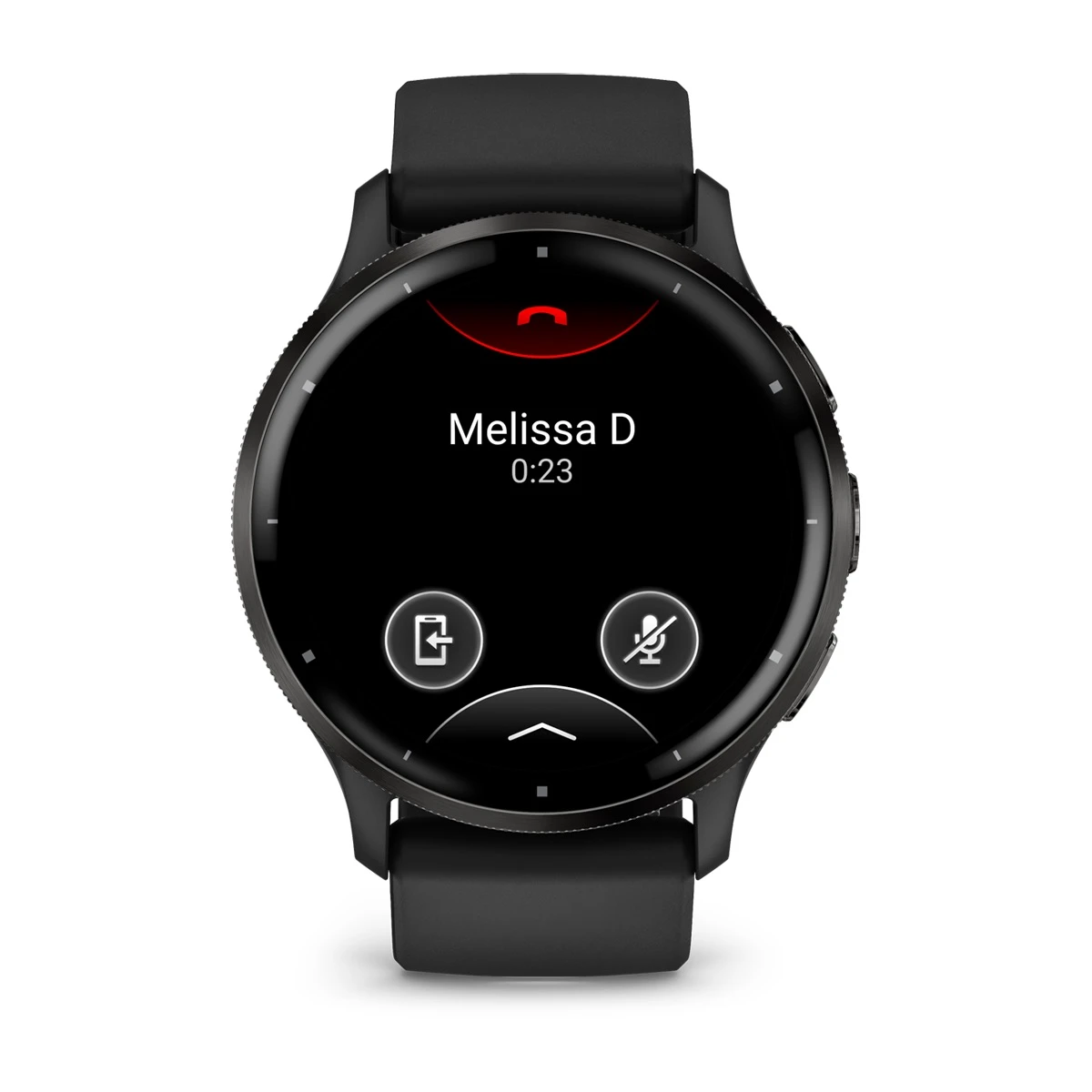
The built-in speaker and microphone transform the Venu 3 from a fitness tracker into a genuine smartwatch. Bluetooth calling works surprisingly well – you can answer calls directly from your wrist, and the audio quality is clear enough for short conversations. Voice assistant support connects to Siri on iPhone or Google Assistant on Android, handling basic commands like setting timers, checking weather, and controlling smart home devices.
Music storage is generous at 8GB of internal memory, with roughly 4-5GB available for songs after the OS and apps – enough for several hundred tracks at typical streaming quality. Spotify, Amazon Music, and Deezer all support offline playlists, making the Venu 3 a legitimate standalone music player during runs or gym sessions. Garmin Pay rounds out the smart features with NFC-based contactless payments at supported terminals.
Where the Venu 3 stumbles is in the depth of its athletic features. There are over 30 preloaded sport modes covering everything from running and swimming to pickleball and HIIT, and animated on-screen workouts are a nice touch for gym sessions. A firmware update added wrist-based running dynamics (ground contact time, vertical oscillation, stride length, vertical ratio) and running power, bringing it closer to the Forerunner line. But the advanced training tools are where the gap remains: you won't find training load, training readiness, or race predictor here – all features available on the $449.99 Forerunner 265. Cyclists get power meter support – an upgrade from the Venu 2 – but the overall training ecosystem can't match the Forerunner 265.
Health and Fitness Tracking
Health monitoring is where the Venu 3 earns its keep. The Elevate V5 optical heart rate sensor is Garmin's latest, and the accuracy is impressive. Wrist-based heart rate tracks within 1-2 BPM of a chest strap during steady-state activities, with only minor lag during rapid intensity changes. For a wrist sensor, this is about as good as it gets.
The sleep tracking suite is the Venu 3's headline feature. Sleep Coach provides personalized recommendations based on your recent sleep patterns, recovery needs, and upcoming activity. It tells you when to go to bed, how much sleep you need, and rates the quality of what you got. The automatic nap detection is a genuine first for Garmin – doze off on the couch for 20 minutes and the watch logs it, adjusting your Body Battery and recovery estimates accordingly. Some sleep stage classification can be slightly off, occasionally logging light wakefulness as sleep, but the overall trend data is reliable and actionable.
Body Battery remains one of Garmin's most intuitive wellness features. It synthesizes heart rate variability, stress, sleep quality, and activity levels into a simple 0-100 energy score that genuinely reflects how you feel. After months of use, the correlation between low Body Battery scores and feeling run down is remarkably consistent.
HRV status tracking provides a rolling baseline of heart rate variability, flagging when your autonomic nervous system is stressed. Combined with the stress tracking widget and guided breathing exercises, the Venu 3 builds a comprehensive picture of daily wellness that few competitors match outside of dedicated health bands like the Whoop. For more watches with strong health features, see our best health monitoring watches guide.
SpO2 (blood oxygen saturation) monitoring runs continuously during sleep and on-demand during the day. Running it 24/7 does impact battery life noticeably, so most users will want to stick with overnight-only mode. The ECG app, which received FDA clearance in the US (and has since expanded to the EU and Australia), offers 30-second atrial fibrillation detection readings. It's not continuous monitoring, but it's a meaningful health screening tool that adds real value.
The skin temperature sensor rounds out the health suite, providing relative temperature trend data that's useful for spotting early signs of illness or tracking menstrual cycle patterns.
GPS and Outdoor Performance
The Venu 3 uses a single-band GPS chipset with support for GPS, GLONASS, and Galileo – no multi-band (dual-frequency) GPS, which you do get on the Fenix 8 and the Forerunner 265. In theory, that should mean inferior positioning accuracy.
In practice, the results are surprisingly close to multi-band performance. Tracks through open terrain are near-identical to those recorded simultaneously on multi-band watches, and even in moderately challenging urban environments with tall buildings, the Venu 3 holds its own. Dense tree canopy and deep urban canyons will expose the gap, but for the typical Venu 3 user – running neighborhood loops, cycling on roads, hiking popular trails – the GPS accuracy is more than adequate.
First fix times are quick, usually under 10 seconds in open sky, and the watch maintains a reliable satellite lock throughout activities. It's not the GPS engine you'd choose for backcountry navigation, but it handles recreational outdoor use confidently.
Battery Life
Battery life is one of the Venu 3's strongest selling points. Garmin rates the 45mm model at up to 14 days in smartwatch mode, and in daily use with notifications, continuous heart rate monitoring, and a couple of GPS activities per week, 10-12 days is a realistic expectation. That is a transformative difference from the 1-2 day battery life of an Apple Watch Series 11 or Galaxy Watch.
In GPS-only mode, the watch delivers up to 26 hours – enough for ultramarathon distances, though the lack of advanced training tools makes that a somewhat academic advantage. GPS with music streaming cuts that to up to 11 hours, still generous by smartwatch standards. Battery saver mode extends standby to a rated 26 days.
Charging is handled through Garmin's proprietary cable, reaching 80% in roughly an hour. A quick 10-minute charge recovers enough juice for a tracked workout, which is handy when you've forgotten to charge the night before.
The always-on display is the biggest battery variable. Enabling it drops real-world endurance from 10-12 days to around 5 days. That's still impressive compared to the competition, but it's worth knowing the trade-off before you enable it.
Who It's For
The Garmin Venu 3 is ideal for the health-conscious professional who wants deep wellness insights without the data overload of a Forerunner or Fenix. If you care about sleep quality, stress management, daily energy levels, and general fitness tracking – and you want a watch that looks good doing it – the Venu 3 delivers. The speaker and microphone make it a genuine smartwatch replacement for basic tasks, and the battery life means you'll actually wear it to bed for sleep tracking instead of putting it on the charger every night.
It's also a standout option for wheelchair users. The Venu 3's dedicated push tracking – including push count, push rate, and distance – along with handcycle sport modes, provides meaningful fitness data that most smartwatches simply don't offer. Garmin remains one of the few companies actively developing accessibility features in the wearable space.
Who Should Skip
If you're a serious runner, cyclist, or triathlete, the Garmin Forerunner 265 is the better buy at $449.99. It offers training readiness, training load, race predictor, and multi-band GPS – the advanced training ecosystem the Venu 3 lacks. While the Venu 3 does have running dynamics and running power, the Forerunner 265 integrates them into a deeper platform with suggested workouts and performance insights. The Forerunner 265 trades the speaker, microphone, and some of the lifestyle polish, but for goal-oriented athletes, those are easy concessions.
If you live inside the Apple or Samsung ecosystem and want maximum app compatibility, the Venu 3's limited Connect IQ app store will feel restrictive. For ecosystem integration, an Apple Watch Series 10 or Samsung Galaxy Watch 7 is simply more capable. Garmin's own Vivoactive 5 offers a similar lifestyle focus at a lower price, and the newer Venu 4 addresses some of the Venu 3's shortcomings. You can also browse our best smartwatches guide for a wider comparison, including the Google Pixel Watch 4.
The Verdict
Score: 82/100
The Garmin Venu 3 is the most polished lifestyle smartwatch Garmin has ever produced. It combines a gorgeous AMOLED display, best-in-class battery life, and genuinely useful health features into a package that looks good enough for the office and tough enough for the gym. The sleep coaching suite alone sets it apart from most competitors, and the addition of ECG, Bluetooth calling, and music storage makes it feel like a complete daily companion rather than a single-purpose fitness tracker.
Its limitations are real but predictable. The sport tracking is broad but shallow, the app ecosystem lags behind Wear OS and watchOS, and the original $449.99 MSRP asked a lot when the Forerunner 265 offers deeper athletic tools at the same price. At the now-common $349 sale price, the value proposition tightens considerably.
For the right buyer – someone who wants Garmin's health expertise without the hardcore athlete orientation – the Venu 3 is an excellent choice that very few watches in its class can match.
| Category | Score | Weight | Weighted |
|---|---|---|---|
| Core Function | 83 | 30% | 24.9 |
| Build Quality | 82 | 15% | 12.3 |
| User Experience | 80 | 20% | 16.0 |
| Value | 78 | 20% | 15.6 |
| Battery | 90 | 15% | 13.5 |
| Total | 82.3 |