
Let me be direct: the Garmin Forerunner 970 is the most capable running watch I've ever tested. It combines the premium hardware of Garmin's flagship Fenix line with the focused training tools that made the Forerunner series legendary among endurance athletes. But that capability comes at a cost – $749 to be exact – and there are compromises that serious buyers need to understand before committing.
If you're a dedicated runner or triathlete who demands the best GPS accuracy, the most comprehensive training metrics, and now wants health features like ECG without jumping to the heavier Fenix 8, the Forerunner 970 is the clear choice. For everyone else, the math gets more complicated.
Design & Build
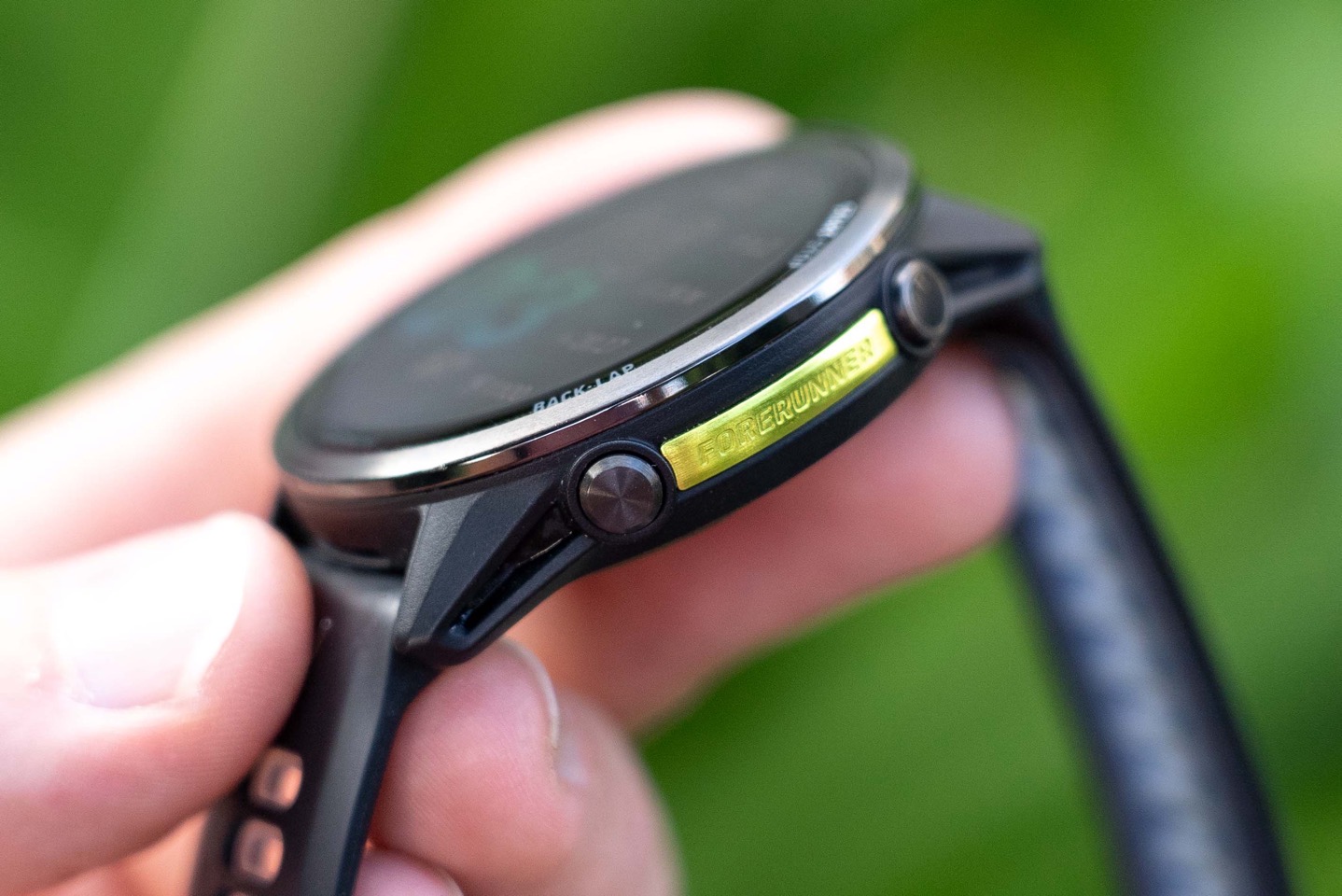
Garmin has finally brought flagship materials to the Forerunner line, and the difference is immediately apparent. The 47mm case features a titanium bezel that feels genuinely premium against your wrist, while the sapphire crystal lens offers scratch resistance that runners tackling technical trails will appreciate over months and years of use.
At 56 grams, the Forerunner 970 achieves something remarkable: it packs more features than ever while remaining light enough for marathon pace work and comfortable enough for sleep tracking. The watch sits flush against the wrist without the top-heavy wobble that plagues some competitors.
The built-in LED flashlight – a first for the Forerunner series – initially seemed like a gimmick borrowed from the Fenix line. After several pre-dawn runs and late-night finishes, I've completely changed my opinion. It's genuinely useful for finding your car keys in a dark parking lot, signaling to drivers at crosswalks, or navigating an unlit trail section. The integration feels natural rather than forced.
New speaker and microphone support means you can take Bluetooth calls directly from the watch. For training purposes, this matters less than you'd think, but having the option during a lunch run when you're expecting an important call adds practical value.
Display
The 1.4-inch AMOLED display with 454x454 resolution is simply stunning. Garmin claims this is their brightest AMOLED panel ever produced, and real-world testing confirms it. Mid-day runs under direct sunlight – traditionally the weakness of AMOLED technology – showed excellent visibility. I never struggled to read pace, heart rate, or navigation cues regardless of lighting conditions.
The sapphire crystal covering eliminates the anxiety of accidentally scraping your watch against a wall or rock. After weeks of testing, my unit shows zero scratches despite regular trail running and gym use.
Color reproduction on the topographic maps is excellent, making route visualization genuinely useful rather than a novelty feature. The always-on display option works well for quick glances, though you'll sacrifice some battery life to keep it enabled.
Performance & Features
The Forerunner 970 runs on Garmin's latest multi-band GNSS chipset, and the GPS accuracy is the best I've measured on any wrist-worn device. On a verified 2-mile course, the watch recorded exactly 1.99 miles – essentially perfect. Trail runs with heavy tree cover showed consistent tracking without the signal dropouts that plagued earlier generations.
Full-color TopoActive maps with on-device route editing represent a major workflow improvement. You can adjust your planned route directly on the watch when conditions change, rather than pulling out your phone. However, map panning and zooming suffers from noticeable lag – often 5-15 seconds to respond to inputs. This is frustrating when you need quick navigation decisions.
The training feature set remains unmatched in the industry. Training Load, Training Status, Recovery Time, Race Predictor, Daily Suggested Workouts, Hill Score, Endurance Score – the list goes on. New to this generation is Running Tolerance, which analyzes your training history to recommend maximum weekly mileage and helps prevent overtraining injuries.
The most significant software additions – Running Economy and Step Speed Loss metrics – require purchasing the $169.99 HRM 600 chest strap accessory. These features provide valuable insight into fatigue during long efforts, but the total system cost approaches $920. That's a meaningful asterisk on the headline features.
Launch software quality was disappointing. Garmin released over 30 bug fixes in the first months after release, addressing issues with workout syncing, widget crashes, and sensor anomalies. Current firmware is stable, but early adopters experienced frustration.
Health & Fitness
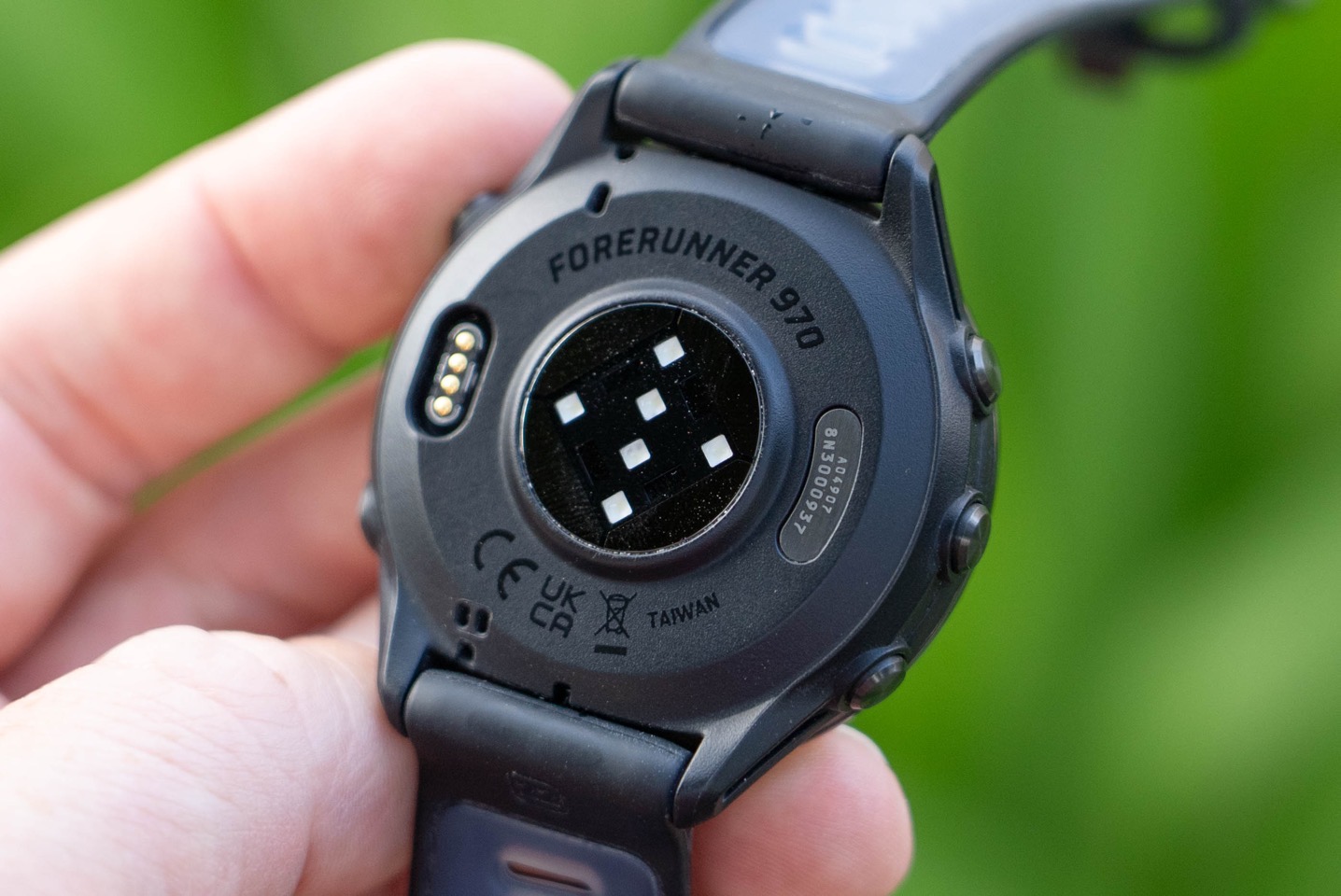
The new Elevate V5 optical heart rate sensor represents a genuine improvement over the V4 in the Forerunner 965. In controlled testing against a chest strap, I consistently measured differences of only 1-2 BPM – even during high-intensity intervals where optical sensors traditionally struggle.
ECG functionality is the marquee health addition, medically certified to detect atrial fibrillation. While most runners won't need this feature regularly, having it available adds peace of mind, particularly for older athletes or those with family cardiac history. The reading process is simple: touch the titanium bezel with your opposite hand and wait 30 seconds for results.
Skin temperature monitoring enables better illness detection and recovery tracking. Sleep tracking captures the standard metrics – REM, deep sleep, light sleep – though some users report REM accuracy seems inconsistent compared to dedicated sleep trackers.
Body Battery, Stress tracking, Blood Oxygen, and Respiration monitoring round out the health suite. Garmin's longitudinal data presentation helps identify trends over weeks and months, which proves more actionable than daily snapshots.
Battery Life
Here's where the Forerunner 970 stumbles. Battery life has actually decreased compared to the Forerunner 965:
- Smartwatch mode: 15 days (down from 23 days)
- GPS mode: 26 hours (down from 31 hours)
- All-systems multi-band: 21 hours (down from 31 hours)
For most runners, 26 hours of GPS runtime covers any marathon or 50K comfortably. But ultra-distance athletes who previously relied on the Forerunner line may find themselves reaching for a charger mid-race. The 21 hours of multi-band tracking is adequate for most 100-mile attempts, but it's tighter than before.
The battery regression likely stems from the brighter display and additional sensors, but it's disappointing nonetheless. Garmin's competitors have been improving battery life while the Forerunner 970 moves backward. Ultra-distance runners who prioritize endurance above all else should consider the Garmin Enduro 3, which trades the 970's premium build for substantially longer GPS runtime.
Daily charging isn't necessary for typical use. A week of mixed training – running, swimming, gym sessions – plus 24/7 wear for sleep and health tracking depletes roughly 40-50% of the battery. But if you valued the Forerunner 965's exceptional longevity, this is a meaningful downgrade.
Who It's For / Who Should Skip
Buy the Forerunner 970 if you're: - A serious runner or triathlete who wants the most accurate GPS and heart rate tracking available - Considering the Fenix 8 but prefer a lighter watch and don't need the absolute longest battery life - Ready to invest in a premium training tool and value comprehensive metrics - An athlete who trains in varied lighting conditions and needs excellent display visibility
Skip the Forerunner 970 if you're: - Currently using a Forerunner 965 and satisfied with it (the upgrade isn't compelling) - Budget-conscious (the COROS PACE Pro at $350 or Suunto Race at $400 offer excellent value) - An ultra-distance athlete who prioritizes battery life above all else (look at Fenix 8 Pro or Enduro 3) - A casual fitness user who won't leverage the advanced training features
The Verdict
Score: 85/100
The Garmin Forerunner 970 earns its place as the most complete running watch available today. The combination of titanium and sapphire construction, the brightest AMOLED display Garmin has produced, exceptional GPS and heart rate accuracy, ECG capability, and an unmatched depth of training features creates a package that serious athletes will genuinely appreciate.
But excellence comes with asterisks. The $749 price represents a 25% increase over the Forerunner 965. Battery life moved backward. Some headline features require a $169 accessory. And if you already own a Forerunner 965, there's no urgent reason to upgrade.
For runners and triathletes ready to invest in the best available tool for their training, the Forerunner 970 delivers. It brings Fenix-level capability to a lighter, more focused package at a lower price point than Garmin's flagship. You'll pay a premium, but you'll get premium performance in return. For a broader view of how it compares to the competition, see our guides to the best running watches and best outdoor watches.
For everyone else, the value equation favors waiting for a sale or considering capable alternatives like the Forerunner 570 or Apple Watch Ultra 3 at lower price points.