
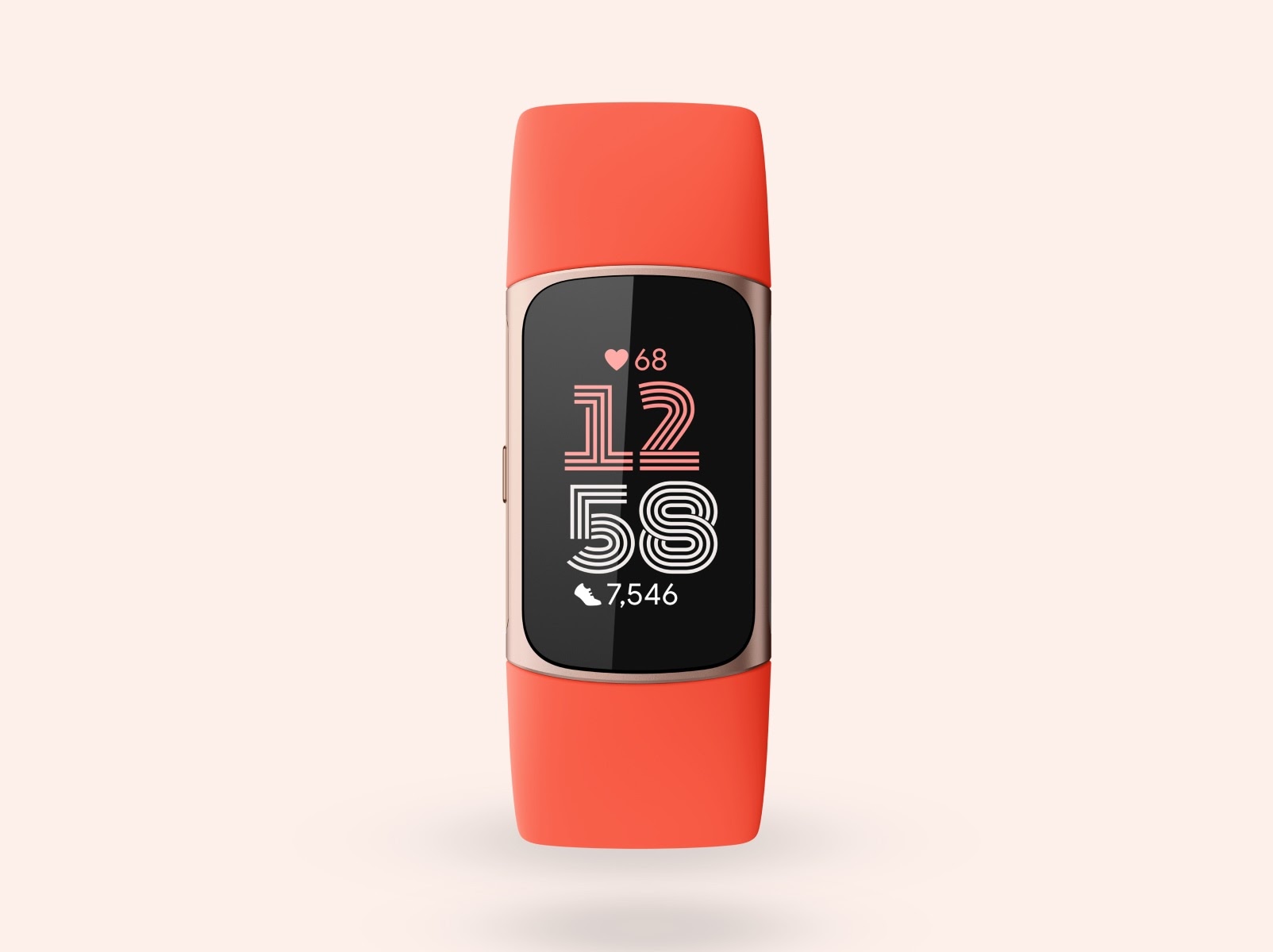
The Fitbit Charge 6 arrived in October 2023 carrying a weight far heavier than its 37 grams. It landed as the first tracker born fully under Google's ownership of Fitbit, and with no Charge 7 yet on the horizon in early 2026, it occupies a peculiar position: the last classic Fitbit fitness band, or perhaps the first draft of whatever comes next. After months of daily wear, the answer is somewhere in between – and at 81/100, that turns out to be a surprisingly good place to be.
This is a fitness tracker that knows exactly what it is. It does not pretend to be a smartwatch. It tracks sleep with remarkable precision, monitors heart health through an impressive sensor array, and now speaks fluent Google. But it also carries forward a GPS antenna design that should have been retired with the Charge 5, and it gates some of its best insights behind a subscription paywall. The Charge 6 is the story of Fitbit's transition told through a wristband – brilliant in spots, frustrating in others, and ultimately worth your attention.
Design & Build
The Charge 6 is virtually indistinguishable from the Charge 5, and that is mostly a compliment. The recycled aluminum case with Corning Gorilla Glass 3 gives it a durability that belies its slim profile. At 36.73mm long, 23.09mm wide, and just 11.20mm thick, this is a tracker that disappears on the wrist. The infinity band design creates a seamless look, and the silicone strap is soft enough for comfortable all-day and all-night wear. Swapping bands takes seconds thanks to the quick-release mechanism.
The most important design change is the return of the haptic side button. The Charge 5 removed it in favor of an all-touch interface, and users universally despised that decision. The button is back, sitting flush on the left side of the case, and it transforms navigation. A quick press returns you to the watch face or summons the app menu. It is a small thing that makes an enormous difference in daily usability, especially during workouts when wet fingers and sweat make touchscreens unreliable.
The Charge 6 ships in three colorways: Obsidian with a black aluminum case, Coral with champagne gold aluminum, and Porcelain with silver aluminum. Water resistance is rated at 5 ATM (50 meters), making it suitable for swimming and shower wear. The proprietary magnetic charging cradle remains the weakest link in the physical package – the magnets are not particularly strong, and it is yet another proprietary cable to keep track of.
Display
The 1.04-inch AMOLED touchscreen is sharp and vivid indoors. Colors are punchy, text is crisp, and the always-on display mode works well in low-light conditions. Peak brightness reaches 450 nits, which is adequate for indoor use and casual outdoor glances.
However, this is where the Charge 6 shows its age. The screen is small by 2026 standards, showing only one data field at a time during workouts. Reading detailed notifications requires scrolling, and in direct sunlight, the display struggles to compete with brighter watches. The visible bezels around the screen emphasize just how compact the actual display area is.
For a fitness band at this price point, the display is acceptable. It is not going to wow anyone coming from a smartwatch, but for quick time checks, workout stats, and notification previews, it gets the job done. The always-on display is a welcome option, though it does cut into battery life noticeably.
Performance & Features
This is where Google's fingerprints are most visible. The Charge 6 integrates Google Maps with turn-by-turn navigation displayed directly on the band – a genuinely useful feature for walking or cycling in unfamiliar areas. Google Wallet enables NFC contactless payments from the wrist, which works reliably at payment terminals. YouTube Music controls let you manage playback from the band, though notably there is no on-device music storage and no native Spotify app, which remains a significant omission.
The 40 exercise modes cover everything from running and cycling to HIIT, CrossFit, skiing, and surfing. The standout addition is real-time heart rate broadcasting to compatible gym equipment via Bluetooth. Pair the Charge 6 with a Peloton bike, NordicTrack treadmill, or Tonal system, and your live heart rate data appears on the machine's display. For gym-goers, this eliminates the need for a separate chest strap during equipment-based workouts.
Notifications from your phone come through clearly, though responding to them is limited to preset quick replies. There are no third-party apps to install, no voice assistant, and no standalone calling capability. The Charge 6 knows its lane and stays in it.
One friction point that cannot be ignored: a Google account is now mandatory for setup. Fitbit accounts are being phased out entirely. For longtime Fitbit users, this forced transition into Google's ecosystem has been a sore point, though the practical impact is minimal once the switch is complete.
Health & Fitness
The sensor suite is the Charge 6's crown jewel. The optical heart rate monitor uses algorithms borrowed from the Pixel Watch 2, and the improvement over the Charge 5 is tangible. Resting heart rate and steady-state exercise readings track closely with what a chest strap reports. During high-intensity intervals with rapid heart rate changes, there is some lag – typical of wrist-based optical sensors – but the overall accuracy is strong for a fitness band.
Beyond continuous heart rate, the Charge 6 packs an ECG sensor for detecting atrial fibrillation, an EDA sensor for stress monitoring through electrodermal activity scans, SpO2 monitoring for blood oxygen levels (measured overnight), a skin temperature sensor, and heart rate variability tracking. It is a comprehensive health monitoring package that rivals devices costing twice as much. For a deeper look at how these sensors compare to Fitbit's smartwatch line, see our Fitbit Sense 2 review.
Sleep tracking is where the Charge 6 truly excels. It analyzes sleep stages (light, deep, REM), calculates a nightly Sleep Score, tracks breathing rate and skin temperature variations, and provides HRV data. The slim form factor makes it one of the most comfortable trackers to wear to bed, and the sleep data is consistently reliable and actionable. The Sleep Profile feature, which identifies your sleep animal archetype and tracks long-term patterns, requires Fitbit Premium – one of the more frustrating paywall decisions.
The built-in GPS is the Charge 6's most significant weakness. The antenna design, carried over unchanged from the Charge 5, struggles to maintain satellite lock unless the band is worn almost comically loose on the wrist. Wear it at normal tightness for accurate heart rate readings, and the GPS frequently drops out, switches to accelerometer estimation, or takes excessive time to acquire a signal. For dedicated runners who want accurate pace and route data, this is a dealbreaker for standalone use. The workaround is connected GPS through your phone, which works reliably but defeats the purpose of built-in GPS.
The absence of an altimeter means no floor-climbing or elevation tracking – a notable omission for fitness enthusiasts who track stairs or hikes with elevation data.
The Fitbit Premium question looms large. The Charge 6 includes a six-month trial, after which the subscription costs $9.99 per month. Without it, you lose access to the Sleep Profile, Daily Readiness Score, detailed wellness reports, and the full workout library. The core tracking features work fine without Premium, but the paywall creates a two-tier experience that competitors like Garmin do not impose. For a device that already costs $160, asking for ongoing subscription fees is a tough sell.
Battery Life
Fitbit rates the Charge 6 at up to seven days of battery life, and in practice, that figure holds up with the always-on display turned off and no GPS-heavy workouts. Typical daily use with notifications, continuous heart rate monitoring, and sleep tracking lands at five to seven days comfortably.
Enable the always-on display, and battery life drops to three to five days. Heavy GPS use drains the battery rapidly – expect to recharge after a few hours of continuous tracking. Connected GPS through the phone is far more battery-efficient. Charging takes approximately one and a half to two hours from empty to full via the proprietary magnetic cable.
For the fitness band category, this is competitive battery life. It comfortably outlasts any Apple Watch or Pixel Watch, and it rivals the Garmin Vivosmart 5 on paper – both are rated at up to seven days – while offering a richer feature set.
Who It's For / Who Should Skip
The Charge 6 is ideal for: Health-conscious individuals who want comprehensive daily health monitoring without the bulk of a smartwatch. Sleep trackers will love the detailed overnight analysis. Gym-goers who use Peloton, NordicTrack, or Tonal equipment will appreciate the heart rate broadcasting. Anyone in the Google ecosystem will benefit from the Maps, Wallet, and YouTube Music integration. Budget-conscious buyers catching it on sale around $100 are getting exceptional value – it regularly appears in our best budget wearables under $100 picks.
Skip the Charge 6 if: You are a serious runner who depends on accurate GPS tracking – look at the Garmin Forerunner 165 instead. If you want a large, bright display for at-a-glance workout data, this screen is too small. If you refuse to pay subscription fees on top of hardware costs, the Premium paywall will frustrate you. Samsung Galaxy phone users might prefer the Galaxy Fit3 at $60 for tighter ecosystem integration.
The Verdict
The Fitbit Charge 6 is neither the last gasp of classic Fitbit nor a fully realized Google wearable. It is a transitional device, and a surprisingly capable one. The health and sleep tracking are genuinely excellent. The Google integrations add real utility without bloating the experience. The return of the physical button fixes the Charge 5's biggest usability mistake. And at its frequent sale price around $100, the value proposition is hard to beat in the fitness band category.
The GPS remains an embarrassment for a device with "built-in GPS" on the box, and the Premium paywall continues to leave a sour taste. But for what most people actually use a fitness band for – daily health monitoring, sleep tracking, workout logging, and the occasional glance at a notification – the Charge 6 delivers with quiet competence. If you run into Bluetooth or syncing issues after purchase, our Charge 6 syncing troubleshooting guide walks through every fix step by step.
It earns its place as a recommended buy, with the caveat that runners should look elsewhere and buyers should mentally budget for either the Premium subscription or accepting a somewhat limited free tier. For a side-by-side look at the full category, check our best fitness trackers for 2026 roundup, which also covers alternatives like the Fitbit Versa 4 and WHOOP MG.
Score: 81/100 – A feature-rich fitness band with excellent health tracking and Google smarts, held back by unreliable GPS and a subscription paywall that competitors do not require.