
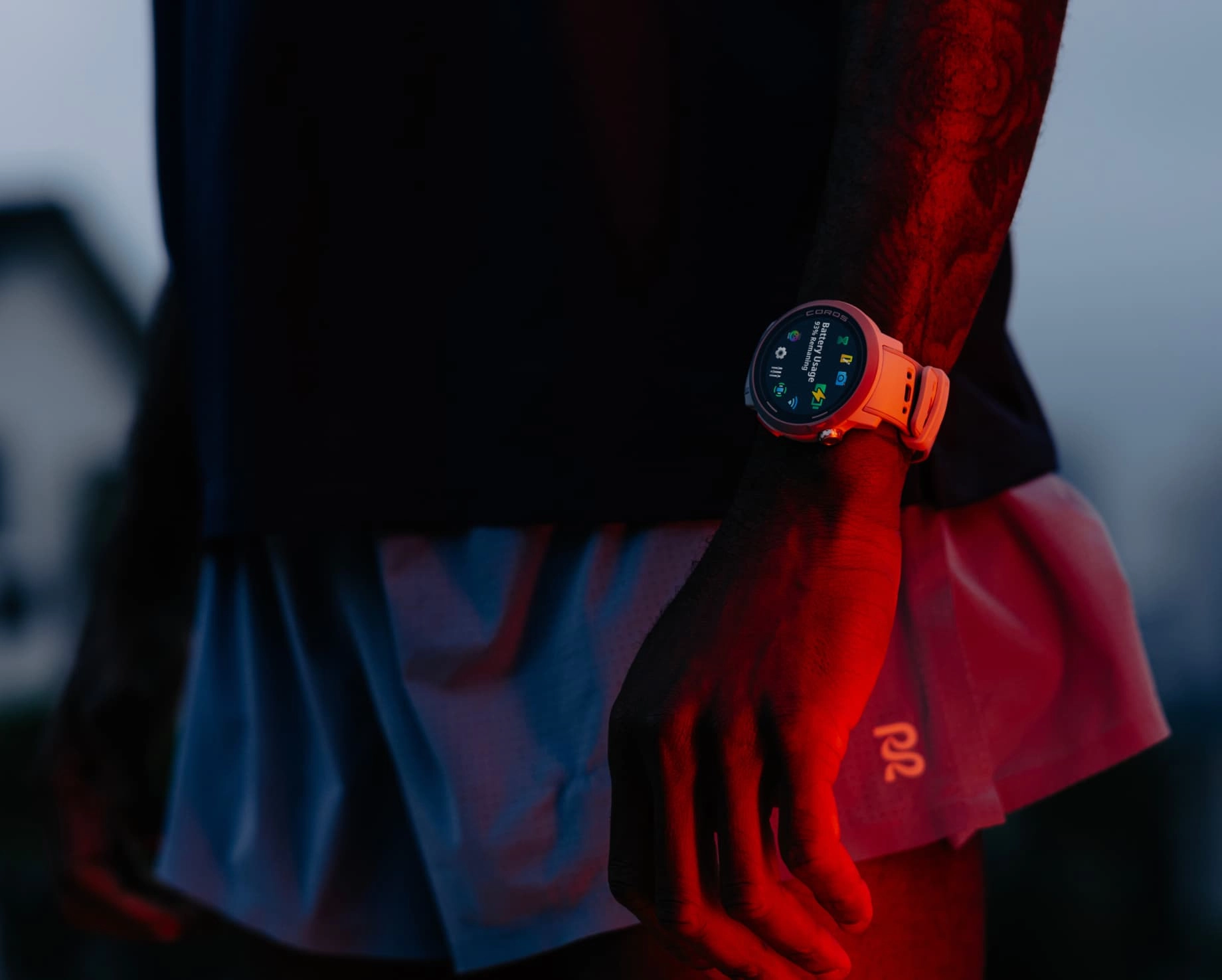
The Coros Pace Pro costs $349 and packs offline topographic maps, dual-frequency GPS, and a brilliant 1500-nit AMOLED display into a featherweight 37-gram frame. The Garmin Forerunner 965 offers a similar feature set–including its own TopoActive maps–for $599. That $250 gap is enormous, and it's where the Pace Pro makes its case.
This isn't just aggressive pricing. It's a statement. For years, Coros built its reputation on budget-friendly GPS watches with stripped-down interfaces and MIP displays that looked dated the moment you strapped them on. The Pace Pro marks the brand's first serious attempt to compete in the premium AMOLED segment, and it's shockingly successful. The display rivals anything Garmin or Apple produces, the battery lasts nearly two full days of continuous GPS tracking, and the training metrics feel legitimately pro-level. There are compromises–no music streaming, a polymer case that feels cheaper than it should, and an ECG sensor that's more wellness toy than medical tool–but none of them matter if you're a runner who cares more about pace zones than Spotify playlists.
Design & Build
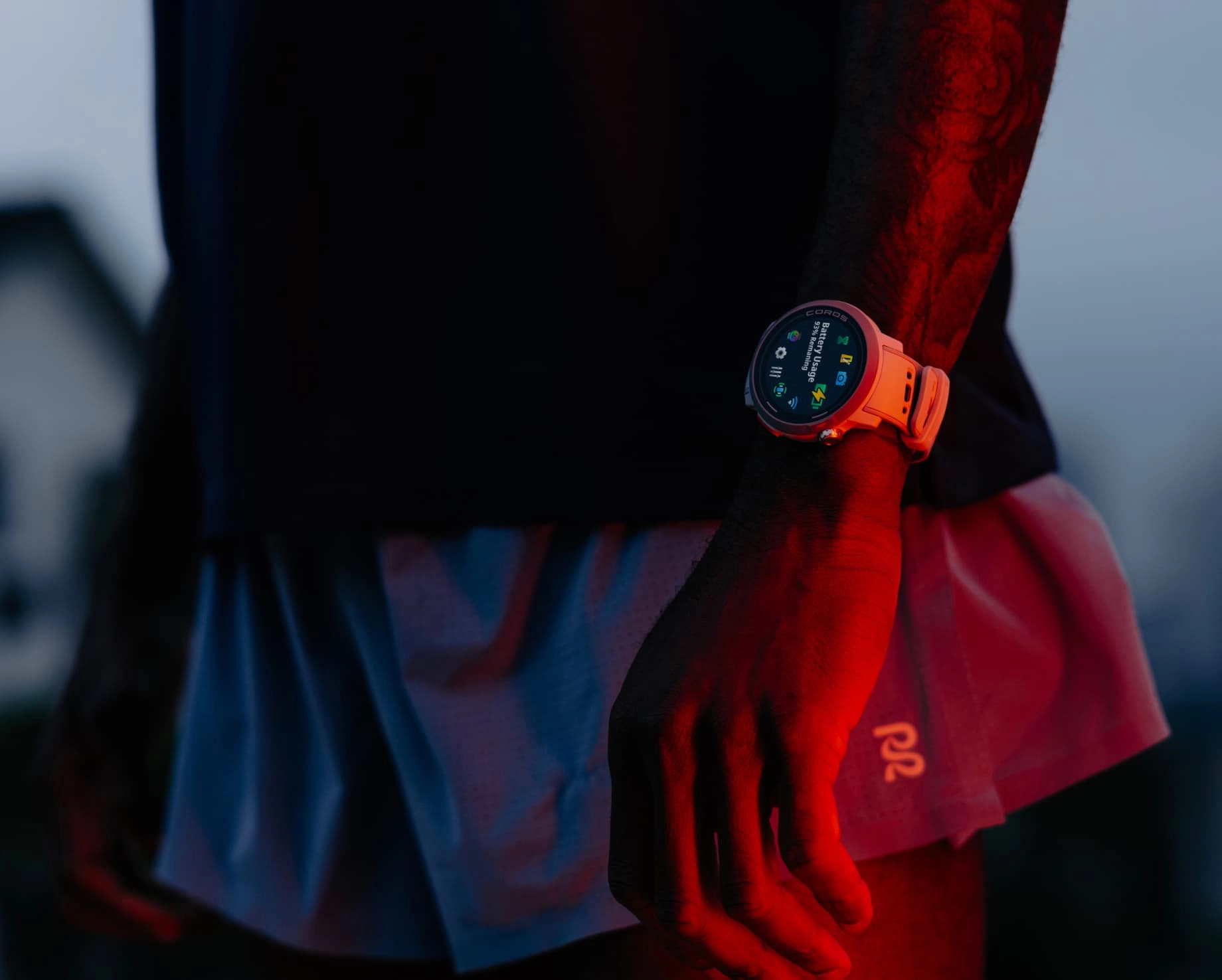
The Pace Pro is light. Absurdly light. At 37 grams with the nylon band, it disappears on your wrist during long runs. The 46mm fiber-reinforced polymer bezel keeps weight down while feeling solid enough for daily abuse, and the digital crown and back button offer tactile, reliable control even in rain or with gloves. The touchscreen is responsive enough for navigating maps mid-run, though defaulting to the buttons for most tasks feels natural–old habits from years of non-touch GPS watches.
The trade-off for that featherweight design is materials. The fiber-reinforced polymer case won't win beauty contests against the Forerunner 965's titanium bezel, and the mineral glass screen scratches more easily than the FR 965's Corning Gorilla Glass 3 DX. Faint scuffs around the bezel appear quickly with regular trail and daily wear. It's not a dealbreaker, but it's noticeable. The silicone band feels generic–functional but forgettable. Swap it for the nylon band and the watch transforms into something that actually looks like it belongs on a $349 device.
Water resistance is rated at 5ATM (50 meters), fine for swimming but not diving. The watch survived multiple rainy runs and pool sessions without issue.

Display
The 1.3-inch AMOLED display is the Pace Pro's headline attraction, and it delivers. At 1500 nits, it's readable in direct sunlight and dims gracefully for night runs without blinding you. Colors pop–maps show clear topographic contours, heart rate zones glow in distinct shades during intervals, and the always-on mode keeps critical data visible without nuking the battery.
The 416x416 resolution is sharp enough that text and icons look crisp. The real win is brightness consistency. Unlike some cheaper AMOLED watches that wash out in sunlight, the Pace Pro's display remained perfectly legible on a noon run in harsh overhead light.
Always-on mode cuts battery life from 20 days to six days in daily use, but that's still miles ahead of most smartwatches. The auto-brightness works well, though manually bumping it up may be needed during especially bright outdoor runs.
Performance & Features
GPS accuracy is where budget watches usually fall apart. Not here. The Pace Pro uses a new Airoha dual-frequency chipset that locks onto satellites in under 10 seconds and tracks routes with precision that rivals Garmin's multi-band modes. On a 10K course with official distance markers, the Pace Pro measured 10.02 kilometers–impressively close to reality.
Urban canyon tests were equally impressive. Running through downtown buildings and under overpasses, the Pace Pro maintained accuracy where older Coros models would wobble. The dual-frequency mode burns battery faster–31 hours vs 38 in All Systems mode–but for races and key workouts, the precision is worth it.
The offline TOPO maps are a revelation for a $349 watch. Download regional maps via WiFi and you get full topographic contours, street names, and points of interest stored on the watch's 32GB of storage. They're not routable–you can't plot a new course on the watch like you can on the Forerunner 965–but for exploring trails or navigating unfamiliar neighborhoods, they're invaluable. The maps render smoothly on the AMOLED screen, and zooming via the digital crown feels natural.
Coros EvoLab training features punch above their weight class. The race predictor, training load tracking, pace zones, and VO2 max estimates all sync cleanly with the app and match perceived exertion. The Running Performance metric–which rates each workout from poor to excellent based on your fitness baseline–became an unexpected motivator.
The ECG sensor exists but don't get excited. It's not FDA or CE certified, so it can't detect atrial fibrillation or other medical conditions. It's useful for HRV readings and wellness checks, but serious athletes will want a chest strap for intervals. Coros bills it as a recovery tool, which is fair, but it feels like a half-implemented feature waiting for regulatory approval.
Health & Fitness
Heart rate tracking is solid for easy and tempo runs. Compared against a chest strap during steady-state efforts, the Pace Pro stayed within 2-3 BPM consistently. During hard intervals with rapid HR spikes, it lagged by 5-8 BPM and took a few seconds to catch up. For runners who live in Zone 2, this is a non-issue. If you're doing VO2 max intervals every week, consider pairing with a chest strap.
SpO2 and sleep tracking work as expected. The sleep stage breakdown (light, deep, REM, awake) felt consistent with subjective recovery, and the morning wellness score correlated well with how rested I actually felt.
Battery Life
Coros claims 38 hours of GPS tracking in All Systems mode and 20 days of daily use. Both hold up. With always-on display enabled and daily runs in dual-frequency GPS mode, I got six days between charges. That's exceptional for an AMOLED watch. For comparison, the Garmin Forerunner 265 lasts up to 20 hours in GPS mode and up to 13 days in smartwatch mode–but costs $100 more.
Charging takes about two hours from dead to full using the magnetic USB-C cable. The magnets snap securely, and the cable is backward compatible with other Coros watches.
Who It's For
The Coros Pace Pro is built for serious runners who want Garmin-level GPS accuracy and training features without paying Garmin prices. If you run 4-5 times per week, race regularly, and care deeply about pace zones and VO2 max trends, this watch delivers everything you need. The offline maps make it a solid choice for trail runners and ultrarunners who venture into unmapped territory. For a broader look at what's available, see our guide to the best running watches in 2026.
It's also ideal for athletes transitioning from Apple Watch or Fitbit who find those devices too smart-watch-y. The Pace Pro strips away most non-fitness distractions–no app store, no mobile payments, no social media notifications–and focuses entirely on helping you run faster and recover smarter.
Who Should Skip It
Skip the Pace Pro if you need a true smartwatch. The Coros app is functional but bare-bones, notifications are text-only with no interaction, and there's no ecosystem of third-party apps. Music lovers will hate the MP3-only storage–no Spotify, Apple Music, or any streaming service.
Smaller wrists should look elsewhere. The 46mm case wears large, and the silicone band doesn't taper well for wrists under 6.5 inches. The Garmin Forerunner 265S (42mm) or Polar Vantage M3 (44mm) will fit better.
Finally, if you need bombproof durability, the polymer case and mineral glass won't cut it. Garmin's titanium-bezeled options or the Coros Vertix 2S are better for rugged backcountry use. If you spend most of your time on trails and peaks, our best outdoor watches roundup covers the toughest options.
The Verdict
Score: 88/100 – The Pace Pro redefines what $349 buys in a running watch: Garmin-rivaling GPS, a stunning AMOLED display, and battery life that embarrasses the competition.
| Category | Score | Weight |
|---|---|---|
| Core Function | 90 | 30% |
| Build Quality | 78 | 15% |
| User Experience | 84 | 20% |
| Value | 95 | 20% |
| Battery | 90 | 15% |
The compromises are real but specific: no music streaming, a polymer case that scratches, and an ECG that's more gimmick than game-changer. If those bother you, save up for the Forerunner 965 or Coros Vertix 2S. But for most runners, the Pace Pro is the smartest $349 you'll spend this year.