
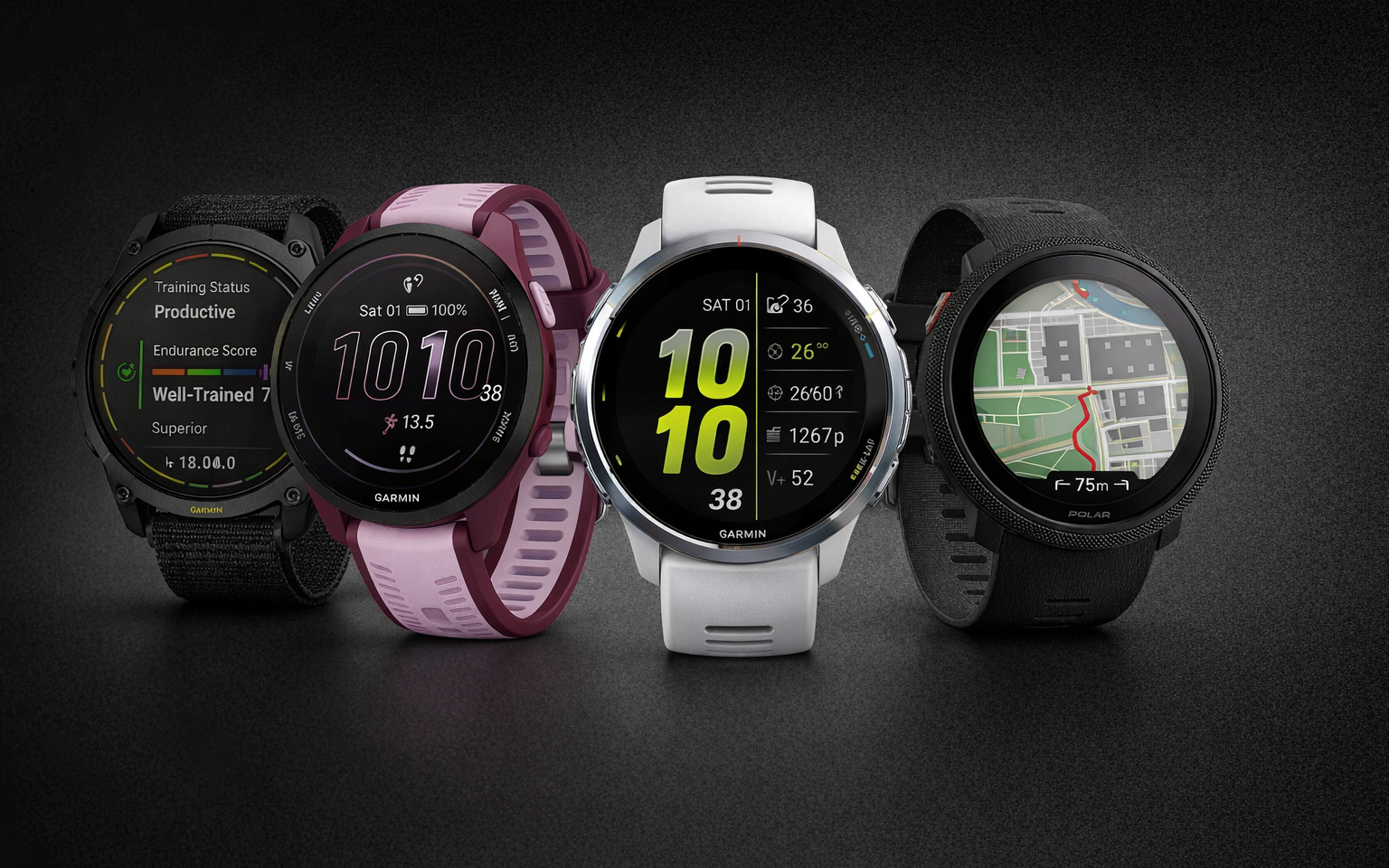
The running watch market in 2026 is absurdly good. Dual-frequency GPS that actually works in downtown canyons, AMOLED screens you can read in direct sunlight, and training metrics that used to require a lab visit – all of it has trickled down to watches costing under $250. The problem is no longer finding a good running watch. The problem is finding the right one.
After testing every major running watch released in the past year, the choice comes down to three tradeoffs: GPS accuracy versus battery life, training intelligence versus simplicity, and price versus the features you will actually use. A couch-to-5K runner does not need offline maps and running economy calculations. An ultramarathon runner does not need 5G connectivity and hypertension alerts. The trick is matching the watch to the runner, not the spec sheet to the ego.
This guide cuts through the noise. These are the eight running watches worth buying in 2026, organized by who they are actually for, with honest assessments of where each one falls short.
Our Top Picks
Best Overall Running Watch: Garmin Forerunner 970 ($749.99)
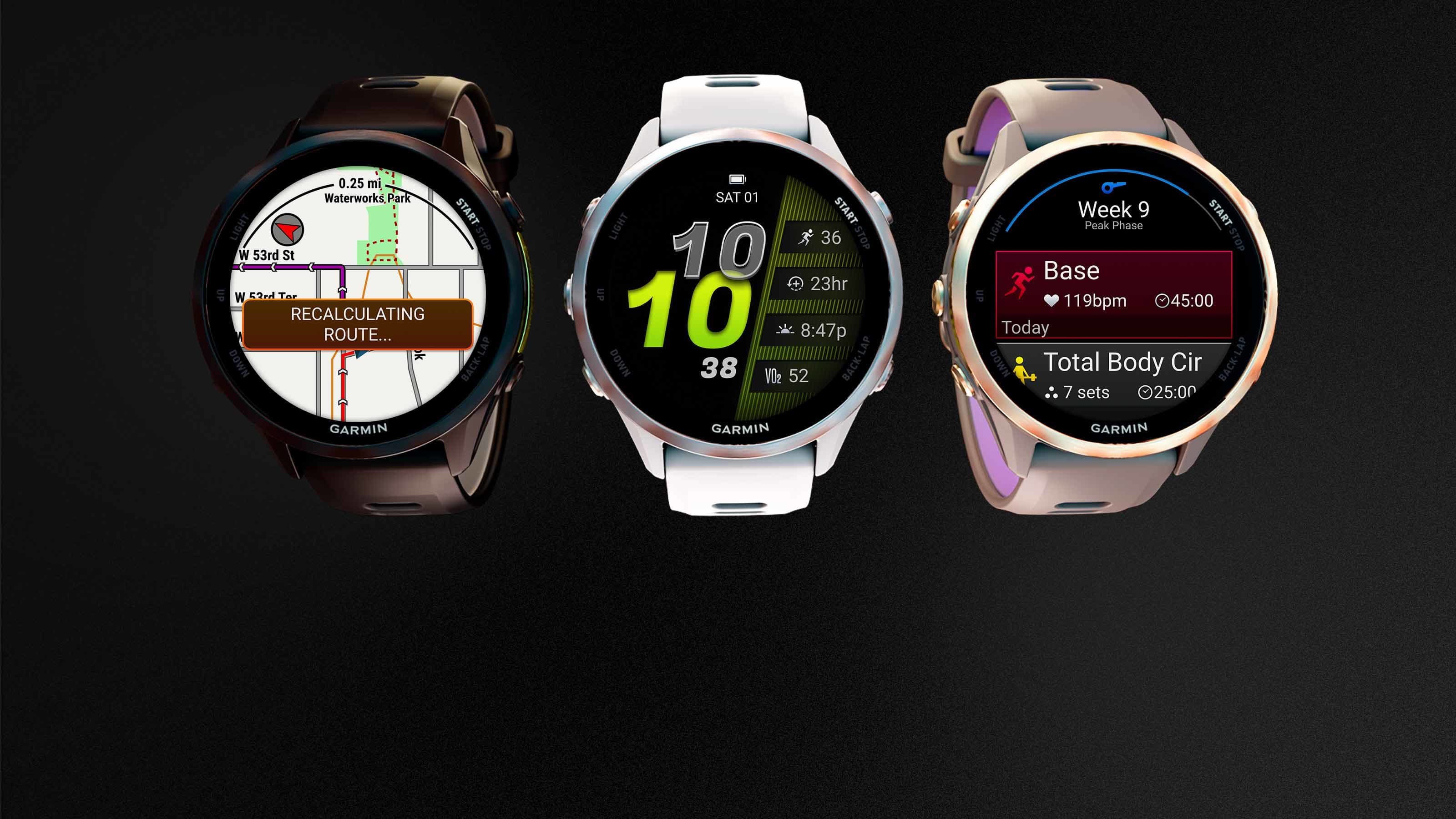
The Forerunner 970 is the most complete running watch ever made, full stop. Built around a 47mm titanium case with a sapphire crystal display, it weighs just 56 grams and packs Garmin's newest Elevate Gen 5 heart rate sensor, a medical-grade ECG, a built-in LED flashlight, and a speaker and microphone for taking calls mid-run (something I use more than I expected). The 1.4-inch AMOLED screen is the brightest Garmin has put in a Forerunner, easily readable at any angle in direct sunlight.
What sets the 970 apart for serious runners is the depth of its training intelligence. Impact Load Factor normalizes your training stress across terrain types, so a hilly trail run gets weighted differently than flat road miles. Running Tolerance tracks how your body handles sustained effort over time. The race time predictor is eerily accurate once it has a few weeks of data. Pair it with Garmin's HRM-600 chest strap and you unlock Running Economy and Step Speed Loss metrics – genuine performance tools that used to require motion-capture labs.
The battery concession is real: 15 days in smartwatch mode and 21 hours in dual-band GPS, down from the Forerunner 965's 23 days and 31 hours respectively. If you run with always-on display, expect roughly two and a half days between charges. That is the cost of the brighter screen, the better sensor array, and the added features. For anyone running up to marathon distance who wants the best data possible, the 970 justifies its premium. For ultrarunners who need multi-day battery, look further down this list.
Best Mid-Range Running Watch: Garmin Forerunner 570 ($549.99)
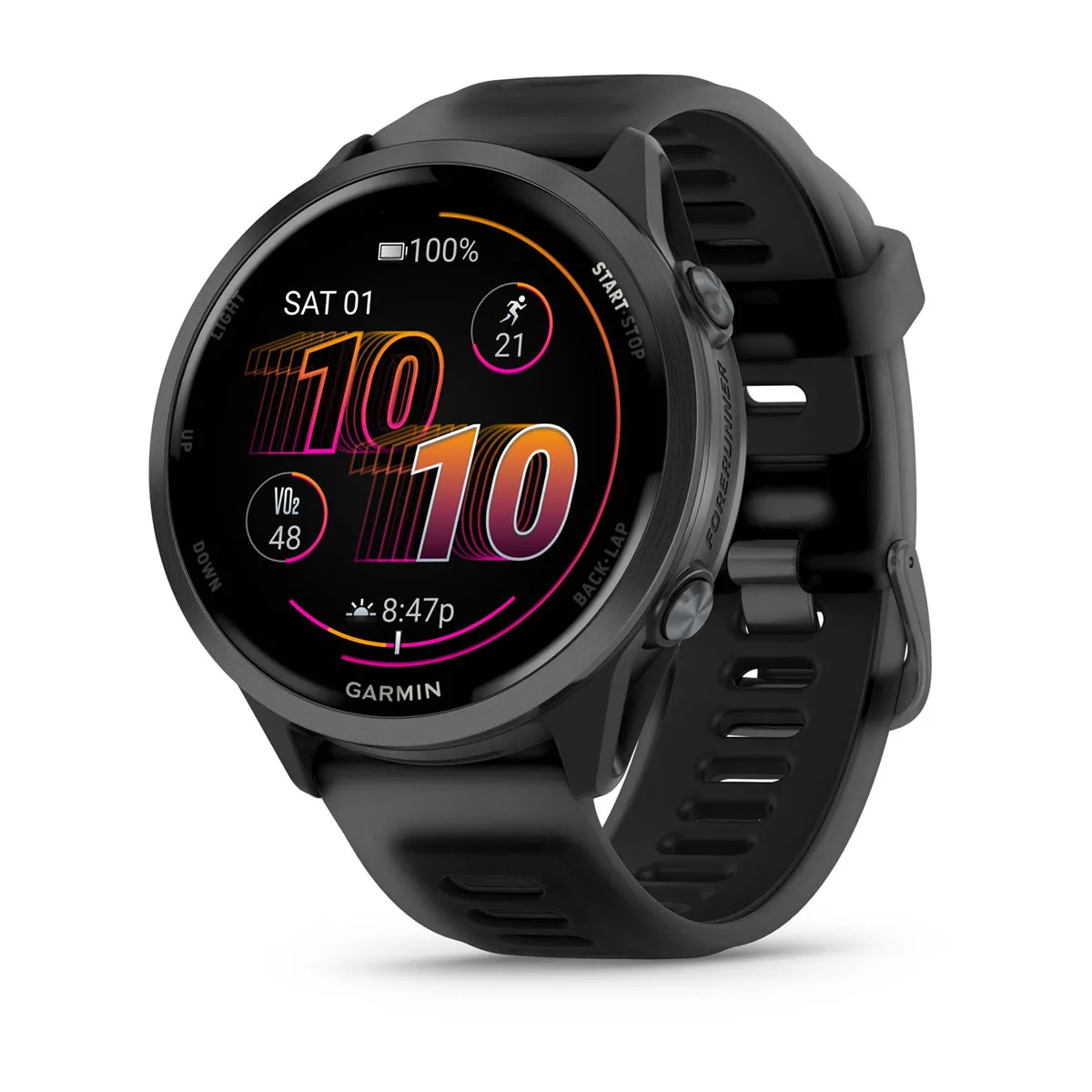
The Forerunner 570 is where things get interesting, because it shares the 970's Elevate Gen 5 heart rate sensor and its multi-band GNSS chipset with SatIQ technology – the same hardware that makes the 970's tracking so precise. Available in both 42mm (42 grams) and 47mm (50 grams) sizes, it gives smaller-wristed runners a genuinely comfortable option that the 970 does not offer. The AMOLED display is sharp and responsive, and the running metrics lineup includes VO2 max, training status, wrist-based running power, and running dynamics.
Battery life is solid: up to 18 hours of GPS tracking, 13 hours in multi-band mode for the 42mm (14 hours for the 47mm), and around 10 days in smartwatch mode. Real-world use with regular runs and the always-on display will get you about three days between charges. It also has a speaker and microphone for phone calls, Garmin Pay, and music storage from Spotify, Deezer, and Amazon Music.
Here is the honest limitation: the Forerunner 570 does not have offline maps. At $549.99, that is a baffling omission when the older Forerunner 965 (still available at around $600) includes full mapping and gets better battery life. If you run primarily on roads and known routes and want Garmin's latest sensor technology in a lighter package, the 570 is excellent. If you need maps, either step up to the 970 or grab the 965 while it is still on shelves.
Best Budget Running Watch: Coros Pace 4 ($249)
The Coros Pace 4 is the watch that makes the budget category feel dishonest. At $249, you get dual-frequency GPS enabled by default, a bright 1.2-inch AMOLED display at 390x390 resolution, training load and training status metrics, and 31 hours of battery in max-accuracy GPS mode. It weighs 32 grams with the nylon band. That is a feature set that would have cost $500 two years ago.
GPS accuracy has been outstanding. Running through tree-covered trails and between tall buildings, the Pace 4's dual-frequency tracking consistently produced clean, accurate traces that matched reference devices. The new optical heart rate sensor is a genuine improvement over the Pace 3, with fewer spikes during interval work and faster response to pace changes. Coros also added a dedicated Action Button (borrowed from their premium models) and a microphone for voice notes tied to your workouts – surprisingly useful for logging how you felt during a session.
The Pace 4 beats the Garmin Forerunner 165 on specs: dual-frequency GPS versus single-band, 31 hours versus 19 hours of GPS battery, training load included versus absent. Where Garmin still wins is in the ecosystem – Garmin Coach adaptive training plans and the more polished Garmin Connect app are genuinely better for runners who want structured guidance. But on pure hardware and running features per dollar, the Pace 4 is the best value in the category by a clear margin.
Best for Beginners and Couch-to-5K: Garmin Forerunner 165 ($249)
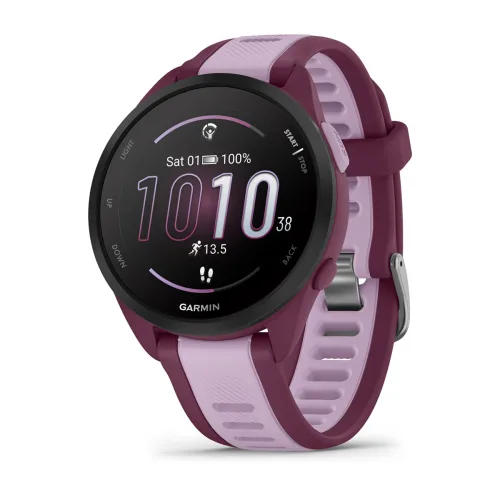
The Coros Pace 4 has better specs at the same price. That is true. But the Forerunner 165 is still the watch I recommend to people lacing up for the first time, and the reason is Garmin Coach.
Garmin Coach lets you pick a goal – 5K, 10K, or half marathon – choose your available training days, set a target date, and get an adaptive plan that adjusts based on your actual performance. It tells you when to run easy, when to push, and when to rest. For someone who has never followed a structured training plan, this is transformative. The suggested daily workouts appear on your wrist each morning, and the watch guides you through each session with real-time prompts. No app-switching, no guesswork.
The hardware is excellent for the price: a 1.2-inch AMOLED display, 39 grams, 19 hours of GPS battery, and wrist-based running power with dynamics including cadence, stride length, and ground contact time. It tracks VO2 max and provides race time predictions. The single-band GPS is reliable in the vast majority of running environments – essentially identical to dual-frequency watches on open roads and park trails, only falling behind in dense urban canyons.
The Forerunner 165 is the watch that meets new runners where they are and grows with them through their first year of running. When they outgrow it, the Coros and Garmin ecosystems are waiting.
Best for Marathon Training: Polar Vantage M3 ($399)
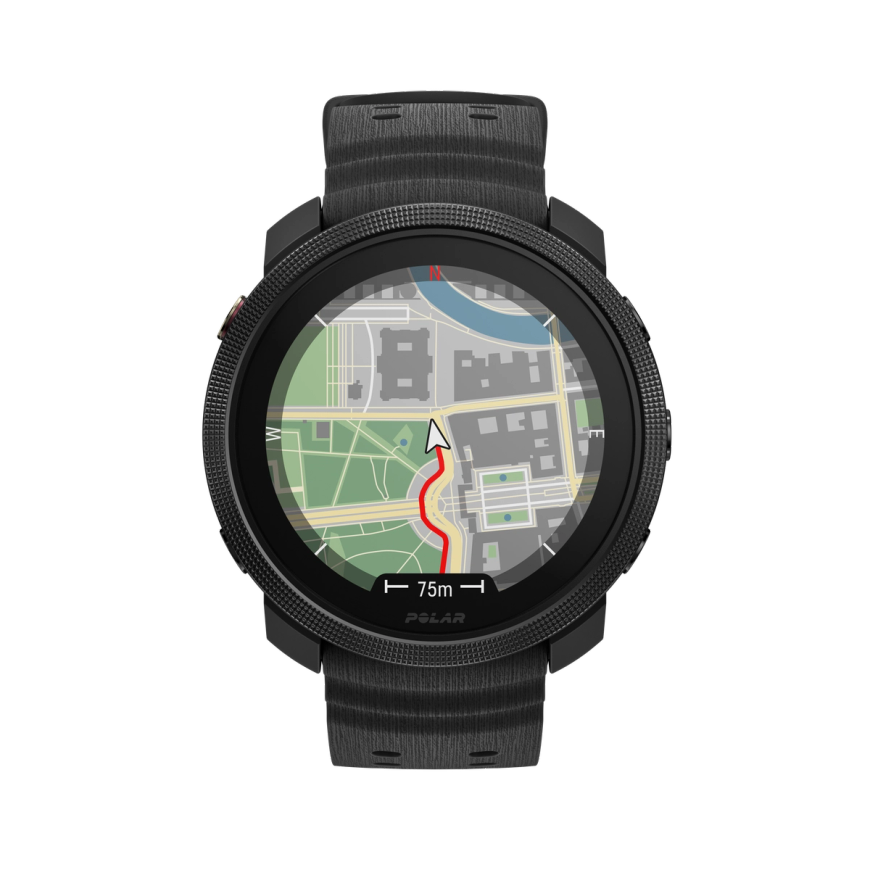
Polar does not get the attention that Garmin and Coros command in the running world, which is a shame, because the Vantage M3 is the best marathon training tool in its price range. Polar's Training Load Pro system breaks your training into cardio, muscle, and perceived load, then maps it against your tolerance and recovery status. The Recovery Pro feature measures your autonomic nervous system response each morning and tells you, with surprising accuracy, whether you are ready to train hard or need to dial it back.
The hardware backs it up: a 1.28-inch AMOLED display, dual-frequency GPS with offline topographic maps and turn-by-turn navigation, ECG capability, and Polar's 4th-generation optical heart rate sensor. It weighs 53 grams and delivers 30 hours of GPS battery, extendable to 70 hours in a reduced-accuracy endurance mode. That 30-hour figure is important – it means you can run a six-hour marathon with continuous heart rate, GPS, and training metrics without worrying about the battery dying.
Where the Vantage M3 shines is in how it synthesizes data over time. After a few weeks, the training load view becomes a genuinely useful planning tool. You can see when you are building effectively and when you are sliding toward overreach. Pair that with the running performance test (a structured treadmill protocol that estimates your lactate thresholds), and you have a watch that understands periodization in a way that Garmin's more metric-heavy approach sometimes obscures. The limitation is Polar's smaller third-party app ecosystem and the clunky Polar Flow app, but for pure marathon preparation, the M3 punches well above its $399 price point.
Best Value for Serious Runners: Coros Pace Pro ($299)
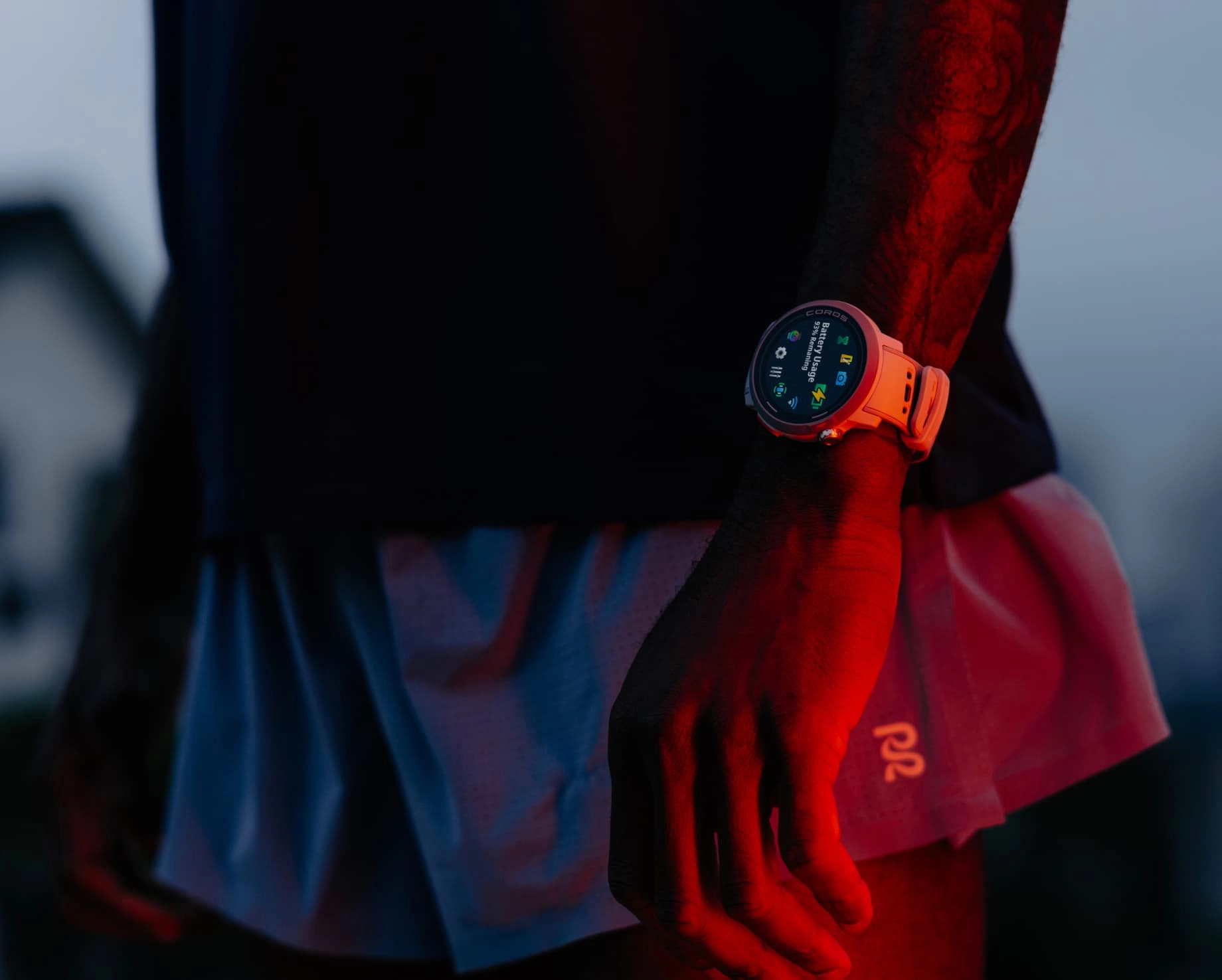
The Coros Pace Pro occupies a fascinating space: more capable than the Pace 4 in ways that matter to experienced runners, but still $200 cheaper than the Forerunner 570. At 37 grams with the nylon band, it is remarkably light. The 1.3-inch AMOLED display runs at 416x416 resolution with 1,500 nits of brightness – one of the best screens in any running watch. And the Ambiq Apollo510 processor gives it more than double the processing power of the Pace 3, which translates to snappier map rendering and smoother scrolling through data screens.
The headline feature is offline global mapping with 32 GB of onboard storage, something neither the Pace 4 nor the Forerunner 570 offers. You can load detailed topographic and landscape maps for any region and navigate with breadcrumb routing. Battery life is class-leading: 38 hours in standard GPS mode, 31 hours in dual-frequency. For a runner doing weekend long runs on unfamiliar trails, a Tuesday track session, and Thursday tempo work, the Pace Pro handles the full week on a single charge.
The training features are comprehensive: training load, training status, VO2 max, running power, and structured workout support. What you give up compared to Garmin is the ecosystem polish – Garmin Connect is a better app, Garmin Coach is unmatched for adaptive plans, and Garmin's third-party integrations (Strava live segments, music streaming) are more seamless. But if you want the best running hardware under $400 and you are comfortable managing your own training, the Pace Pro is hard to beat.
Best for Ultramarathon and Trail Running: Garmin Enduro 3 ($899.99)
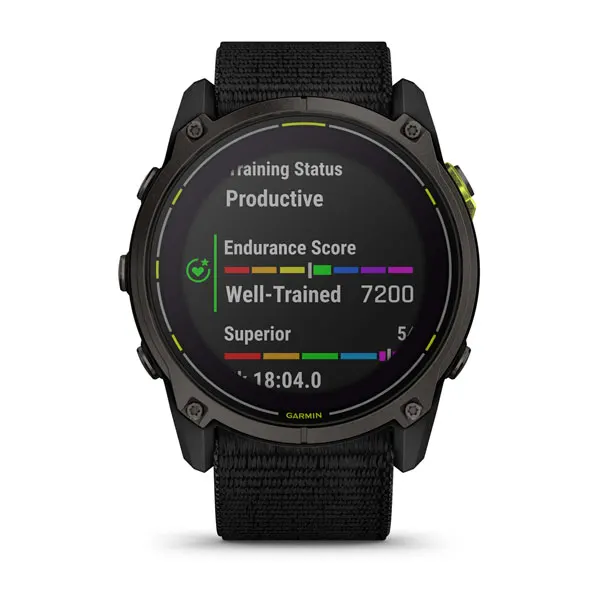
The Garmin Enduro 3 exists for one reason: to outlast you. With solar charging, it delivers up to 320 hours of GPS battery life – that is over 13 days of continuous tracking. Even without solar, the multi-band GPS mode runs for 60 hours, and the standard GPS mode stretches to 120 hours. In smartwatch mode with solar, it can go 90 days between charges. These numbers hold up in real use – during a 100-mile run with mixed terrain and frequent navigation checks, the battery barely dipped below 70 percent.
At 63 grams with a titanium bezel and sapphire crystal, the Enduro 3 is lighter than it has any right to be. The MIP (memory-in-pixel) display is not as pretty as the AMOLED screens on the Forerunner lineup, but it is always on, always readable, and consumes a fraction of the power. You get full TopoActive maps with relief shading, dynamic round-trip routing, trail run VO2 max, grade-adjusted pace, ClimbPro for managing ascents, and a built-in LED flashlight with red-light mode for night running.
For runners tackling ultras, multi-day adventures, or fastpacking trips, the Enduro 3 is the obvious choice. The only runners who should look elsewhere are those who want a bright, colorful touchscreen (this is a button-operated MIP display) or who primarily run road races and would be better served by the Forerunner 970's superior training metrics at a lower price.
Best Apple Watch for Running: Apple Watch Ultra 3 ($799)
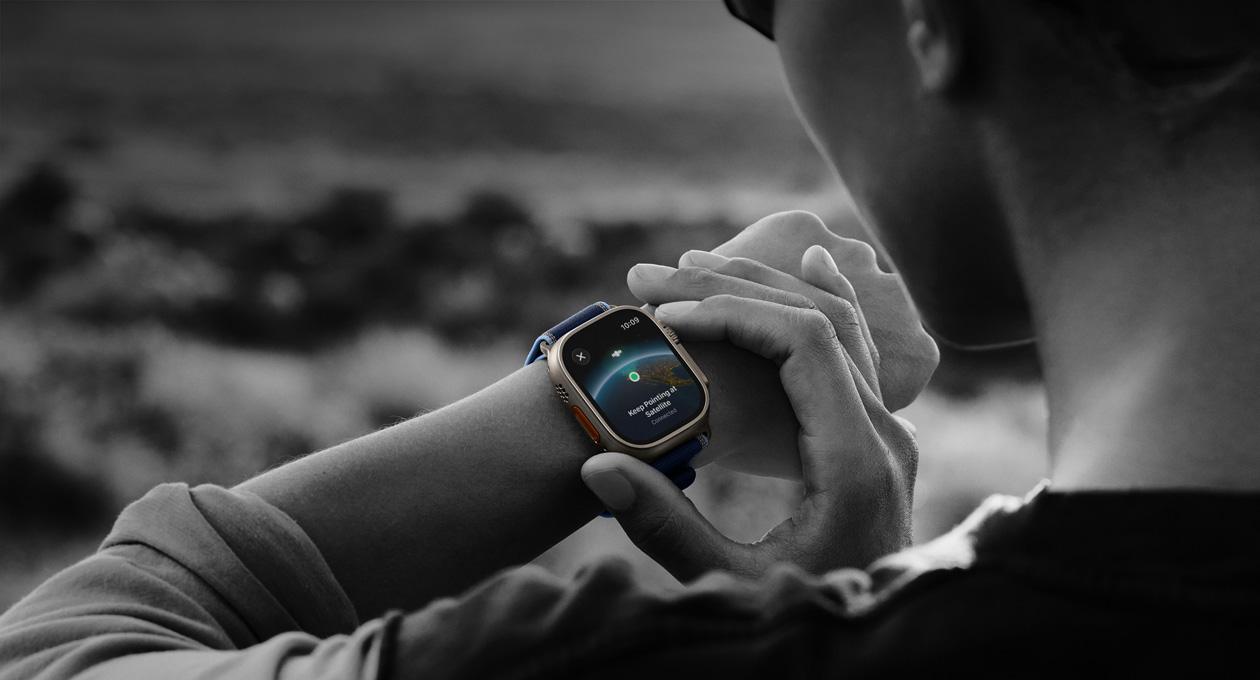
The Apple Watch Ultra 3 is not the best running watch on this list. It is the best running watch for people who are deeply invested in the Apple ecosystem and refuse to wear a second watch. That distinction matters because it is genuinely capable.
The Ultra 3's dual-band GPS is accurate, producing clean tracks that match Garmin's best. The Action button can trigger Precision Start for races, mark segments, or control workouts. Running metrics include vertical oscillation, ground contact time, stride length, heart rate zones, and automatic track detection that is impressively reliable. Training Load tracking across watchOS provides cumulative load and intensity breakdowns. And with up to 42 hours of normal battery life (14 hours with continuous GPS), it can handle a marathon with room to spare.
The satellite connectivity is a genuine differentiator for trail runners: two-way messaging and emergency SOS when you are beyond cell range, without carrying a separate device. The 49mm titanium case is tough and water-resistant, and the 3,000-nit display is the brightest of any watch on this list.
Where it falls short compared to dedicated running watches: no solar charging, limited battery for anything beyond marathon distance, no structured training ecosystem comparable to Garmin Coach or Coros's training tools, and the Workout app – while improved – still lacks the depth of Garmin's or Polar's training analysis. If your phone is an iPhone and your headphones are AirPods and your world is Apple, the Ultra 3 is a remarkably capable running companion. Otherwise, the dedicated options on this list offer more for less.
How We Chose
Every watch on this list was evaluated against criteria that matter specifically for running, not general smartwatch features:
GPS accuracy is non-negotiable. We test in open roads, tree-covered trails, urban canyons, and mixed terrain. Dual-frequency GPS has become the baseline for accuracy, but implementation varies – some watches with single-band GPS (like the Forerunner 165) outperform poorly implemented dual-band systems.
Heart rate accuracy during running, specifically, including intervals, tempo runs, and hill sessions where optical sensors historically struggle. Garmin's Elevate Gen 5 and Coros's latest sensors have narrowed the gap with chest straps significantly.
Training features that help runners improve: VO2 max estimation, training load tracking, recovery metrics, race predictions, and adaptive coaching. We weigh whether these features produce actionable insight or just more numbers.
Battery life with GPS active, not the inflated smartwatch-mode numbers. A running watch that dies during your long run is not a running watch.
Weight and comfort during extended runs. Anything over 60 grams starts to feel noticeable on runs longer than 90 minutes.
Value relative to the competition, because a $750 watch needs to justify its premium over a $350 watch in ways that actually matter to runners.
Who Should Buy What
You just started running and want guidance: Garmin Forerunner 165. Garmin Coach alone is worth the price of admission.
You run 3-4 times a week and want great data on a budget: Coros Pace 4. The best hardware for the money, period.
You are training for a specific marathon and want periodization tools: Polar Vantage M3. Recovery Pro and Training Load Pro are best in class for race preparation.
You are a serious runner who wants maps and great value: Coros Pace Pro. Offline mapping, 38-hour GPS battery, and 37 grams for $299.
You want the best running watch money can buy: Garmin Forerunner 970. The most complete training tool for road and track runners.
You want a capable mid-range Garmin with the latest sensors: Garmin Forerunner 570. Best for road runners who do not need maps.
You run ultras or multi-day trail events: Garmin Enduro 3. Nothing else comes close on battery life.
You are locked into Apple and want one watch for everything: Apple Watch Ultra 3. Genuinely capable for running, with caveats.
What to Avoid
Do not buy a running watch based on smartwatch features. If you are choosing between the Apple Watch Series 11 ($399) and the Coros Pace Pro ($299) because the Apple Watch has better notifications and apps, you are optimizing for the wrong thing. The Series 11's 8-hour GPS battery life makes it a poor choice for anyone running longer than a half marathon, and its training analysis is shallow compared to dedicated running platforms.
Be skeptical of the Garmin Forerunner 570 at full price. At $549.99 without offline maps, it sits in an awkward spot. The older Forerunner 965 (still available at around $600) offers maps and better battery life for just $50 more, and the Coros Pace Pro ($299) offers maps and comparable GPS accuracy for $200 less. The 570 is an excellent watch, but only if you specifically want the smaller 42mm size or the latest Gen 5 sensor and do not care about mapping.
Do not overspend on features you will not use. If you run three times a week and your longest run is 10K, you do not need a $750 watch with running economy metrics and a titanium bezel. The Coros Pace 4 or Forerunner 165 at $249 will serve you just as well for years.