
For nearly a decade, I've had the same complaint about every Apple Watch: the battery life is embarrassing. Charging every night wasn't just inconvenient–it made sleep tracking feel like a compromise rather than a feature. With the Series 11, Apple has finally, mercifully, addressed the elephant in the room. This isn't the most exciting upgrade in Apple Watch history, but it might be the most meaningful one.
The Series 11 delivers legitimate all-day-and-night battery life, FDA-cleared hypertension screening, and Apple's first 5G-capable watch. None of these features are flashy. All of them are useful. This is the most practical Apple Watch ever made–even if it's not the most innovative.
Design & Build
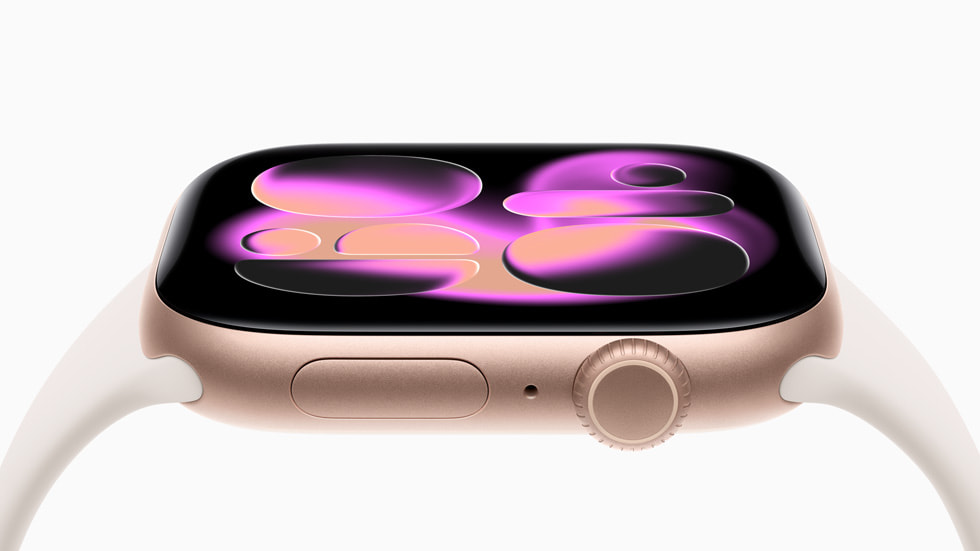
Apple kept the Series 11 physically identical to its predecessor, and honestly, that's fine. The design language established with Series 10 remains the gold standard for mainstream smartwatches: thin, refined, and unmistakably premium.
The aluminum model weighs just 30.3 grams for the 42mm case–light enough to forget you're wearing it during workouts or sleep. The titanium cellular variant commands a steeper $699 price tag but delivers the durability serious users demand.
What's genuinely improved is scratch resistance. The new Ion-X glass is twice as resistant to scratches as the previous generation, and the display stays pristine through gym sessions, yard work, and daily wear. This was always a weak point for the non-sapphire models, and Apple has meaningfully addressed it.
The 42mm and 46mm size options accommodate most wrists, though I wish Apple would introduce a larger option for those of us who find even the 46mm compact. Comfort remains exceptional–the curved caseback sits flush against skin without the pressure points some competitors create.
Display
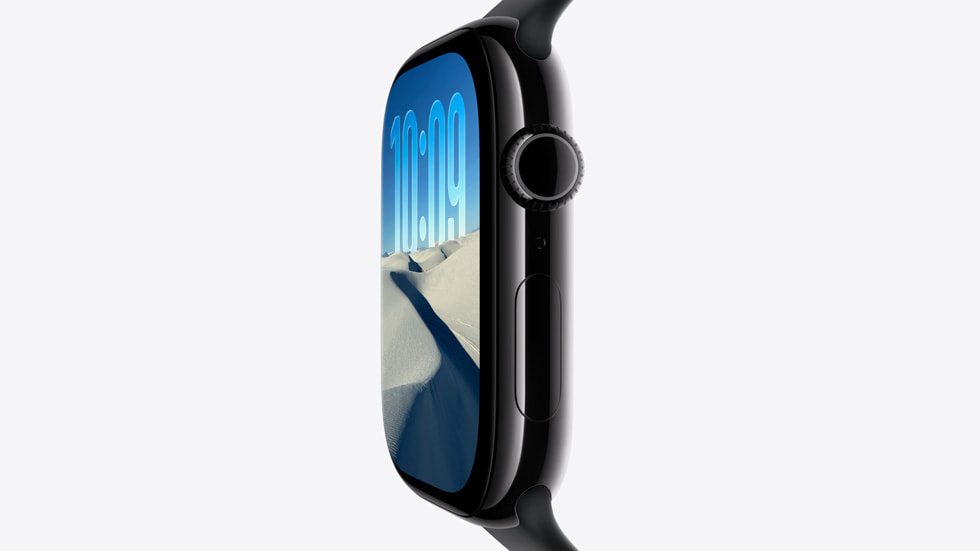
The Always-On Retina LTPO3 OLED display peaks at 2000 nits, making outdoor visibility a non-issue. Whether I'm checking my pace under the midday sun or glancing at notifications on a bright beach, the screen punches through glare without hesitation.
Color accuracy and black levels are exactly what you'd expect from Apple–essentially flawless. The always-on functionality has matured to the point where it's genuinely useful rather than a battery-draining gimmick. The display intelligently dims while maintaining legibility, and the refresh rate adjusts dynamically to preserve power without sacrificing smoothness during interactions.
Text rendering remains sharp enough to read full messages and emails comfortably, and the watch faces–particularly the new options in watchOS 26–take full advantage of the panel's capabilities. If there's a better display on any smartwatch, I haven't seen it.
Performance & Features
Here's where the Series 11 stumbles: it runs the same S10 chip as the Series 10. Apple clearly didn't feel the need to improve processing power this generation, and while the S10 handles everything watchOS 26 throws at it without lag, the lack of advancement feels lazy.
In practice, apps launch quickly, Siri responds promptly, and animations are fluid. The 5G RedCap connectivity is genuinely useful for cellular users–streaming music and taking calls on LTE feels snappier, and the improved efficiency doesn't destroy battery life the way earlier cellular models did.
The software story is mixed. WatchOS 26 brings meaningful improvements including enhanced workout metrics, better sleep analysis, and refined notification handling. The problem? Nearly all of these features work on the Series 8 and newer. Apple hasn't given Series 11 owners much software exclusivity, which makes the upgrade calculus harder to justify for recent Apple Watch owners.
Siri handles most requests competently, though complex queries still get punted to your iPhone. The app ecosystem remains the strongest in wearables, with excellent third-party support from fitness apps, productivity tools, and smart home platforms.

Health & Fitness
The headline health feature is FDA-cleared hypertension screening, and it's important to understand exactly what this means–and what it doesn't.
The Series 11 can alert you to potential high blood pressure after collecting 30 days of baseline data. The specificity is impressive at 92.3%, meaning when it flags something, it's probably right. However, the sensitivity sits around 40%, so it will miss more cases than it catches. This is a screening tool for undiagnosed users over 22, not a blood pressure monitor. You won't see actual BP readings, and if you've already been diagnosed with hypertension, this feature isn't designed for you.
Is it useful? Absolutely. Catching previously undetected high blood pressure can be life-changing. Just don't mistake this for the continuous monitoring that a dedicated blood pressure device provides.
GPS accuracy has improved dramatically, now rivaling the Ultra 3 at half the price. Running and cycling routes track precisely, even in urban canyons and tree-covered trails that confused earlier models. For serious athletes who don't need the Ultra's extreme durability, the Series 11 delivers comparable tracking performance.
Heart rate monitoring, blood oxygen readings, ECG, and fall detection all perform reliably. The comprehensive health suite makes the Apple Watch the most capable mainstream health monitoring watch available–the competition simply hasn't caught up to the breadth of Apple's sensor array.
Battery Life
This is where the Series 11 earns its keep. Apple claims 24 hours of normal use and 38 hours in Low Power Mode. My testing consistently delivered 27-32 hours with always-on display enabled, workout tracking, sleep monitoring, and regular notification checks.
Let me be clear about why this matters: for the first time, I can wear my Apple Watch to bed for sleep tracking and still have enough charge to get through the following day without anxiety. Previous models forced a choice between sleep tracking and all-day reliability. The Series 11 eliminates that compromise.
Is it Garmin territory? No. Multi-day battery life remains the domain of fitness-focused competitors. But Apple has finally reached the point where the battery is good enough to stop being a liability. For most users, that's the threshold that mattered.
Charging speed remains quick–80% in about 45 minutes–making opportunistic top-ups during showers or desk work a viable strategy for heavy users.
Who It's For / Who Should Skip
Strong Buy: - Series 8 or older owners ready for meaningful hardware improvements - Anyone frustrated by Apple Watch battery life - Users who want sleep tracking without daily charging anxiety - Those interested in the hypertension screening feature - Cellular users who want 5G connectivity
Consider It: - Series 9 owners who value battery life over all else - Users whose current watch battery has degraded significantly
Skip It: - Series 10 owners (unless you specifically need 5G) - Anyone expecting revolutionary new features - Users who need multi-day battery life (look at Garmin or competitors) - Those with diagnosed hypertension hoping to monitor their condition
The Verdict
Score: 84/100
The Apple Watch Series 11 isn't the generational leap some hoped for. The processor is recycled, the design is unchanged, and most software features work on older watches. If you're looking for innovation, you'll be disappointed.
But if you're looking for the most practical, usable Apple Watch ever made, you've found it. The battery life improvement alone transforms the daily experience. Sleep tracking plus full-day use is finally viable. The hypertension screening, while limited, represents a genuine health advancement. The improved scratch resistance addresses a real durability concern. The 5G connectivity modernizes the cellular experience.
Apple didn't reinvent the wheel with Series 11. They fixed the flat tire that's been annoying owners for years. Sometimes that's exactly what's needed.
For Series 8 or older owners, this is an easy recommendation. For Series 9 owners, it's worth considering if battery life has been your pain point. For Series 10 owners, wait for Series 12 unless 5G is critical to your use case.
The Apple Watch Series 11 is the best mainstream smartwatch you can buy–not because it's exciting, but because it's finally complete. Budget-conscious buyers looking for a more affordable entry into the Apple ecosystem should also consider the Apple Watch SE 3, which shares many core features at a lower price.