
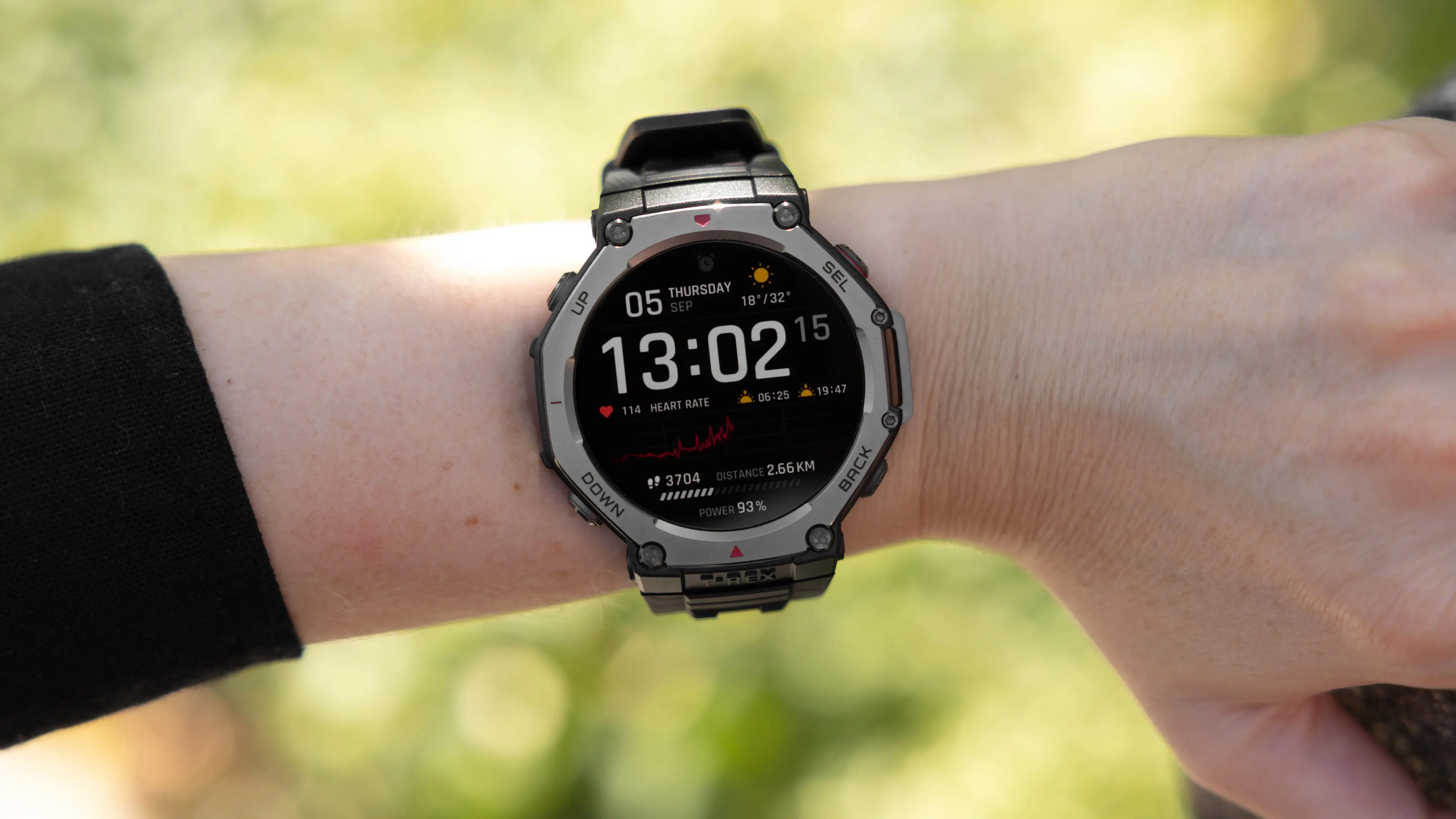
The Amazfit T-Rex 3 is the most disruptive outdoor watch on the market – not because it is the best, but because it exposes just how much the competition is overcharging.
For $280, it packs offline topographic maps, a 2,000-nit AMOLED screen, six-satellite dual-band GPS, and military-grade durability – features that the $450 Garmin Instinct 3 AMOLED cannot match. The Garmin Fenix 8 starts at $1,000. The hardware punches absurdly above its price; the software reminds you why it costs what it does. The T-Rex 3 is not a Fenix killer – but it is a genuine Instinct killer, and Android users who value maps and battery life over software polish have their new default pick. iPhone users, however, get a fraction of the experience.
Design and Build
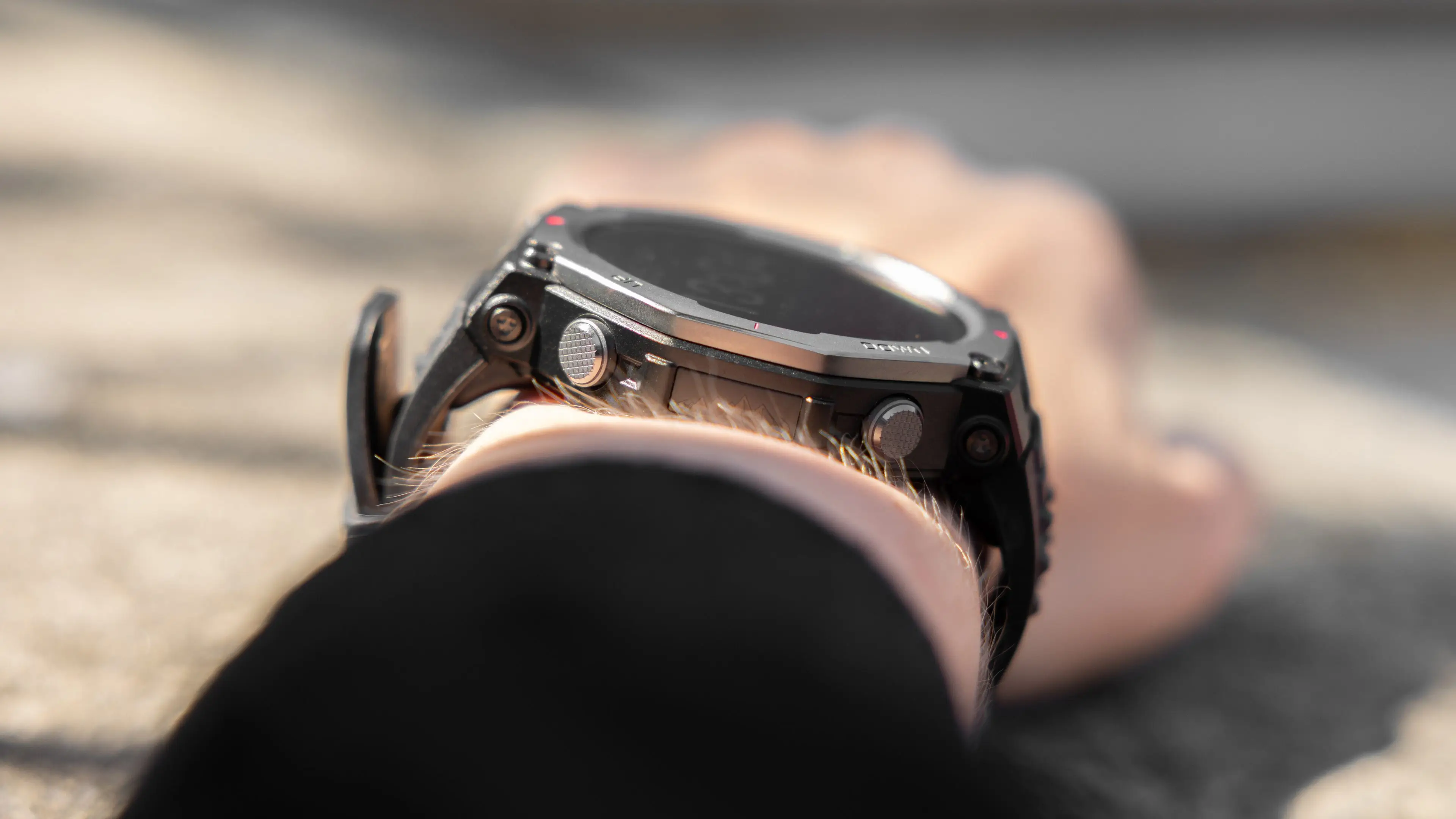
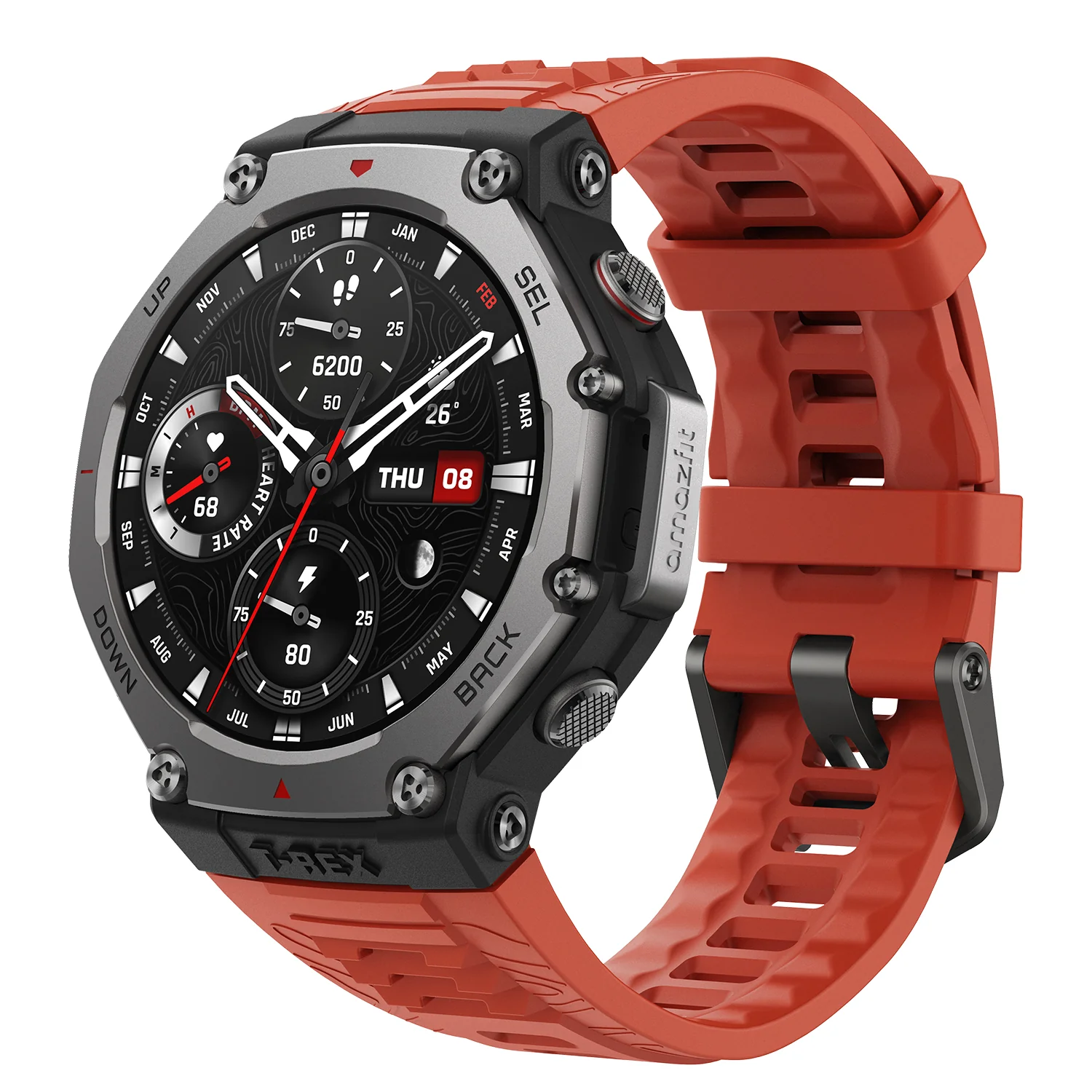
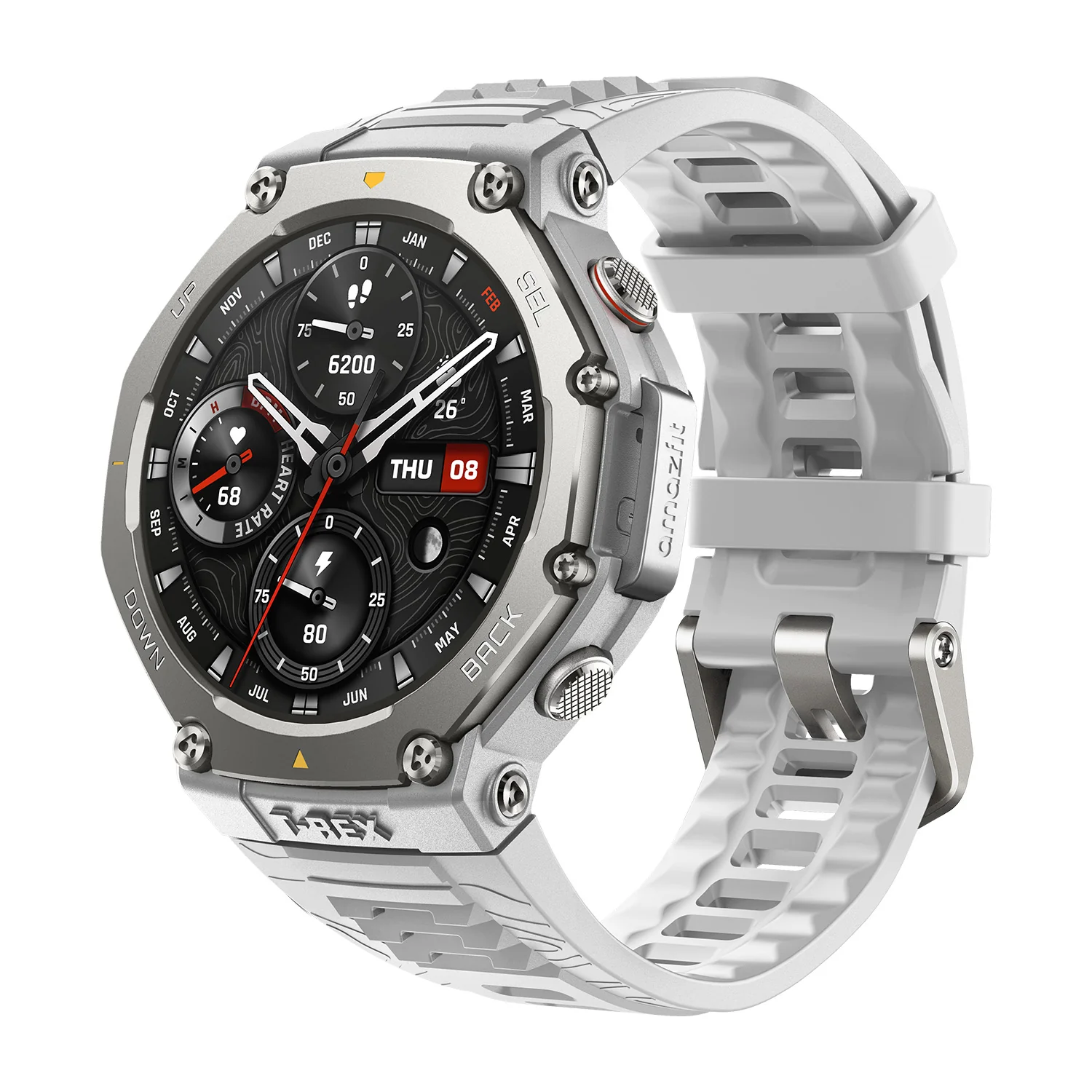
The T-Rex 3 looks the part. The 48.5mm case wears like a proper tool watch, with a thick raised bezel, deep-set crown, and aggressive knurling on the two physical buttons. Corning Gorilla Glass protects the face – not sapphire, which is reserved for the $400 T-Rex 3 Pro – but it resists minor scratches well enough for trail and gym duty. The silicone strap is wide and functional, though the silicone can irritate skin after extended wear in hot, humid conditions. A strap swap to a nylon NATO-style band solves this cheaply.
At 68.3 grams, the T-Rex 3 is noticeably heavier than the Garmin Instinct 3 AMOLED's 53 grams. On a slim wrist, it dominates. On a larger wrist, it disappears into the kind of rugged-tool-watch aesthetic that outdoor watches are supposed to inhabit. This is not a watch that pretends to be dressy. It is chunky, angular, and unapologetically built for dirt, salt, and altitude.
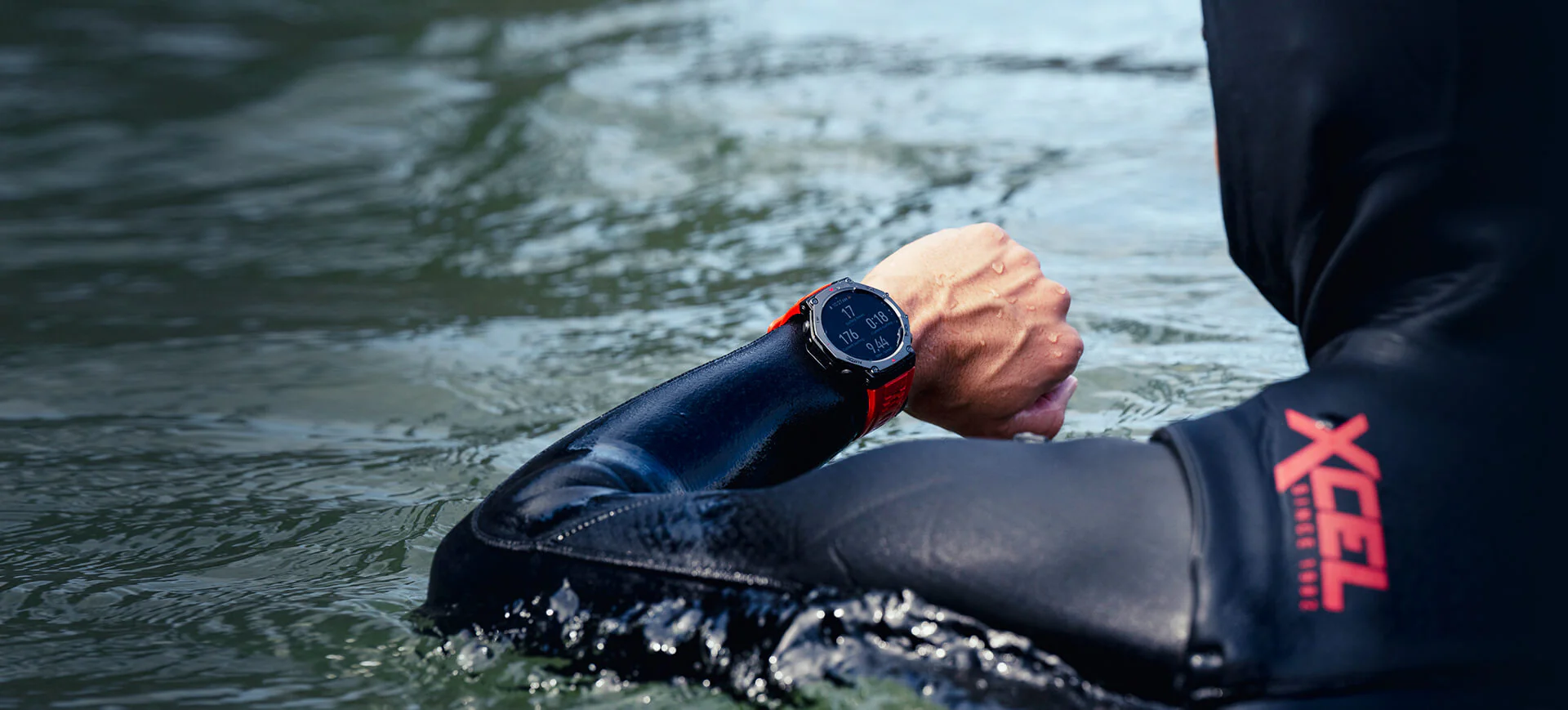
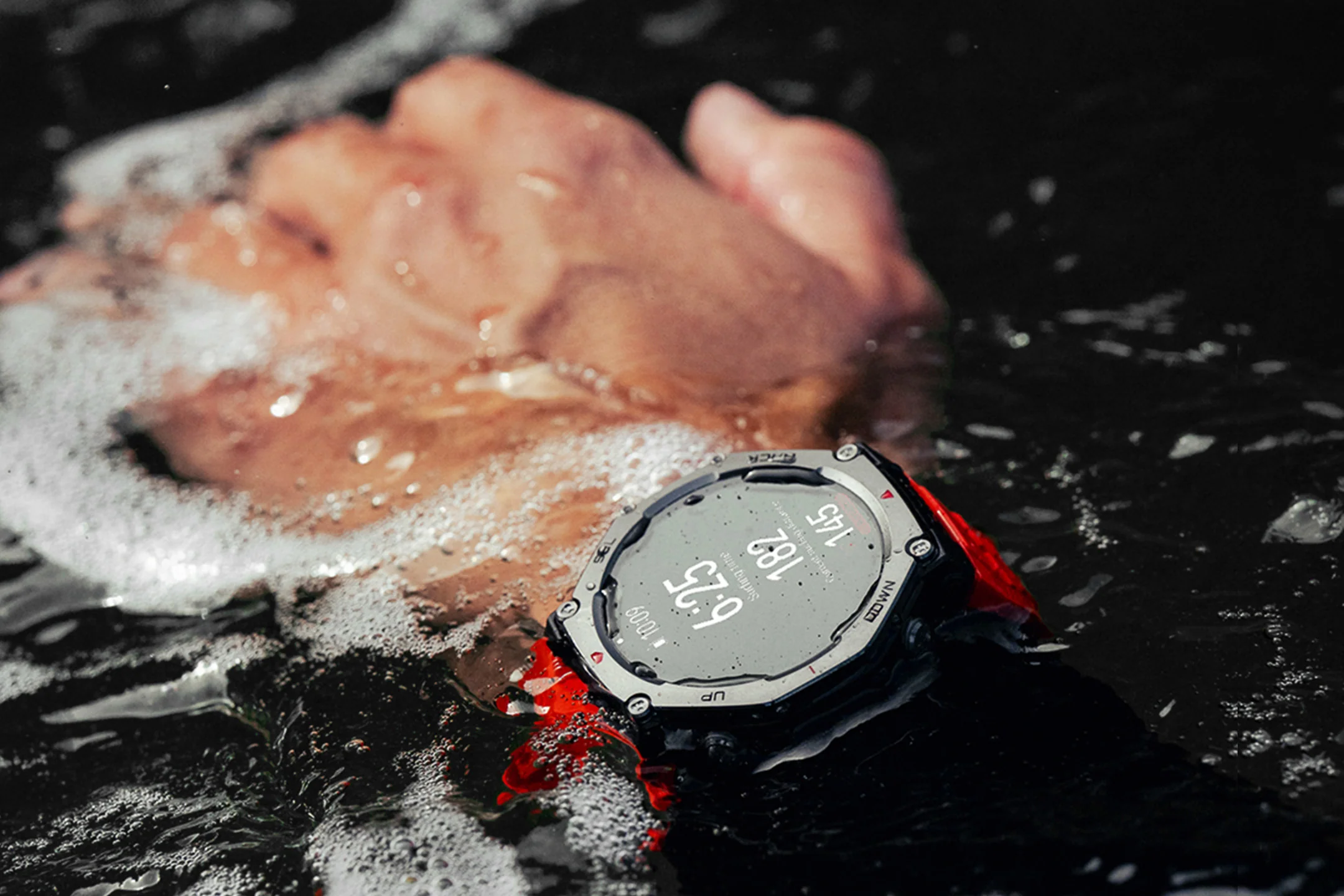
The durability credentials are legitimately impressive. MIL-STD-810H certification covers shock, vibration, humidity, sand, dust, and temperature extremes from -30°C to 70°C. Water resistance hits 10 ATM with an EN13319-certified depth gauge rated to 45 meters – displaying real-time depth and water temperature for recreational diving and snorkeling. You can drag this watch through environments that would void the warranty on most smartwatches and the T-Rex 3 will not blink.
Display
The display is the T-Rex 3's showpiece, and it punches well above its price class. The 1.5-inch AMOLED panel runs at 480×480 pixels with a peak brightness of 2,000 nits. For context, the Garmin Instinct 3 AMOLED squeezes a 1.2-inch panel at a similar brightness – and costs $170 more. The T-Rex 3 Pro bumps to 3,000 nits and sapphire glass, but the standard model's screen is already legible in harsh noon sunlight with polarized lenses.
Colors are saturated and punchy. Map tiles render with enough contrast to follow a trail route at a glance. Workout data fields are large, clean, and easy to parse while running or hiking. The always-on display mode is available and functional, though it eats into battery life. The raise-to-wake gesture is another story – it is slow and unreliable, missing about one in three wrist raises, which makes the always-on mode more of a necessity than a choice for anyone who checks pace mid-run.
Performance and Features
Here is where the T-Rex 3 both impresses and frustrates in almost equal measure.
The GPS hardware is genuinely strong. Six-satellite dual-band positioning locks quickly and tracks accurately for running, hiking, and cycling. Road runs produce clean, tight traces that hug the correct side of the street. Trail routes through moderate tree cover hold position well. For the vast majority of outdoor use – weekend hikes, trail races, road cycling – the GPS delivers results that are functionally indistinguishable from a Garmin in the same conditions. Edge cases are where the gap shows: dense urban canyons, thick old-growth canopy, and open-water swimming expose slightly more drift and wobble than a Fenix 8 would produce. But for 90 percent of users in 90 percent of conditions, the GPS is completely adequate.
Offline topographic maps are the headline feature, and they are included free – no subscription, no additional purchase. Download regional map tiles over Wi-Fi before your trip, and you get full topographic maps with trail overlays, waypoints, and turn-by-turn breadcrumb navigation. The map rendering has a significant weakness, though: the tiles struggle to distinguish water from land in many areas, producing blue blobs where a Garmin or Suunto would render crisp lake boundaries and river banks. For above-treeline ridge navigation or desert canyon routes, the maps work well. For paddling or lakeside trail navigation, the muddled water rendering is a genuine limitation.
Navigation workflow is clunky compared to Garmin. Importing a GPX route requires syncing through the Zepp app, which adds friction that Garmin users will find maddening. Once a route is loaded, the breadcrumb overlay works, but there is no automatic re-routing, no intelligent turn alerts based on trail junctions, and no climb planning with gradient profiles. The maps are a tool for orientation, not a full navigation system. They are vastly better than the Instinct 3's basic breadcrumb-only navigation, but several steps behind the Fenix 8's polished cartography.
The T-Rex 3 offers over 170 sport modes – a staggering number that covers everything from standard running and cycling to paddleboarding, snowboarding, and obstacle course racing. Many of these are lightly differentiated, but the breadth means you will almost certainly find a profile for whatever niche activity you pursue.
Health and Fitness Tracking
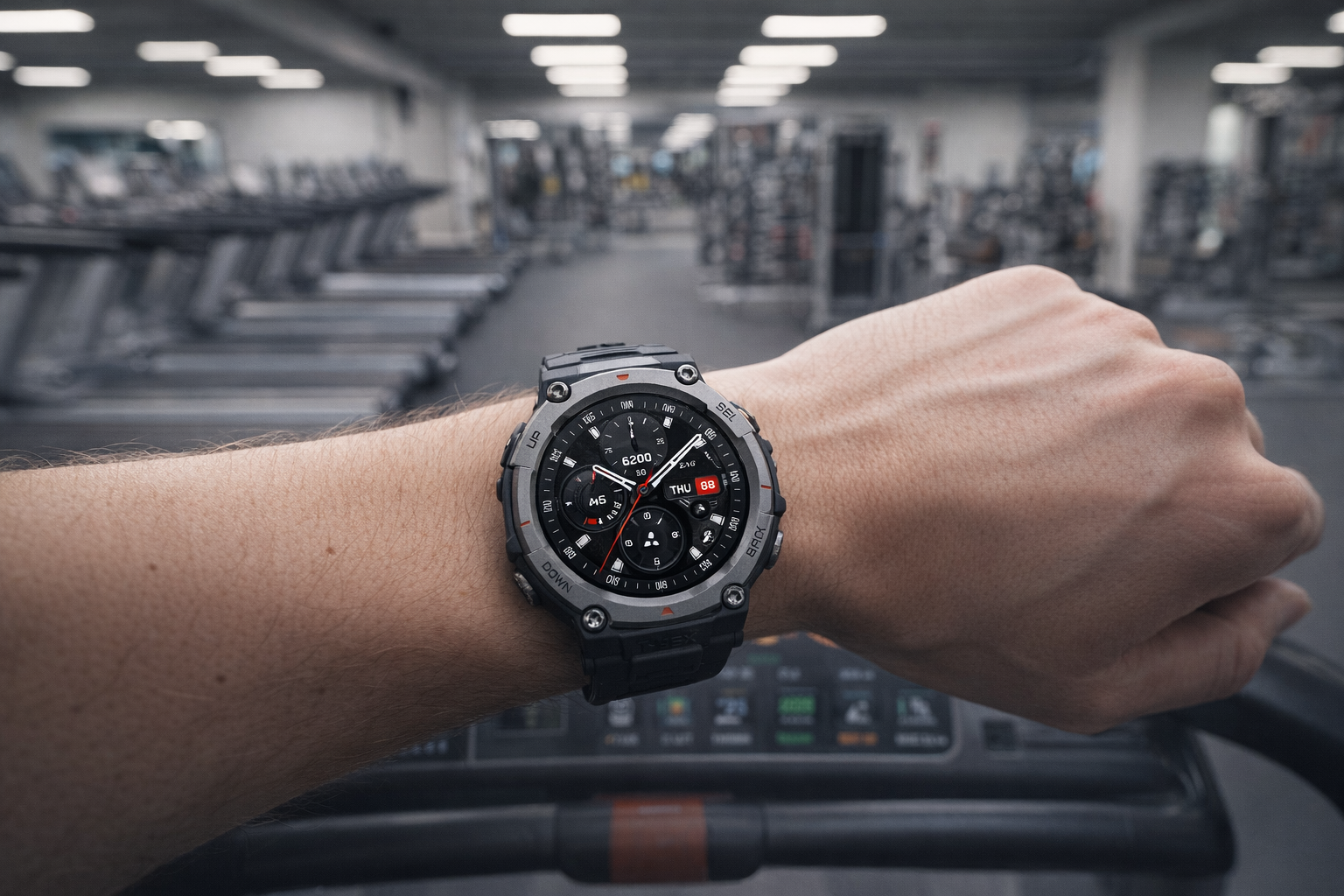
Heart rate tracking on the T-Rex 3 is a split decision. For running at steady paces – easy runs, tempo efforts, long slow distance – the optical sensor tracks cleanly and consistently, staying within a few beats per minute of a chest strap reference. Zone alerts fire at the right thresholds, and the data is smooth enough to use for pacing decisions.
Cycling is a different story. During climbs with variable intensity – the kind of surging, out-of-saddle efforts that define hilly road rides and mountain biking – the optical sensor struggles, producing readings that spike erratically or lag far behind actual heart rate. For serious cyclists and triathletes who depend on heart rate zones for training, an external chest strap or arm-band sensor is not optional; it is essential.
Sleep tracking had a rough launch. Early adopters reported a bug where the watch collected no sleep data for the first one to two weeks of ownership – a startling oversight for a shipping product. Amazfit has released multiple firmware updates since launch, and current sleep staging (light, deep, REM, awake) is reasonable, if not class-leading. The Readiness Score, Amazfit's answer to Garmin's Training Readiness, is less useful. It correlates poorly with perceived recovery and often assigns high readiness scores on mornings that feel sluggish, and low scores on mornings that feel sharp. Treat it as decoration, not data.
The T-Rex 3 provides training metrics including VO2 Max estimation, training load tracking, and recovery time recommendations. These are directionally useful – they trend in the right direction over weeks – but they lack the granularity and calibration of Garmin's Training Status ecosystem. If your training decisions hinge on daily readiness scores and load ratio analysis, Garmin's software remains in a different league.
Battery Life
Battery life is a clear strength. Amazfit claims 27 days in smartwatch mode and 42 hours of continuous dual-band GPS – and real-world performance broadly supports those claims. With notifications active, regular GPS workouts, and the always-on display disabled, expect 10 to 15 days between charges depending on workout frequency. Heavy GPS users who track long weekend hikes and daily runs will land closer to seven days, which is still excellent.
The 42-hour GPS figure holds up during extended outings. A full-day hike with continuous tracking barely dents the percentage, and multi-day backpacking trips are comfortably achievable without a power bank. Compared to the Garmin Instinct 3 AMOLED's 68-hour max battery GPS mode, the T-Rex 3 falls short on paper – but that Garmin figure uses lower-accuracy positioning. In comparable multiband GPS modes, the gap narrows considerably.
Charging uses a magnetic puck that snaps onto the caseback. A full charge takes roughly two to two and a half hours.
Who It Is For and Who Should Skip
Buy the T-Rex 3 if:
- You want a rugged outdoor watch with offline topographic maps and are unwilling to spend $450 or more for a Garmin with the same feature
- You are a runner, hiker, or general outdoor enthusiast who values durability and battery life over polished software
- You use Android – the Zepp app experience on Android is fully functional and reasonably polished
- You find it on sale around $240, where it becomes arguably the best value in rugged outdoor watches
Skip the T-Rex 3 if:
- You are an iPhone user – the iOS experience is significantly degraded, with missing features and poor notification handling that reduces the watch to a glorified fitness tracker
- You are a cyclist or triathlete who depends on accurate wrist-based heart rate – the optical sensor is unreliable during high-intensity variable efforts
- You want mature, reliable training analytics – Garmin's Training Readiness, Training Status, and recovery ecosystem are dramatically more refined
- You prioritize navigation over orientation – the Fenix 8 and COROS Nomad offer true turn-by-turn navigation with intelligent re-routing that the T-Rex 3 cannot match
- You have smaller wrists – at 48.5mm and 68.3 grams, this watch wears large
The Verdict
The Amazfit T-Rex 3 is the best value in rugged outdoor watches right now, and it is not particularly close. For $280 – often $240 on sale – you get offline topographic maps, a display that embarrasses watches costing twice as much, GPS accuracy that holds its own against Garmin in most conditions, legitimate military durability, and battery life measured in weeks rather than days. When you stack those features against the Garmin Instinct 3, which costs $450 and ships without topographic maps on a smaller screen, the T-Rex 3's value proposition borders on absurd.
What holds it back is software maturity. Zepp OS 5 is better than its predecessors, but it still lags behind Garmin Connect in training analytics, navigation intelligence, and day-to-day reliability. The Readiness Score is unreliable. The gesture recognition is poor. The map rendering has embarrassing gaps. The iOS experience is subpar. These are not minor quibbles – they represent the gap between a watch that nails hardware and a watch that nails the full experience.
For runners and hikers on Android who care more about value than software polish, the T-Rex 3 is a no-brainer. For serious athletes who need training analytics they can trust, or iPhone users who expect a full smartwatch experience, the software gap still matters – and Garmin's premium is the price of maturity.
Score: 82/100
| Category | Weight | Score | Weighted |
|---|---|---|---|
| Core Function | 30% | 78 | 23.4 |
| Build Quality | 15% | 82 | 12.3 |
| User Experience | 20% | 68 | 13.6 |
| Value | 20% | 95 | 19.0 |
| Battery Life | 15% | 88 | 13.2 |
| Total | 100% | 82 |