
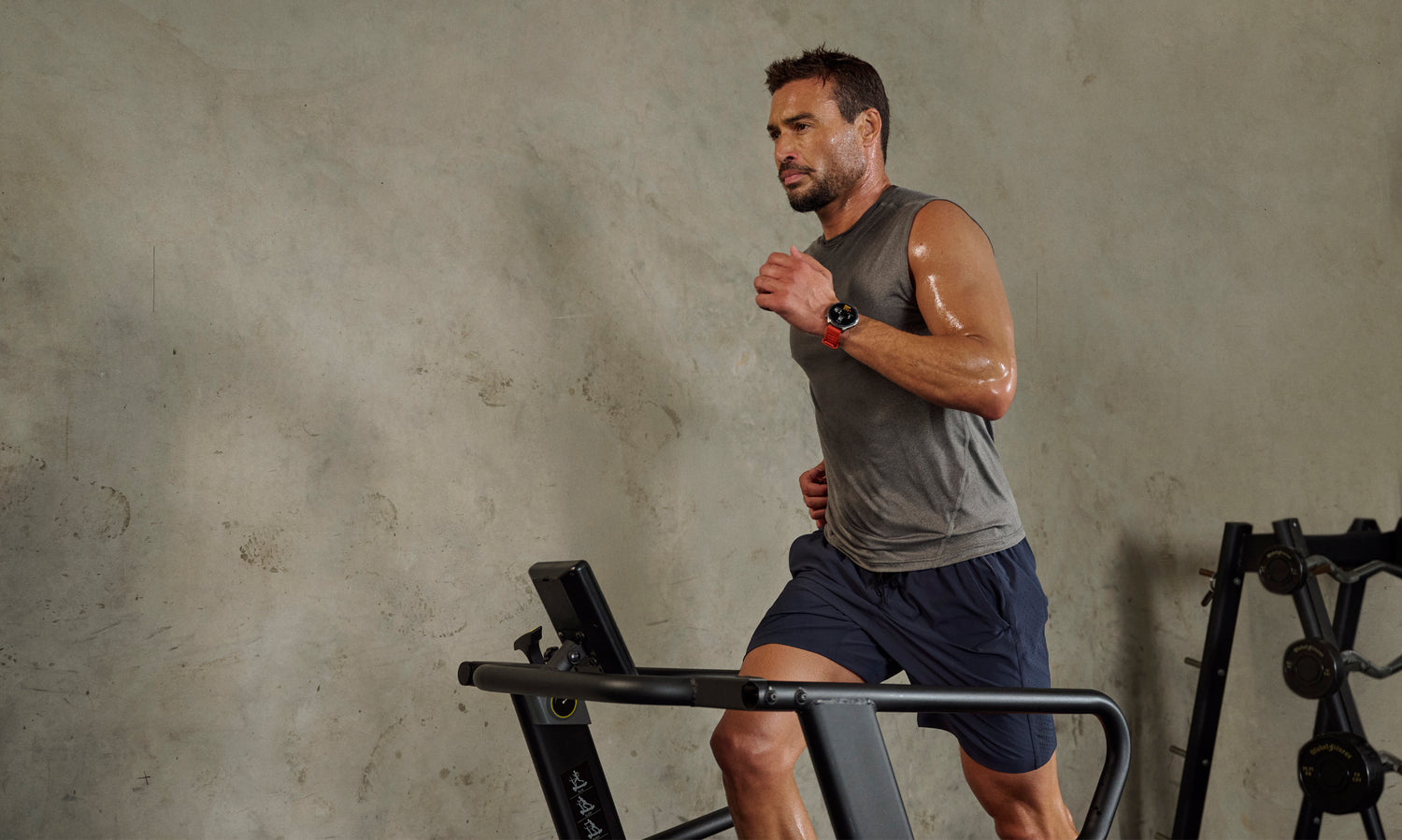
The Amazfit Balance 2 does something that no Samsung, Apple, or Google smartwatch can: it goes weeks between charges without sacrificing a bright AMOLED display, accurate GPS, or comprehensive health tracking. At $299.99 ($250 on sale), it delivers a feature set that genuinely rivals watches costing $150 to $200 more, and it does it while sitting comfortably on your wrist for 10 to 21 days on a single charge depending on display and GPS usage.
After extensive daily wear – through runs, gym sessions, sleep tracking, all-day notifications, and weekend hikes – the verdict is clear: the Balance 2 is the most complete fitness smartwatch under $300 in 2026, and its battery claim is not marketing fiction. It is the real deal.
Design & Build
The Balance 2 looks and feels more expensive than its price tag suggests. The 47mm case pairs an aluminum alloy bezel with a fiber-reinforced polymer body, striking a balance between durability and weight. At just 42 grams without the strap, it sits lighter on the wrist than you would expect from a watch this size, and it wears comfortably around the clock – sleep tracking included.
Sapphire crystal glass protects the display, which is a material you typically see on watches at twice this price. After weeks of daily wear, the glass showed zero signs of scratching. The 10 ATM water resistance rating (100 meters) handles rain and swimming with ease, and a dedicated Recreational Scuba Diving mode supports dives up to 45 meters – a serious upgrade over the original Balance.
The watch ships with two interchangeable 22mm silicone straps – a sporty accent color and a subdued black option. They are functional and comfortable, though they do feel slightly generic next to the premium watch body. The aluminum frame has a satisfying heft, the crown dial offers crisp, responsive haptic feedback, and the overall package projects a confidence that belies its mid-range positioning.
The 12.3mm thickness is a touch chunkier than its predecessor, and on smaller wrists the 47mm case can look imposing. There is no smaller size option. But for anyone with a medium-to-large wrist, the proportions feel right.
Display
The 1.5-inch AMOLED touchscreen is a standout. At 480 x 480 pixels (323 PPI), it delivers sharp text, vibrant colors, and smooth animations. The 2,000-nit peak brightness matches the Apple Watch Series 10 and Google Pixel Watch 4, making outdoor readability a non-issue even in direct sunlight.
The always-on display mode is well implemented, with a range of watch faces that remain legible at a glance. Touch response is quick and consistent, and the combination of swipe navigation with the physical crown dial gives you flexible control. This is one of the best displays available at this price point, full stop.
Performance & Features
The Balance 2 runs Zepp OS 5, and the experience is noticeably snappier than previous Amazfit generations. Menus scroll fluidly, animations are smooth, and app launches feel immediate. It is the zippiest Zepp OS experience to date.
The Zepp companion app is genuinely impressive. Health dashboards are clean and informative, workout summaries are detailed, and the AI food logging feature – which lets you snap a photo of your meal or describe it by voice for calorie estimates – works with no subscription fee. That last point matters: Amazfit charges nothing for features that competitors increasingly lock behind monthly paywalls.
Notification support is strong on Android, with the ability to send custom typed replies directly from the wrist. iOS notification handling is more limited, as expected with any non-Apple wearable. The built-in microphone and dual speakers enable phone calls from the wrist, and call quality is passable in quiet environments.
Offline maps with turn-by-turn navigation bring Garmin-level trail utility to a $300 watch. You can download regional maps over Wi-Fi and follow routes without touching your phone. This is a feature that was previously the domain of watches costing $400 and up.
Where the Balance 2 falls short is the third-party app ecosystem. There is no Spotify streaming – music playback requires transferring MP3 files to the watch via its 32 GB of onboard storage. The Zepp app store is growing but remains thin compared to Wear OS or watchOS. NFC payments via Zepp Pay work in 33 European countries, though the service is not currently available in the United States.
The AI-powered Zepp Coach provides personalized training plans and recovery guidance. The insights are helpful for beginners, though experienced athletes will find the coaching suggestions fairly surface-level.
Health & Fitness
The BioTracker 6.0 sensor array is the hardware backbone here, featuring an 8-photodiode, 2-LED optical sensor configuration that tracks heart rate, blood oxygen (SpO2), heart rate variability (HRV), skin temperature, and stress levels continuously. For a deeper look at how wrist-based sensors stack up, see our best fitness trackers for 2026.
Heart rate accuracy is strong. Side-by-side testing against a Polar H10 chest strap showed tight correlation during steady-state runs, cycling, and hiking. During high-intensity interval training, readings stayed within a reliable margin, though wrist-based optical sensors inherently lag a beat or two behind chest straps during rapid heart rate spikes. For the vast majority of training scenarios, the data is trustworthy.
GPS performance benefits from dual-band (L1+L5) connectivity across six satellite systems with a circularly polarized antenna. Satellite lock is fast, real-time pace is stable, and route traces are clean – even in urban canyons and tree-covered trails. The GPS does occasionally record slightly shorter distances than a dedicated Garmin on identical routes, but the gap is marginal and well within acceptable tolerances.
The 170+ sport modes cover everything from running and cycling to swimming, HYROX training, golf (with downloadable course maps for 40,000+ courses), scuba diving, and strength training that automatically recognizes 25 different exercises and 8 sport movements. The strength training intelligence is genuinely useful – it identifies exercises, counts reps, and tracks rest periods without manual input.
Sleep tracking captures REM, light, and deep sleep stages, nap detection, breathing quality, and generates a sleep score. It reads sleep cycles more accurately than the original Balance, though it can occasionally be slow to detect when you have woken up but have not yet stood. This is a known quirk shared by most wrist-based sleep trackers.
Battery Life
This is the headline feature, and the Balance 2 delivers. The 658 mAh battery is rated for up to 21 days of typical use, and real-world testing confirms it.
With always-on display disabled, continuous heart rate and SpO2 monitoring enabled, daily notifications, and two to three 30-minute GPS workouts per week, the watch comfortably reaches 14 to 16 days. In low-usage scenarios – step counting and occasional notifications only – drain can drop below 3% per day, a pace that genuinely approaches the 21-day claim.
Turn on always-on display, and daily drain jumps to roughly 10%, delivering 10 solid days. Even in this power-hungry configuration, the Balance 2 outlasts a Samsung Galaxy Watch (typically 1-2 days) by a wide margin.
High-precision GPS mode draws harder, delivering 33 hours of continuous tracking – enough for an ultramarathon. Power-saving GPS mode extends that to 67 hours.
Charging takes approximately two hours from empty to full via the magnetic puck charger. That is slower than competitors with fast-charging, but when you only charge every two weeks, the speed barely matters.
Who It's For / Who Should Skip
Buy the Amazfit Balance 2 if you: - Want multi-week battery life without sacrificing a modern AMOLED display - Train across multiple sports and value accurate GPS and heart rate tracking - Refuse to pay subscription fees for health insights and coaching - Need offline maps and navigation on a budget - Use Android and want strong notification integration - Play golf – the course maps and golf mode are excellent
Skip the Amazfit Balance 2 if you: - Need deep smartwatch integration with iOS (Apple Watch remains king) - Want Spotify, YouTube Music, or streaming audio on your wrist - Rely heavily on third-party apps (Wear OS has a far richer ecosystem) - Have small wrists – the 47mm case is the only option - Need LTE connectivity - Require NFC payments in the United States
The Verdict
Score: 87/100 – The Amazfit Balance 2 is the best value fitness smartwatch available in 2026. It pairs a genuine multi-week battery with a stunning AMOLED display, capable dual-band GPS, solid health sensors, and a no-subscription software platform – all for $300. The app ecosystem and smartwatch polish cannot match Samsung or Apple, but for fitness-focused buyers who are tired of daily charging, nothing else comes close at this price.