
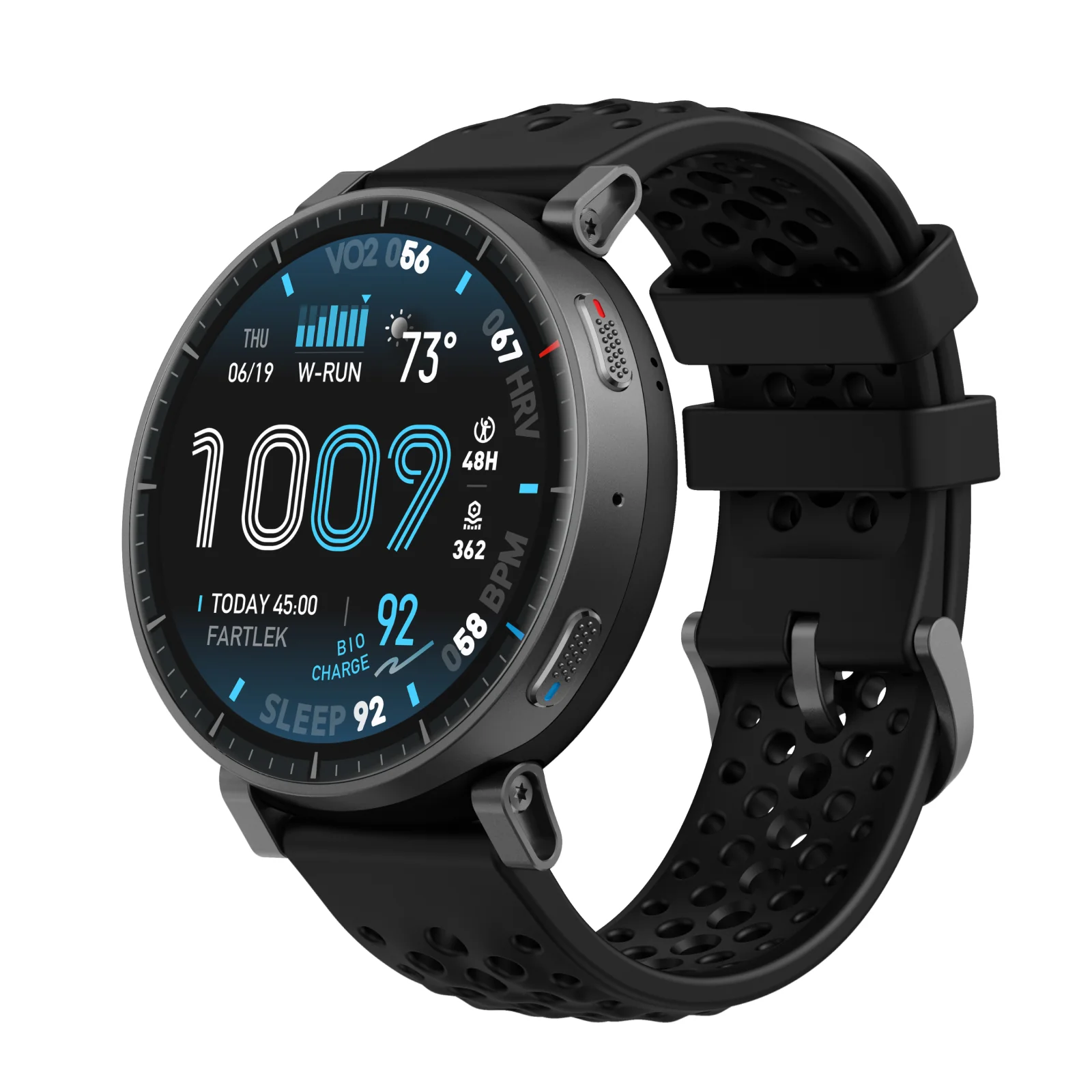
Launched in late December 2025 and showcased at CES 2026, Amazfit's Active Max is a $169 smartwatch packing features that typically cost $500. A blazing 3,000-nit display. Offline topographic maps. Nearly a month of battery life. The pitch is simple: why spend Garmin money when you can get Garmin features for a third of the price?
But budget watches always hide compromises somewhere–in this case, single-band GPS that struggles in challenging terrain and software that lacks Garmin's polish. The question is whether the Active Max's trade-offs matter for everyday runners and fitness enthusiasts, or if Amazfit just redrew the value equation for entry-level sports watches.
Design & Build
The Active Max won't turn heads at the gym. It's a chunky, 48.5mm slab of aluminum alloy and polymer that weighs 39.5 grams–light enough to forget during runs, but visually bland. Only available in black with a silicone strap, it lacks the personality and color options of competitors like the Amazfit Active 2. The design is utilitarian, not aspirational.
The flush metal buttons have textured ridges that provide tactile feedback, and the 5 ATM water resistance handles pool swims without issue. Build quality feels solid for the price, though you're getting strengthened glass instead of sapphire crystal, and the materials can't match the premium feel of titanium-clad rivals. This is a watch that prioritizes function over fashion–and it shows.
Display
Here's where the Active Max punches above its weight class. The 1.5-inch AMOLED display hits 3,000 nits of peak brightness–matching the $799 Apple Watch Ultra 3 and outshining the standard Apple Watch Series 11. In direct sunlight, text remains sharp and colors stay vivid when most budget watches wash out.
The 480x480 resolution at 323 PPI delivers crisp graphics, though the substantial bezel creates a "dead zone" that reduces the usable screen area. Colors skew slightly oversaturated–typical of AMOLED panels at this price–but auto-brightness handles varying conditions well. The always-on display mode works smoothly without stuttering.
At 12.2mm thick, the watch feels chunkier than sleeker fitness trackers, but the pivoted lug structure flexes naturally with your wrist during movement. For a $169 watch, this display is genuinely impressive–the kind of screen clarity you'd expect from devices costing twice as much.
Performance & Features
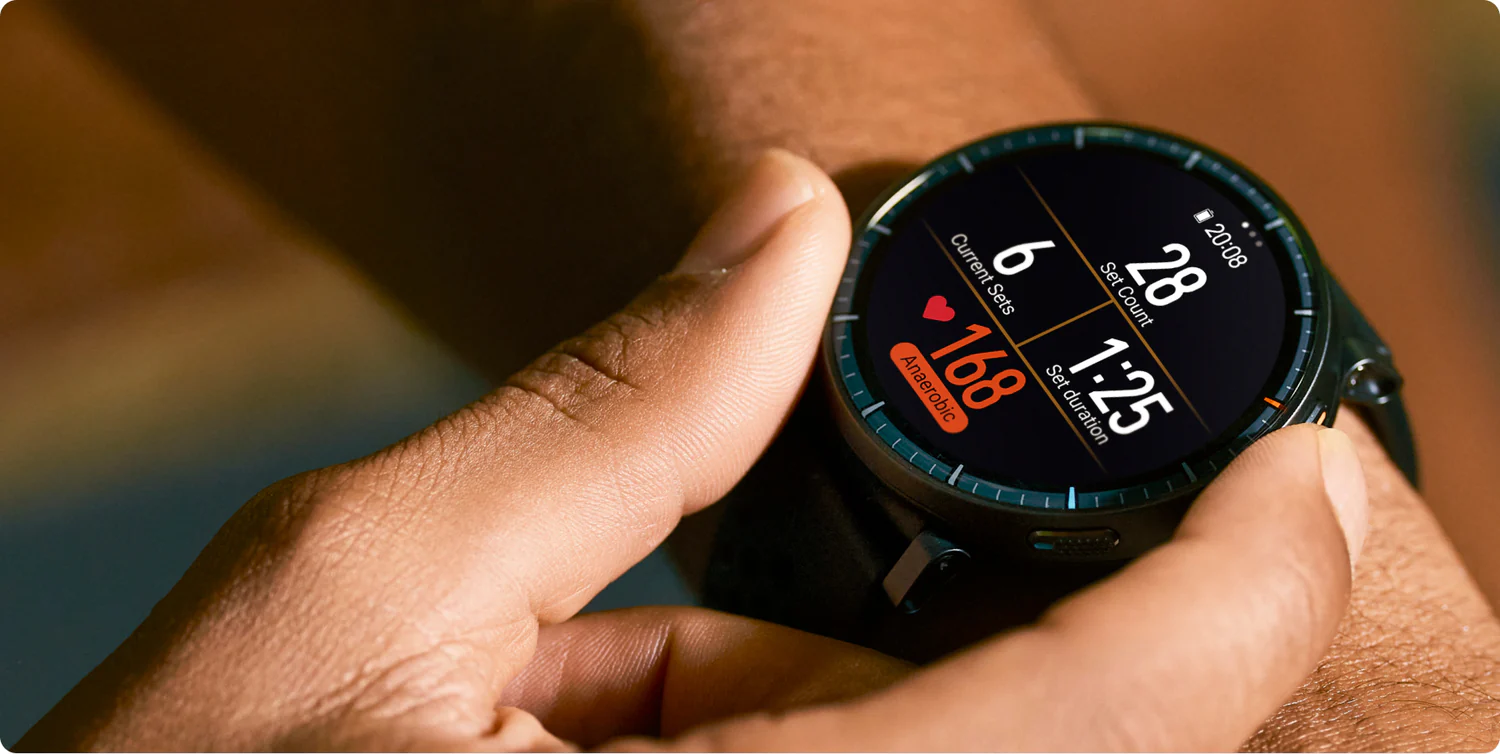
The Active Max runs Zepp OS 5, which brings over 170 sport modes, offline maps, and Amazfit's new BioCharge dynamic energy score that updates throughout the day based on sleep, stress, and activity. It's a more useful metric than static morning readiness scores, giving real-time guidance on whether to push hard or take it easy.
The 4GB of storage swallows up to 100 hours of podcasts or hundreds of songs, and Bluetooth 5.3 pairs reliably with headphones for phone-free runs. The watch handles calls through its built-in speaker and microphone, though the audio quality is tinny–fine for quick check-ins, but you'll reach for your phone for real conversations.
Offline topographic maps are surprisingly robust for this price point, displaying contour lines and terrain details that rival Garmin. The catch? Route recalculation still fails when you go off-course, throwing errors instead of adapting. You can't tap a point on the map to navigate there either–you must import routes beforehand. These are significant limitations for trail runners who value spontaneity.
Zepp OS has grown into a surprisingly capable ecosystem with over 400 downloadable mini-apps and 5,700+ watch faces. But the interface still feels budget-oriented in places, with occasional clunkiness and a companion app that lacks the polish of Garmin Connect or Apple Health. It also trails the best smartwatches for Android in third-party app support. The learning curve is gentle, but serious athletes will miss the depth and refinement of premium platforms.
Zepp Pay enables contactless payments in 33 European countries via Mastercard, binding up to eight cards for wrist-based payments. For European buyers, it's a convenient perk. For Americans? It's still unavailable, which stings when rivals like Garmin offer broader NFC support.
Health & Fitness
The BioTracker PPG sensor uses five photodiodes and two LEDs to monitor heart rate, SpO2, stress, and sleep. Heart rate accuracy is solid for casual training–readings track closely with chest strap data during steady-state efforts and patterns stay consistent throughout runs. Serious athletes chasing zone precision may still prefer a chest strap, but for everyday tracking, it's more than adequate.
Sleep tracking breaks down REM, light, deep, and awake stages with reasonable accuracy, and overnight heart rate and breathing patterns align with how you actually feel in the morning. The BioCharge score condenses recovery metrics into a single daily number, though it lacks the granular insights of Whoop or Garmin's Body Battery.
GPS accuracy is where the single-band GNSS shows its limitations. The watch supports five satellite systems (GPS, GLONASS, Galileo, BeiDou, QZSS), but without dual-frequency reception, it tends to drift from roads and overestimate distances in challenging environments–dense forests, urban canyons, mountainous terrain. On open trails, it's competent, showing only minor variations compared to reference devices (7.48km vs. 7.58km in one test). For 99% of runners, it's good enough. For the 1% chasing Strava segment PRs or precise pace work, it'll frustrate.
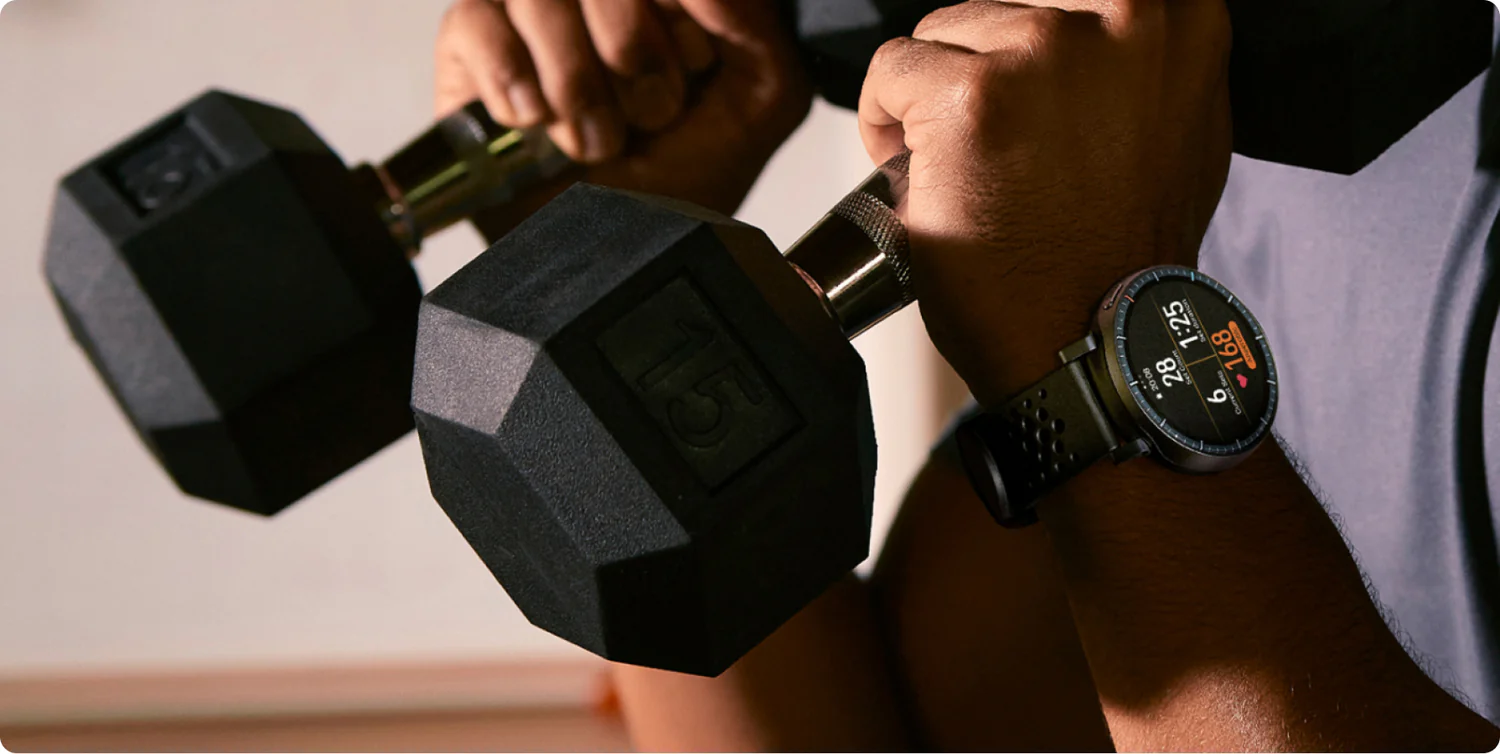
Strength training auto-recognition covers 25 movements–barbell squats, deadlifts, burpees, pull-ups–but requires creating a training plan in the app first. Without that setup, you only get body area summaries. Rep counts occasionally misfire, so serious lifters may still prefer manual logging.
The HYROX mode shines for functional fitness enthusiasts, correctly tracking stations with audio prompts. It's a thoughtful addition for a growing sport, though metric customization is limited compared to dedicated tools.
VO2 Max estimates, training load, and training effect metrics provide useful feedback for progression, and Zepp Coach delivers AI-powered workout recommendations. It's not as sophisticated as Garmin's training ecosystem, but for beginners building a base, it offers plenty of guidance.
Battery Life
This is the Active Max's standout strength. The 658mAh battery delivers on Amazfit's ambitious claims: 25 days in light use, 13 days with heavy use, and 7-10 days with daily GPS tracking, high brightness, and continuous monitoring enabled. That's genuinely impressive–three to four times longer than most smartwatches.
GPS drains at roughly 4-5% per hour, giving you 64 hours of continuous tracking in ideal conditions. Pair Bluetooth music and that drops to 22 hours–still respectable for long ultras or multi-day adventures. Always-on display mode cuts battery to 10 days, which remains competitive.
Charging is slow but infrequent. You'll reach for the cable every week or two instead of nightly, which fundamentally changes the ownership experience. Battery anxiety vanishes.
Who It's For / Who Should Skip
Buy the Active Max if: - You want Garmin-level features (offline maps, training metrics, robust GPS) without Garmin prices - Battery life matters more than premium build quality or refined software - You're a beginner or casual athlete building fitness habits, not chasing podiums - You value bright outdoor displays and don't mind a chunkier design - You run/hike in Europe and want NFC payments
Skip it if: - You need dual-band GPS for challenging terrain or precise pace tracking - Software polish and ecosystem depth matter–Garmin, Apple, and Google still lead here - You're a serious lifter who needs reliable auto-rep counting - You want reliable route recalculation for trail navigation - You prioritize sleek design and multiple color/size options - You live in the U.S. and expected NFC payments
The Verdict
The Amazfit Active Max redefines what $169 can buy. Its 3,000-nit display, weeks-long battery, and offline maps deliver features typically reserved for watches costing $400-$500. For runners and fitness enthusiasts prioritizing value, tracking accuracy, and stamina over premium materials and software refinement, it's a compelling package.
But it's not perfect. Single-band GPS lacks precision in tough environments. Zepp OS feels unpolished compared to Garmin or Apple. Route recalculation doesn't work. The design is forgettable. These are real compromises, not nitpicks.
The question is whether those trade-offs matter for your training. If you're building fitness habits, running open trails, and want a watch that lasts a week between charges, the Active Max is exceptional value. If you're chasing Strava KOMs, navigating backcountry loops, or want a watch that feels premium, spend more on a Garmin Forerunner 265 ($449) or consider the Coros Pace 3 ($229) for dual-frequency GPS.
Amazfit didn't build the perfect budget sports watch. But for $169, they built one that's good enough to make Garmin's entry-level lineup sweat–and that's a win for every runner's wallet.
Score: 80/100
| Category | Weight | Score | Weighted |
|---|---|---|---|
| Core Function | 30% | 80 | 24.0 |
| Build Quality | 15% | 73 | 10.95 |
| User Experience | 20% | 75 | 15.0 |
| Value | 20% | 90 | 18.0 |
| Battery | 15% | 80 | 12.0 |
| Total | 80/100 |