
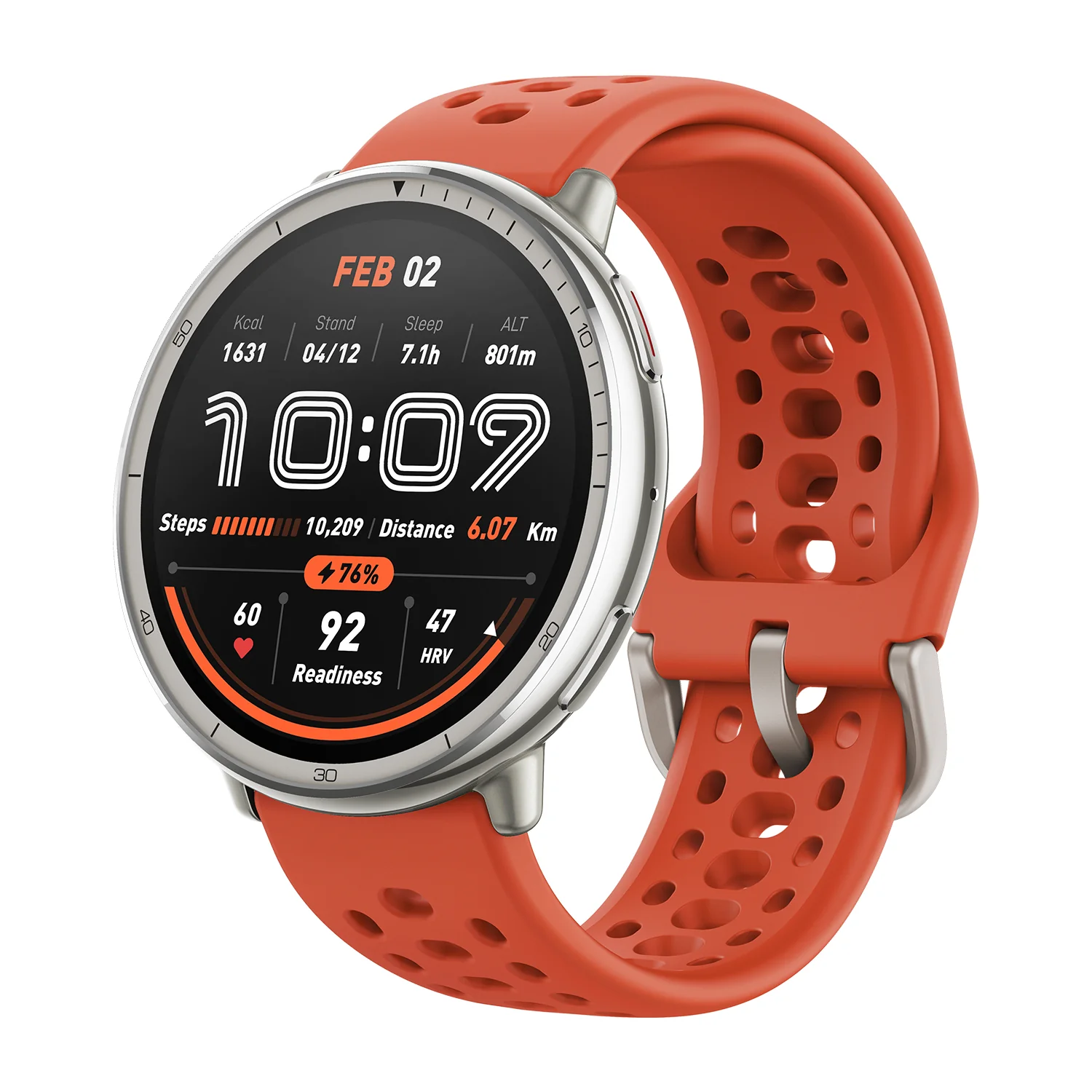
I have tested dozens of smartwatches, and I keep coming back to the same question: why am I paying $300 for features that cost $99? The Amazfit Active 2 does not just challenge premium watches--it embarrasses them. With a display that matches Samsung flagship brightness, offline maps you would expect on a $450+ Garmin, and up to 10-day battery life that makes Apple Watch users jealous, this $99 wearable proves the smartwatch market has been overcharging us for years.
Sure, there are trade-offs. GPS runs about 120 meters long on a 5K route, heart rate spikes 10-15 bpm high during intervals, and the UI feels like it was designed by engineers who have never met a UX designer. But when you are getting a stainless steel smartwatch with 160+ sport modes, Bluetooth calling, AI voice assistant, and no subscription fees for the price of two fancy coffee runs per month, suddenly those compromises seem pretty reasonable.
Design & Build: Stainless Steel at a Plastic Watch Price
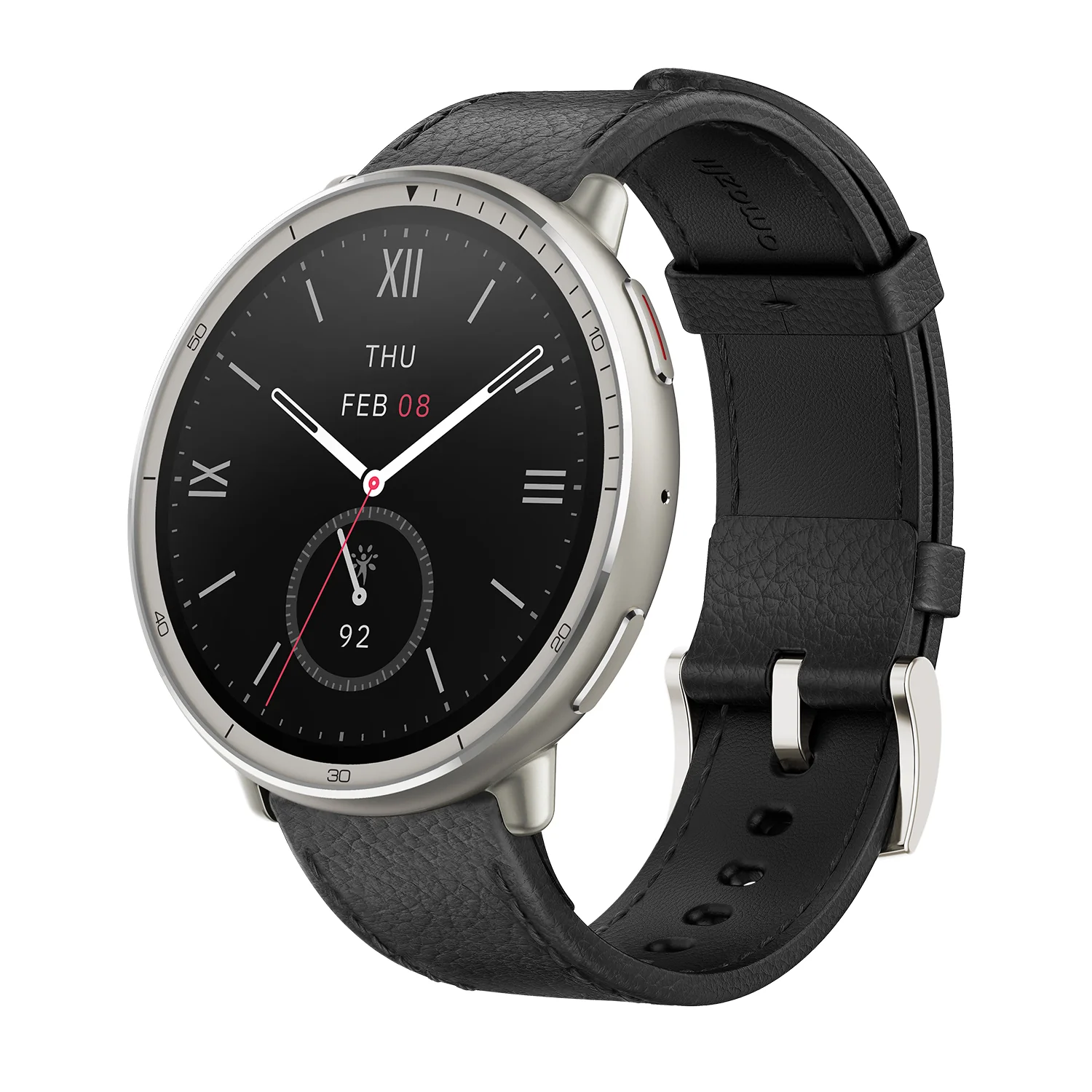
The Active 2 weighs just 29.5 grams--lighter than most fitness trackers--yet feels surprisingly premium. The stainless steel bezel catches the light like watches triple its price, and the 9.9mm thickness slides under dress shirt cuffs without catching. In direct sunlight, the silver bezel has a slight toy-watch sheen compared to the all-black original Active. But at this price? A minor aesthetic compromise.
The silicone strap is where Amazfit cut corners. The standard silicone strap does the job but feels cheap compared to the stainless steel bezel. The good news: standard 22mm quick-release pins mean swapping in a nicer third-party band takes seconds and costs about $12.
Water resistance hits 5 ATM (50 meters), making it pool- and shower-safe. The polymer case back sits flush against skin without the hot spots some metal watches create during workouts.
One brilliant design choice: two physical buttons flanking the crown. The top button launches workouts, the bottom opens the app menu. After fumbling with touchscreen-only watches mid-run with sweaty fingers, having tactile controls feels like a revelation.
Display: 2,000 Nits of "How Is This $99?"
The 1.32-inch AMOLED screen produces 2,000 nits peak brightness--matching Samsung Galaxy Watch 7 specs at one-third the price. Outdoors in direct sunlight, notifications are readable without squinting or cupping a hand over the screen. The 466x466 resolution makes text sharp enough to comfortably read full messages.
The always-on display is a battery killer (dropping longevity from 10 days to around 5), but it looks good when active. Raise-to-wake works reliably about 85% of the time--occasionally requiring a deliberate wrist flick rather than a subtle movement.
Colors lean slightly oversaturated, giving everything a punchy, vibrant look. The 2.5D tempered glass (sapphire crystal on the $129 premium version) picks up fingerprints readily, but a quick sleeve wipe clears them instantly.
Performance & Features: Premium Hardware, Budget Software
Here is where the Active 2 reveals its split personality. The hardware is exceptional--BioTracker 6.0 sensors, GPS with six satellite systems, barometric altimeter, microphone, speaker, and 270mAh battery. The software running it all? That is where you remember you paid $99.
Zepp OS 4 works, but it does not delight. Scrolling through the app list occasionally stutters. Accessing settings requires more taps than necessary. The interface feels engineered rather than designed, prioritizing function over finesse.
But what works shockingly well: offline maps. Download map tiles via the Zepp app, and they are accessible directly on the watch during workouts. No phone required. For trail running in unfamiliar areas, having a topographic map on the wrist is genuinely useful--though turn-by-turn navigation is buggy, often alerting late or rendering land as water. This feature alone costs $450+ on Garmin watches like the Forerunner 965.
The Zepp Flow AI assistant responds to voice commands for adjusting settings, checking readiness scores, or dictating message replies. Simple commands like "start a run" execute fine. Asking it to compose a longer text often produces garbled results. More proof-of-concept than polished feature, but how many $99 watches even attempt AI assistants?
Bluetooth calling works better than expected. The speaker is loud enough for brief conversations, and the microphone picks up voices clearly even with moderate background noise. Perfect for quick "on my way" calls, though not ideal for business conversations.
The app ecosystem remains Zepp OS weakest link. Native apps for weather, music control, compass, and barometer, plus a handful of third-party options like Sonos and GoPro. No Spotify standalone, no meditation apps, no robust third-party development. If you want Apple Watch-style app versatility, look elsewhere.
Health & Fitness: Accurate Enough (With Caveats)
The BioTracker 6.0 sensor tracks heart rate, SpO2, stress, and skin temperature. During steady-state cardio--jogging, cycling, hiking--it matches chest strap HR monitors within 3-5 bpm. Impressive for the price.
The catch: it runs 10-15 bpm high during interval training or strength work. The watch also takes 5-10 minutes to "lock on" at the start of runs, showing wildly inaccurate readings before settling into accuracy. For casual fitness tracking--step counts, general activity levels, basic HR trends--it is perfectly fine. For training zones, pair it with a chest strap (which it supports via Bluetooth).
Sleep tracking impressed. Sleep stage detection, breathing quality analysis, and REM tracking aligned closely with dedicated sleep trackers. Morning readiness scores proved surprisingly accurate--on days with fragmented sleep, it correctly flagged low readiness and suggested lighter workouts.
GPS accuracy sits in "good enough" territory. On a known 5K route, it measured 5.12 km--about 120 meters over. Route mapping shows reasonable accuracy, though occasionally cutting corners or drifting 10 meters off trail. Acceptable for recreational athletes, not for competitive runners obsessing over pace.
The offline map navigation needs serious work. Portions of dry land render as water. Turn-by-turn prompts arrive late or not at all, often alerting 50 meters after the turn. The feature has potential but is not ready to replace phone GPS.
The 160+ sport modes cover everything from HYROX training to pickleball. Most are renamed cardio profiles, but having dedicated tracking for niche activities shows attention to enthusiast communities.
Battery Life: Finally, a Watch That Lasts
Amazfit claims up to 10 days typical use. Real-world testing delivers 8-9 days with moderate activity: daily workout tracking (30-45 minutes with GPS), continuous heart rate monitoring, sleep tracking, and dozens of notifications. That is phenomenal.
With always-on display enabled, battery drops to 5-6 days--still respectable. Heavy GPS use drains about 10% per hour, meaning the up to 21-hour GPS endurance claim holds up. A full recharge takes about 2 hours.
After years of nightly charging routines with other smartwatches, wearing a watch for over a week between charges feels revolutionary.
Who It Is For
Buy the Active 2 if you: - Want smartwatch features without smartwatch prices - Need GPS and offline maps for hiking or running - Prioritize battery life over UI polish - Track fitness casually rather than competitively - Use Android (iOS users lose Bluetooth calling) - Do not care about extensive third-party apps
Skip the Active 2 if you: - Need competition-grade GPS/HR accuracy - Want Apple Watch-style app ecosystem - Demand buttery-smooth software performance - Prefer smaller, more delicate watches
The Verdict
Score: 85/100 – Excellent with minor caveats.
| Category | Score | Weight | Reasoning |
|---|---|---|---|
| Core Function | 82 | 30% | GPS and HR accuracy are good but not elite; 160+ modes and BioTracker 6.0 sensors perform admirably |
| Build Quality | 85 | 15% | Stainless steel bezel and solid construction at $99 is remarkable; strap is subpar |
| User Experience | 72 | 20% | Clunky UI and limited apps; offset by offline maps, AI assistant, and Bluetooth calling |
| Value | 98 | 20% | Unmatched price-to-performance ratio; $300+ features for $99 with no subscriptions |
| Battery | 92 | 15% | 8-9 days real-world use crushes competition; up to 21-hour GPS tracking is excellent |
The Amazfit Active 2 is not perfect, but it is perfectly priced. At $99, you get a stainless steel smartwatch with flagship-level brightness, offline mapping typically reserved for $450+ Garmin watches, 10-day battery life, comprehensive health tracking, and Bluetooth calling--all without subscription fees.
Yes, the UI feels utilitarian. Yes, GPS accuracy will not satisfy serious runners. Yes, the app ecosystem is barren compared to Apple or Samsung. But those compromises pale against what you get for $99.
This is the smartwatch for people who want 80% of flagship functionality at 30% of the price. For runners who need route guidance but do not race competitively. For fitness enthusiasts tracking general trends rather than training zones. For anyone sick of charging their watch daily or paying subscriptions to view their own health data.
If you are shopping in this price range, also consider the Amazfit Bip 6 for an even lighter option, the Huawei Watch Fit 4 for a more polished UI, or the Samsung Galaxy Fit 3 if you prefer a band-style tracker. For a bigger-screened Amazfit alternative, the Amazfit Active Max is worth a look. And if your budget stretches a bit higher, check our best budget smartwatches guide for more options.
The Amazfit Active 2 does not make expensive watches obsolete--but it makes them justify their price tags. And most of them cannot.